The Professor of Practice is an innovative academic position introduced at KISS-DU to bridge the gap between academic learning and practical expertise. The concept of Professor of Practice is aligned with its mission to integrate academic rigor with real-world applications, especially in the context of safeguarding tribal culture and indigenous knowledge. The position typically emphasizes traditional knowledge and professional experience rather than academic qualifications. Professors of Practice bring real-world perspectives to the university, helping students connect theoretical concepts to their practical applications. At KISS, which is dedicated to empowering tribal communities through education, Professors of Practice work on projects that address issues like tribal livelihoods, sustainable development, indigenous knowledge, cultural heritage and community empowerment. They command respect in their expertise in their respective domain.
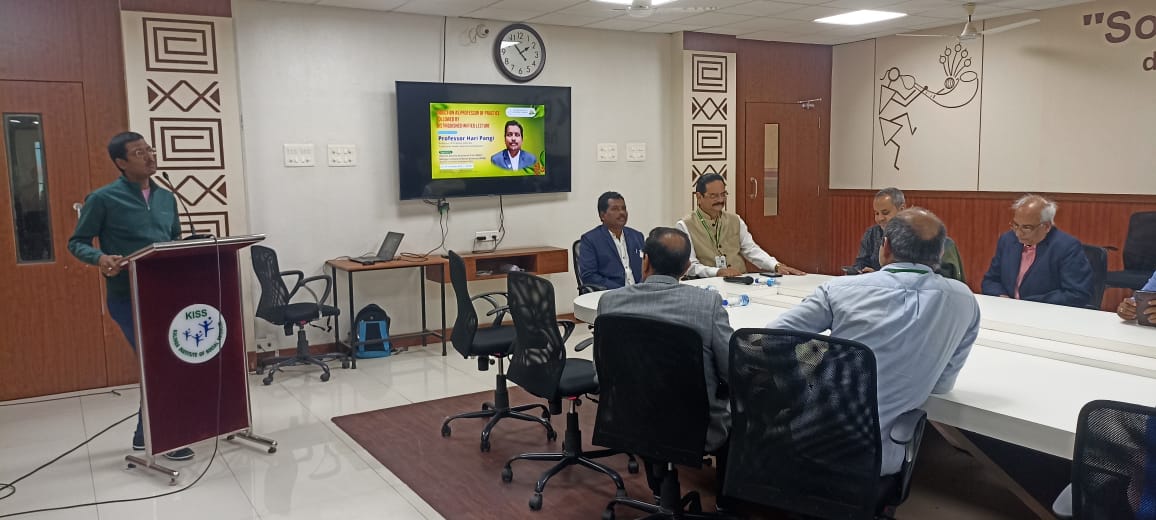
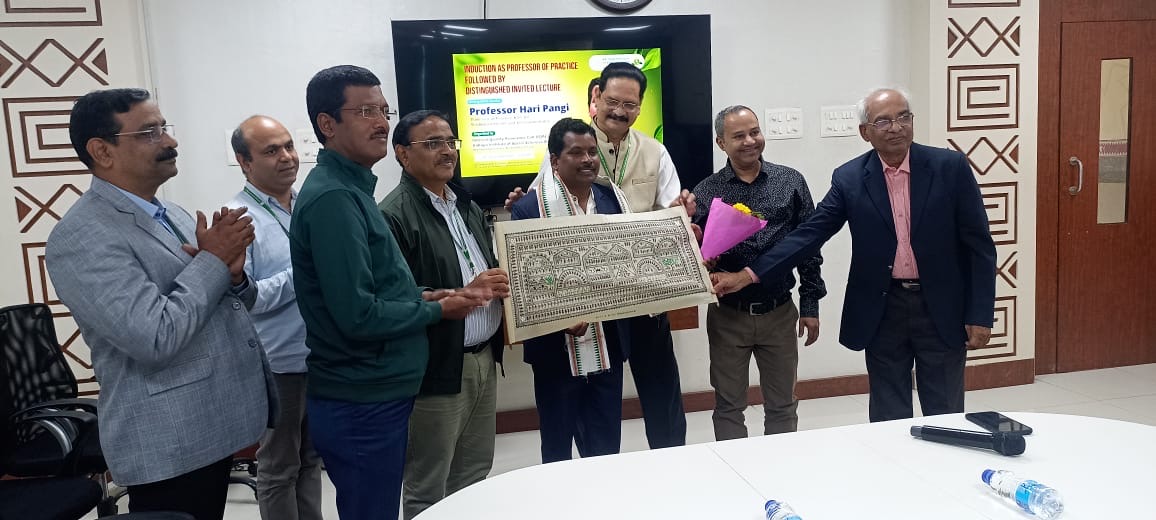
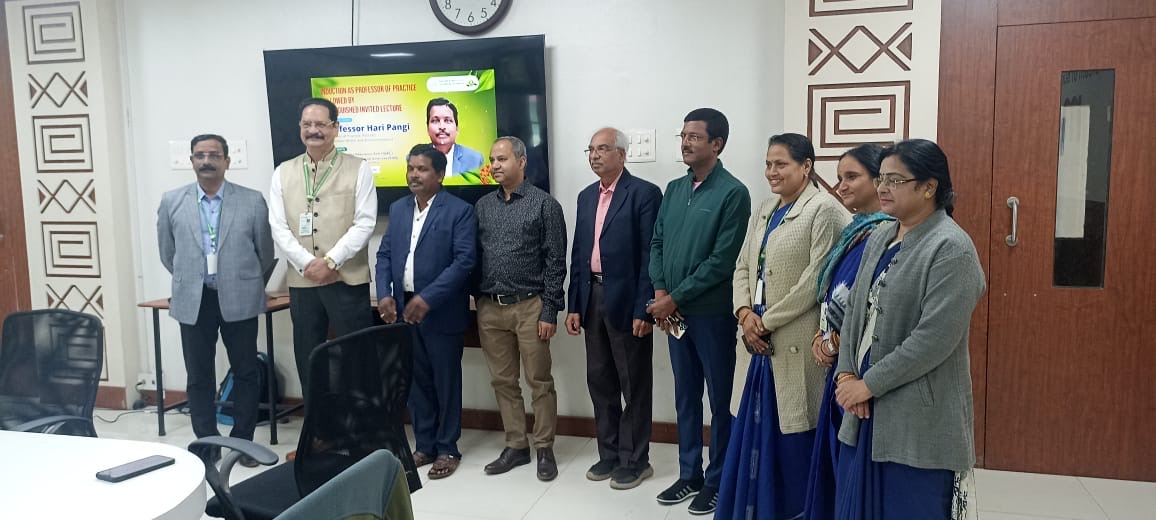
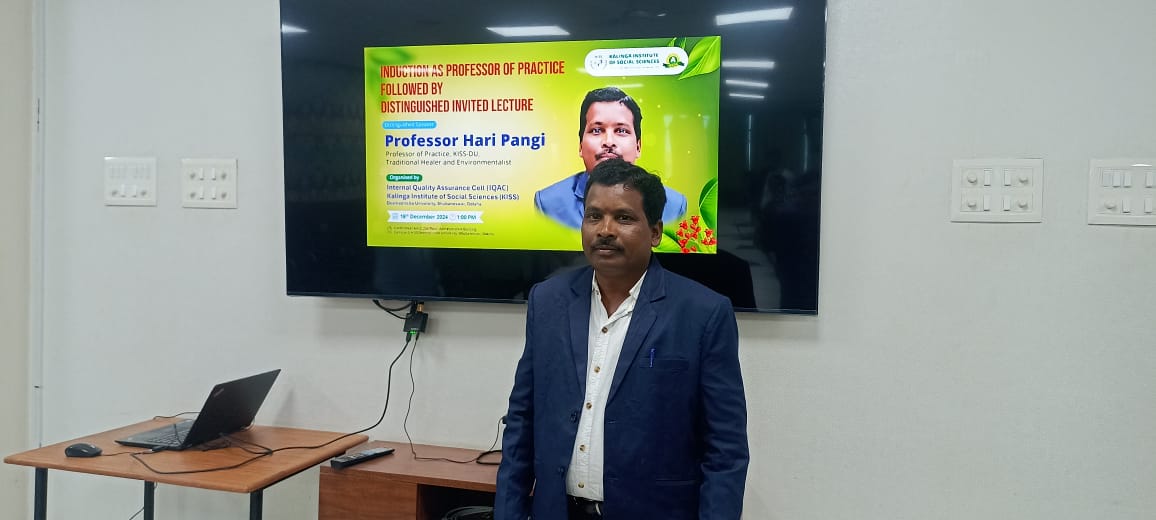
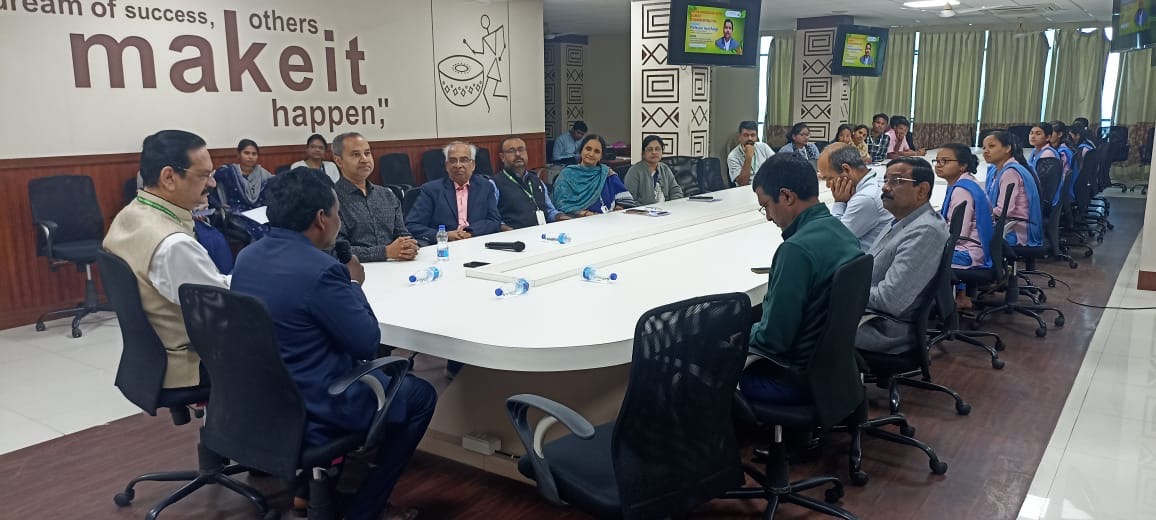
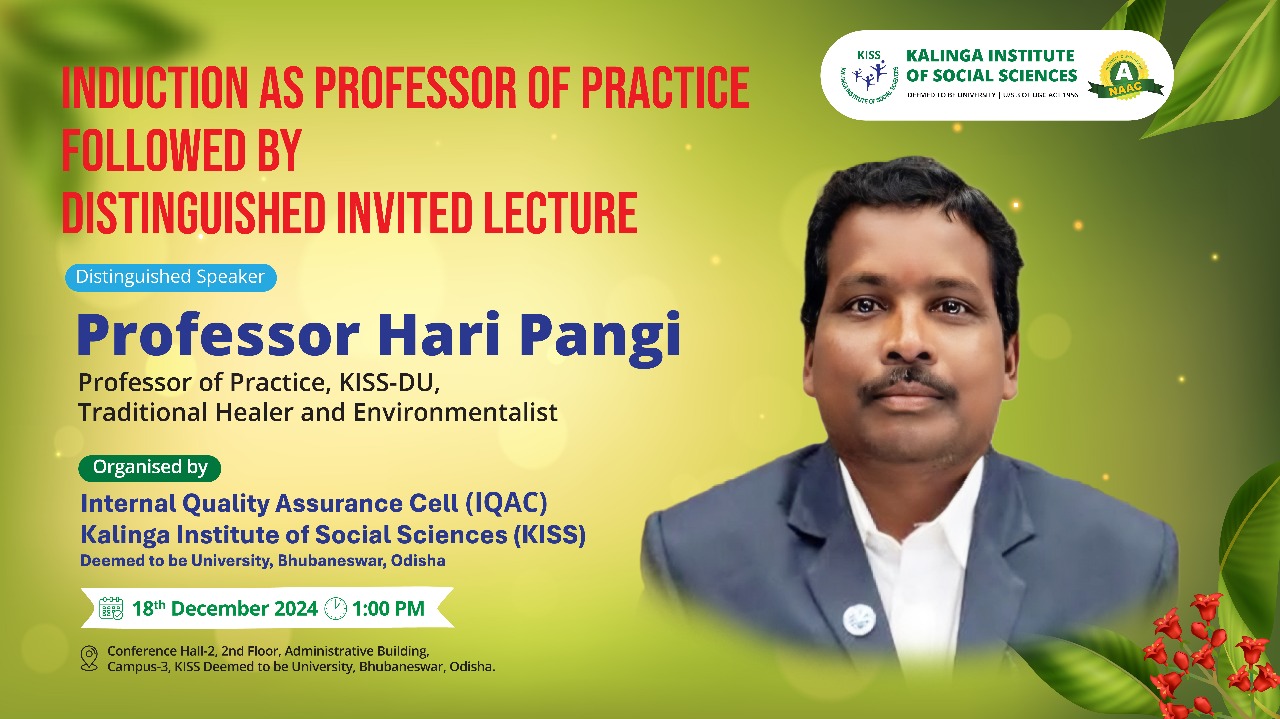
Mr. Hari Pangi is inducted as Professor of Practice in KISS Deemed to be University. In an event organized at KISS-DU on 18th December 2024. Professor Deepak Kumar Behera, Vice Chancellor of the University felicitated and formally announced the induction of Mr.Pangi as the newly appointed Professor of Practice at KISS-DU. The event was graced by Professor Emeritus Professor Siba Prasad Adhikary. Professor Pangi’s journey as a herbal medicinal practitioner was shared through a video which inspired the students. His intervention will bring about bridgning traditional and modern knowledge, promoting tribal knowledge, community-centric living, advancing research and innovation, and empowering students. Professor Pangi will also contribute towards teaching and mentorship, curriculum development, and research collaboration.
The impact of this initiative will elevate Indigenous Knowledge, bring global recognition to traditional tribal practices and their relevance in modern contexts, enrich the Academic Environment, foster a multidisciplinary learning experience for students and faculty alike, strengthen tribal empowerment, validate and promote the significance of tribal wisdom, and boost the morale of tribal students and communities.