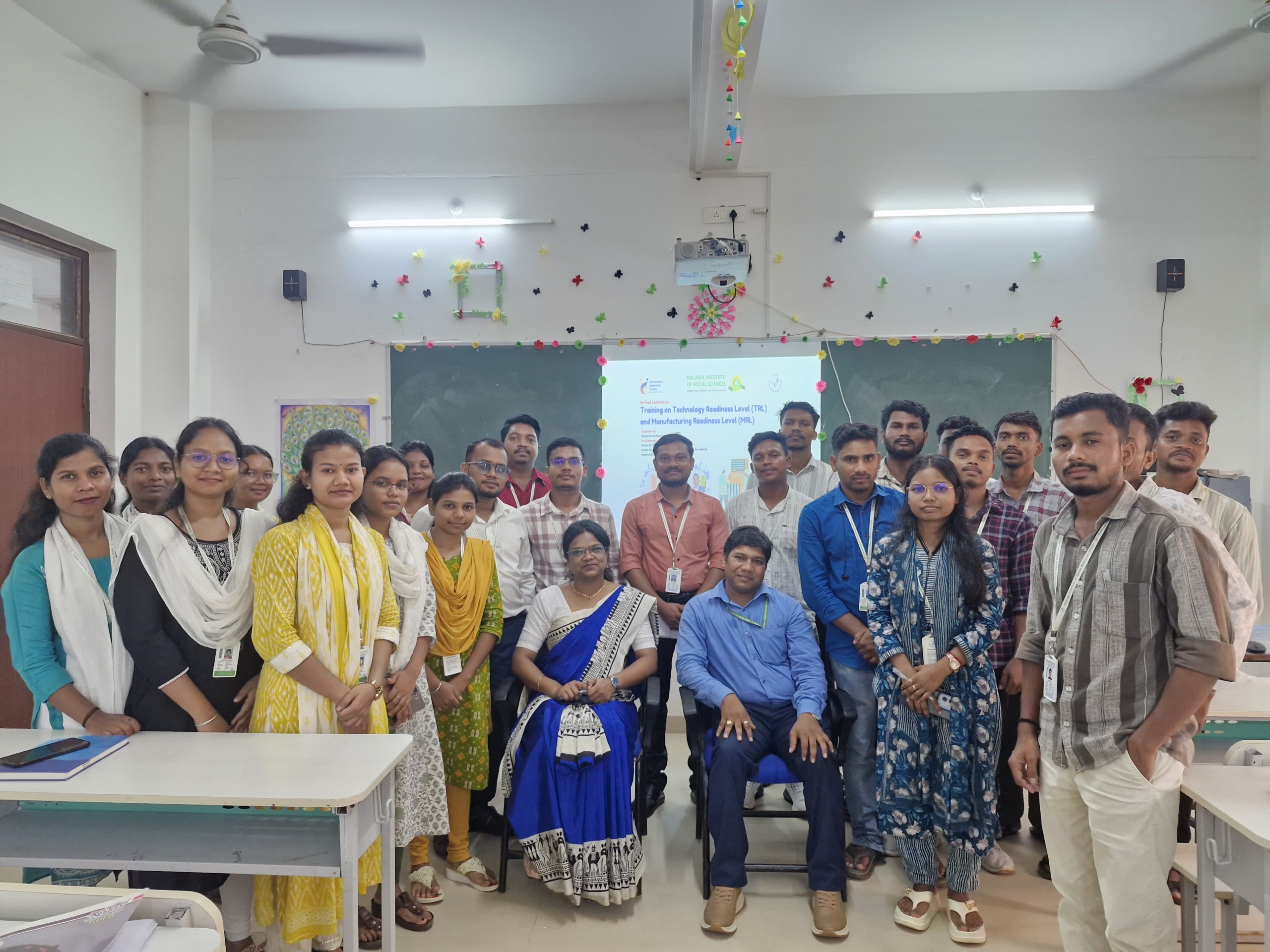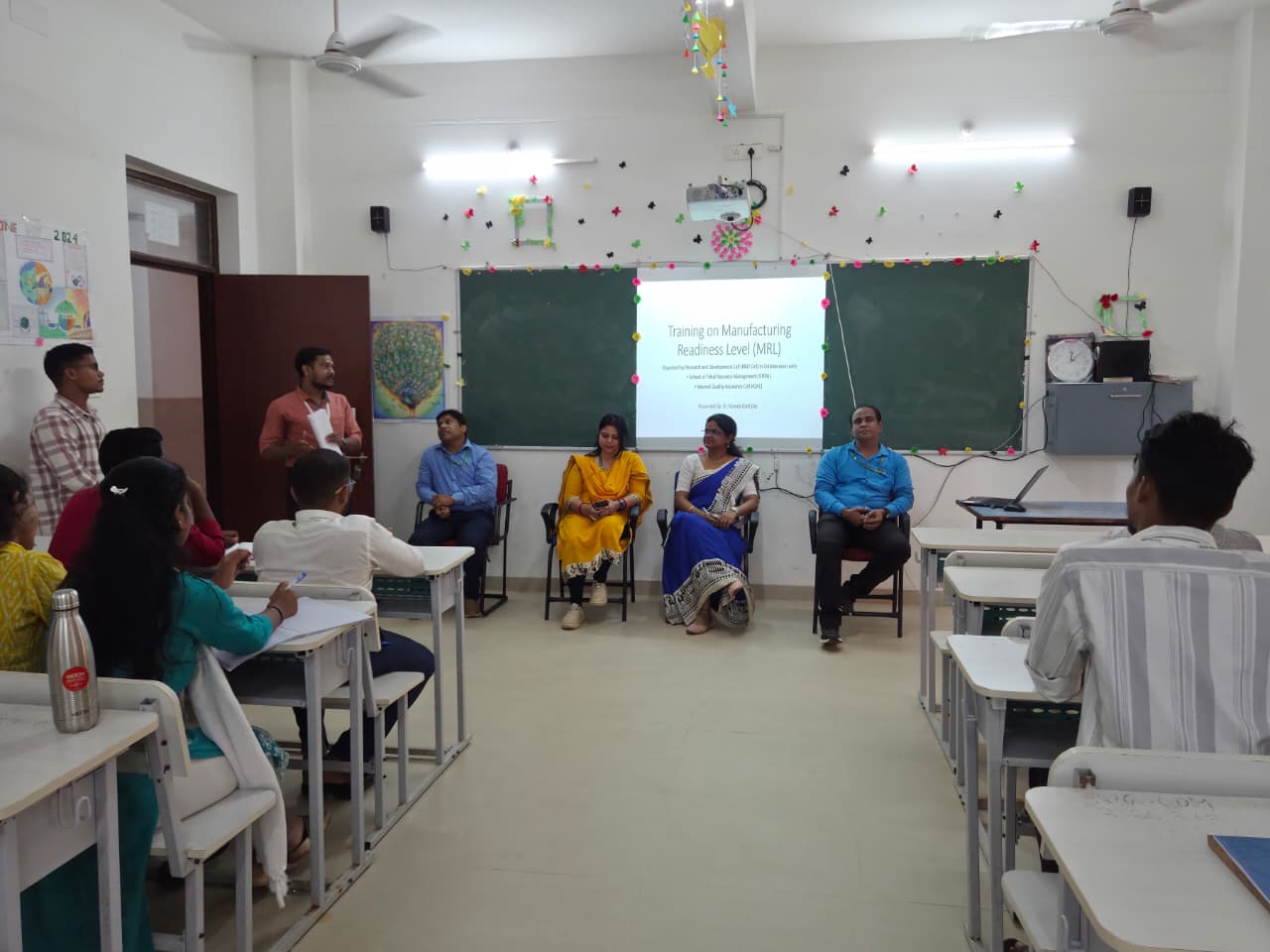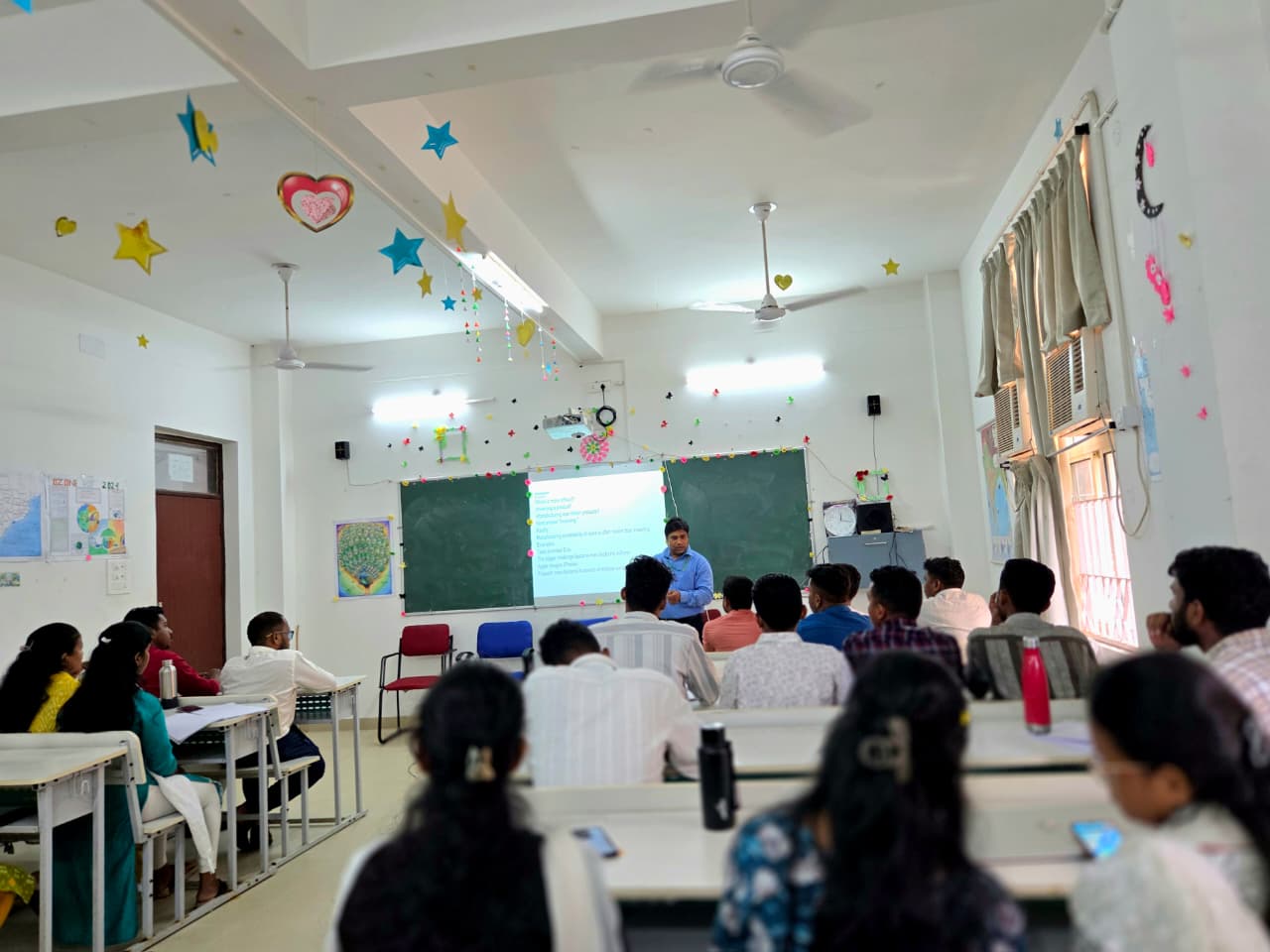
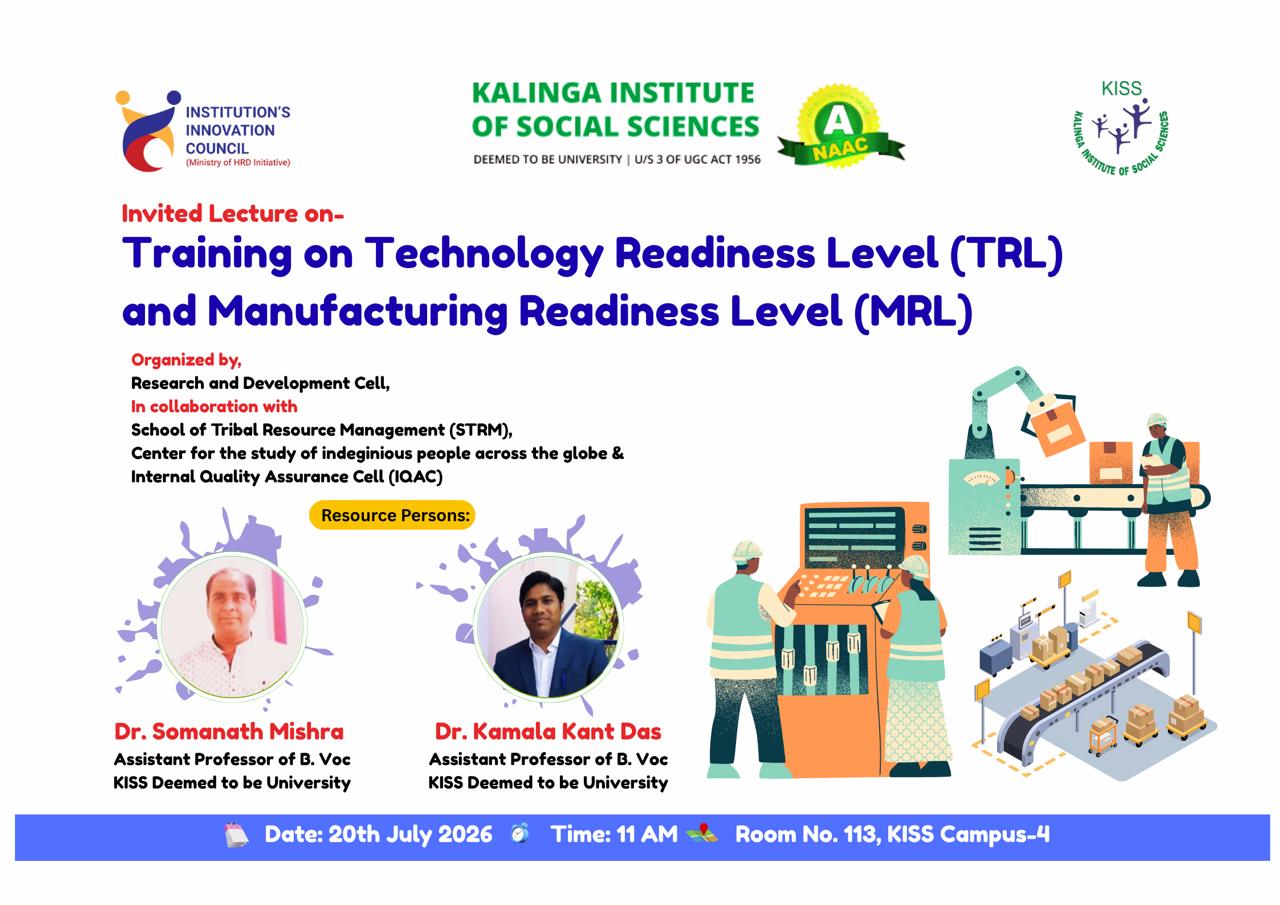
The Research and Development Cell (R&D Cell) of KISS Deemed to be University, Bhubaneswar, in collaboration with the School of Tribal Resource Management (STRM), Institution’s Innovation Council (IIC), and the Internal Quality Assurance Cell (IQAC), successfully organized a training programme on “Technology Readiness Level (TRL) and Manufacturing Readiness Level (MRL)” on 20th July 2026. The programme was organized with the objective of familiarizing participants with the complete innovation pathway—from conceptual research and prototype development to industrial-scale manufacturing and commercialization—while bridging the gap between academic research and industrial applications. The event witnessed enthusiastic participation from faculty members, research scholars, and students.
The formal programme commenced with an Inaugural Address by Dr. Arpana Premi Lina Oraon, Associate Professor, Dean of the School of Tribal Resource Management (STRM), and Director of the Research & Development Cell. In her address, she emphasized the growing importance of innovation-driven research in higher education institutions and highlighted the role of the R&D Cell in promoting quality research, entrepreneurship, technology transfer, and interdisciplinary collaborations. She encouraged research scholars to think beyond publications and work towards developing technologies that can directly benefit society. Following the inaugural address, the programme coordinators introduced the distinguished resource persons for the technical sessions: Dr. Somnath Mishra, Assistant Professor, Renewable Resources (B.Voc.), and Dr. Kamala Kant Das, Assistant Professor, B.Voc.
In the first technical session, Dr. Somnath Mishra delivered an informative and interactive deliberation on Technology Readiness Level (TRL), explaining it as a globally accepted framework used to evaluate technological maturity across nine progressive stages, from basic scientific principles (TRL 1) to a proven system in successful operation (TRL 9). Tracing the lifecycle of a research project through problem identification, experimental validation, prototype testing, reliability assessment, and operational deployment, Dr. Mishra underscored that academic research should aim to solve real-world problems and create socially and economically beneficial technologies rather than ending with publication alone.
The second technical session, led by Dr. Kamala Kant Das, focused on Manufacturing Readiness Level (MRL), which evaluates whether a technology can be manufactured efficiently, economically, and consistently across ten stages—from initial manufacturing feasibility (MRL 1) to full-scale, optimized commercial production (MRL 10). Differentiating between the two frameworks, he noted that while TRL answers whether a technology can work, MRL determines whether it can be manufactured successfully at scale. Dr. Das enriched the session with practical, real-life case studies, tracing the growth of a homemade pickle enterprise from small-scale kitchen preparation to an export-oriented manufacturing unit, alongside the transformation of tribal products from village-level production to global markets through value addition, standardized manufacturing, quality certification, branding, and market linkages.
The sessions were followed by an engaging interactive discussion where participants explored key themes including technology commercialization, Intellectual Property Rights (IPR), prototype development, start-up ecosystems, government innovation support, and research funding opportunities. Coordinated by Mr. Laxman Dora and Mr. Santosh Kandamaka, Ph.D. Scholars of STRM, along with Dr. Arpana Premi Lina Oraon, the programme concluded with formal Votes of Thanks proposed by Dr. Monalisha Mishra, Assistant Professor and Head, Department of Geography, and Mr. Durjan Sabar, Ph.D. Scholar, STRM. The training programme successfully reinforced the university’s commitment to fostering translational research, tribal entrepreneurship, and sustainable societal development.