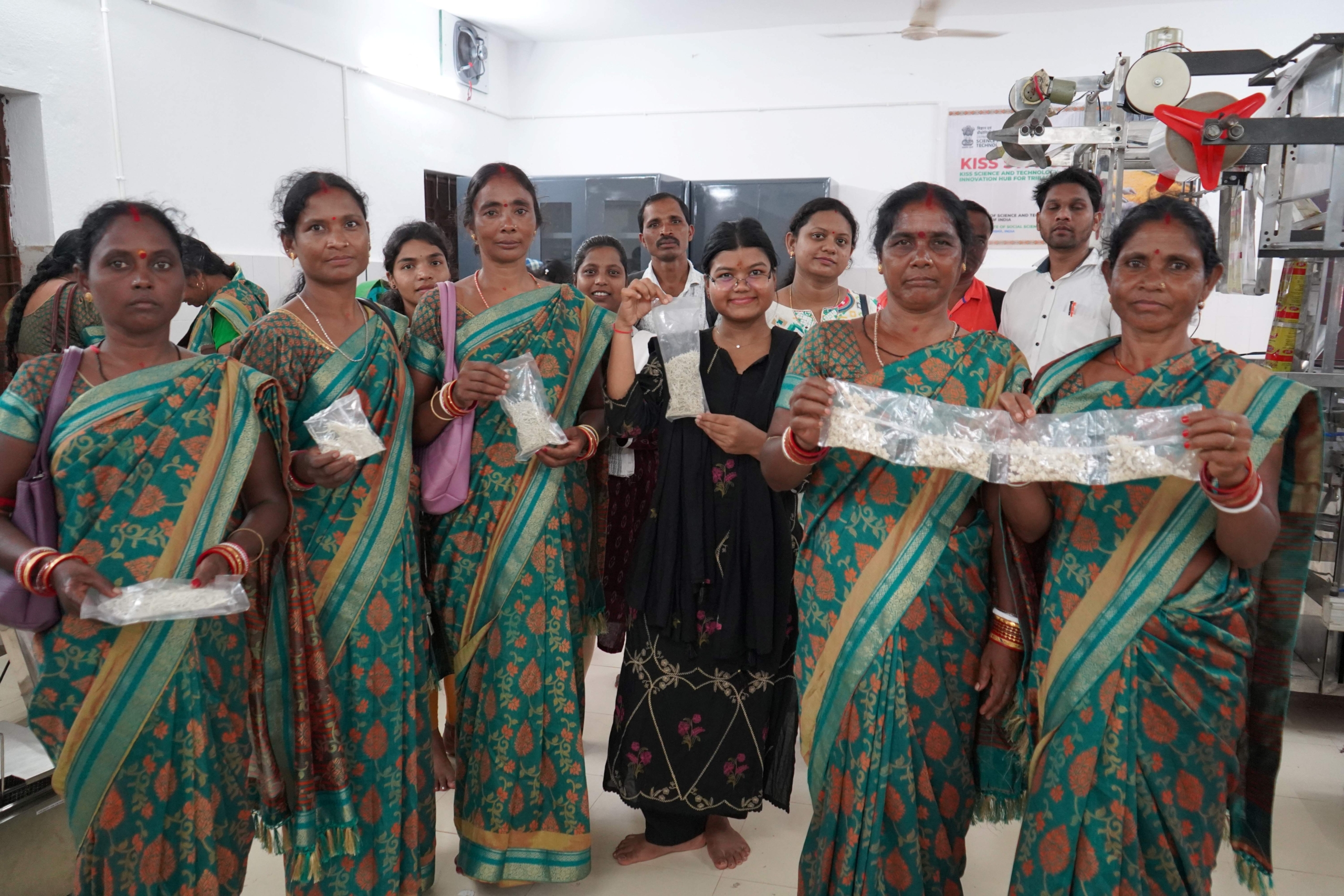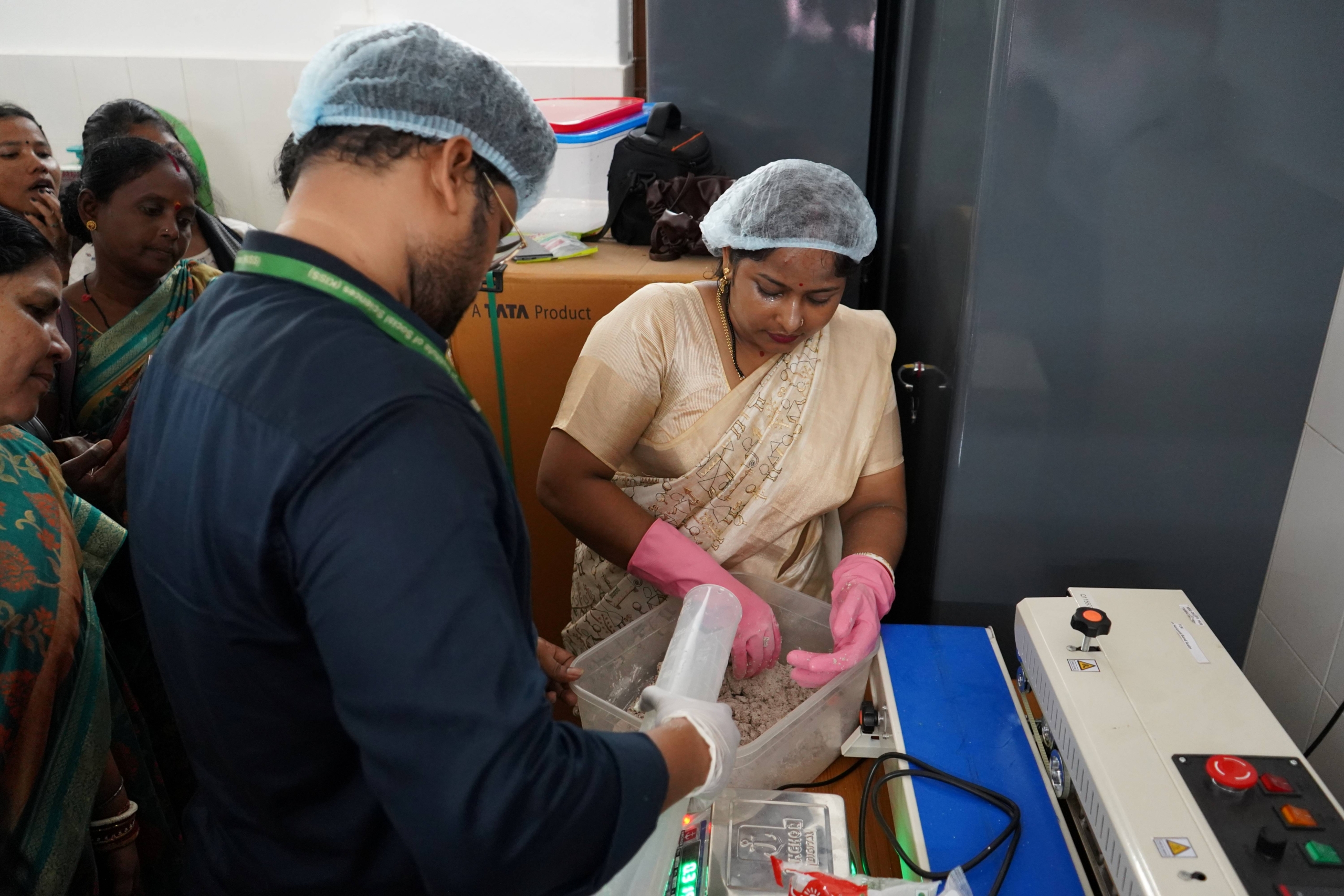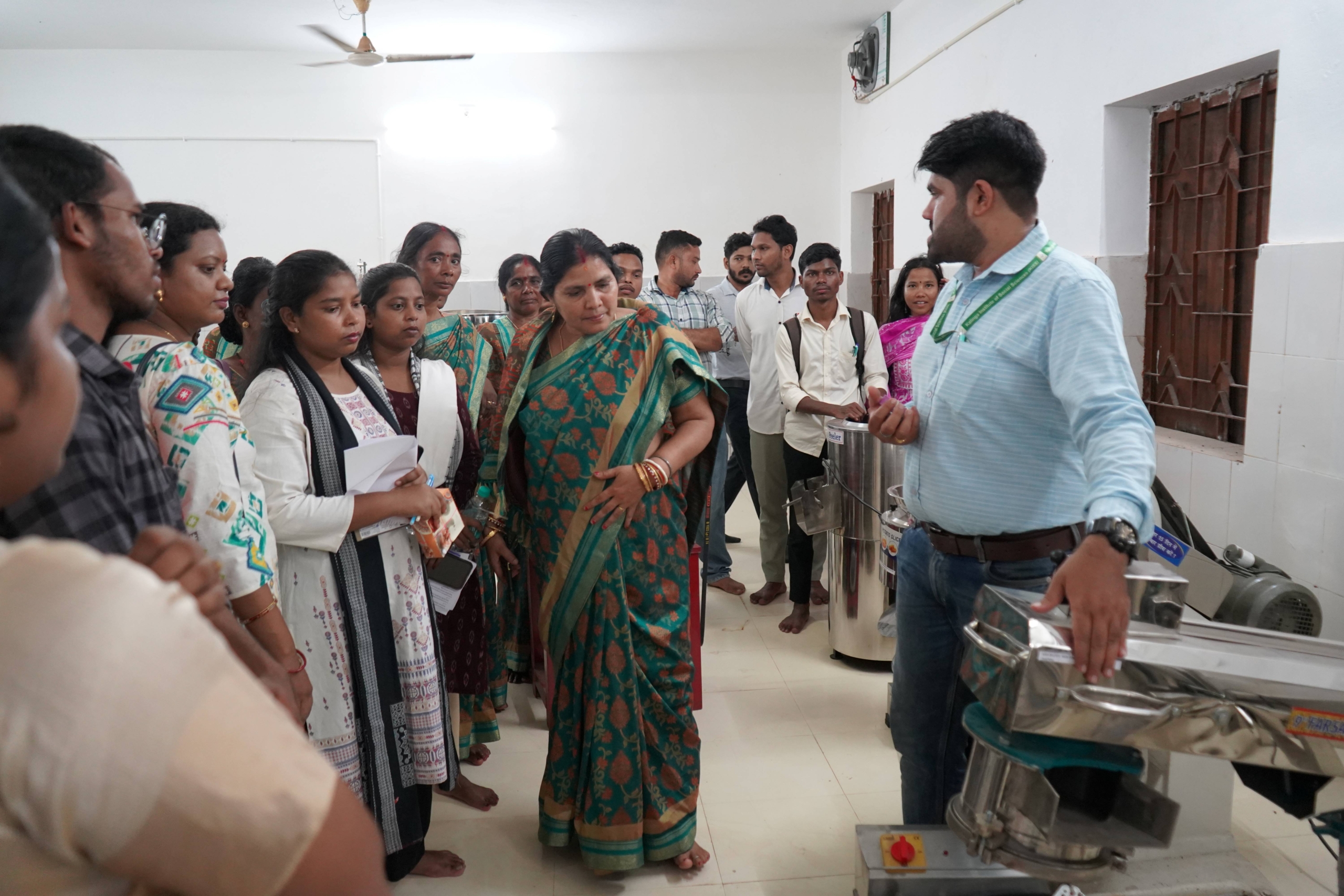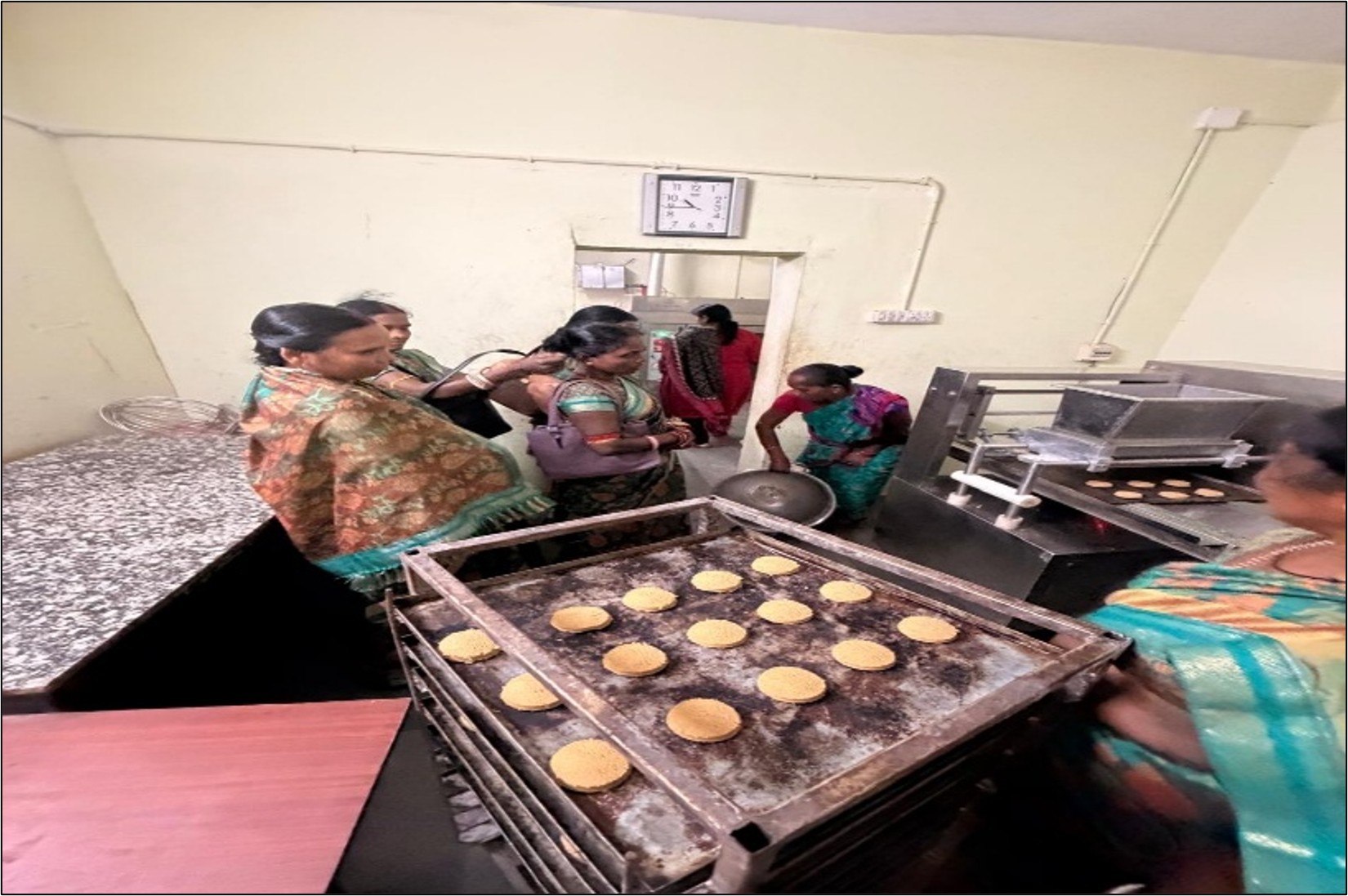
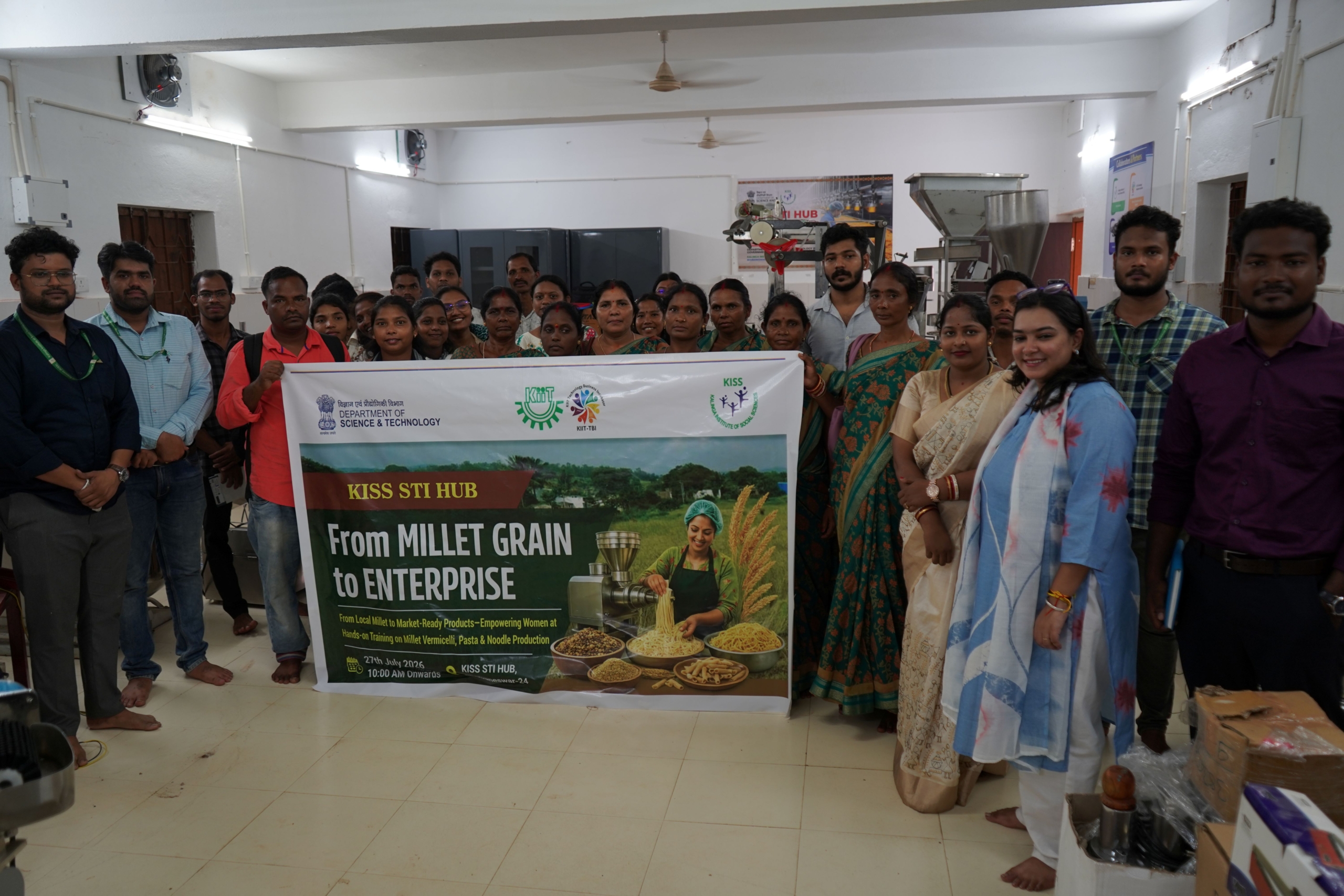
The KISS Science and Technology Innovation (STI) Hub for Tribals Project at KISS-DU (funded by the Department of Science and Technology (DST), Government of India) successfully organized one-day hands-on training programme titled “Millet-Based Pasta and Vermicelli Processing, Quality Control & Entrepreneurship” at the Food Processing Laboratory, KISS & KIIT STI Hub for Tribals on 27th July 2026. The programme was conducted in collaboration with the key partner – KIIT-TBI.
The objective of the programme was to empower participants with practical skills in millet-based food processing, quality control, and entrepreneurship development. The training focused on providing comprehensive hands-on experience in the production of millet pasta and vermicelli, covering the entire value chain from raw material selection to packaging, quality assurance, and market linkages. The initiative aimed to promote millet-based enterprises among Self-Help Groups (SHGs), Farmer Producer Organizations (FPOs), rural entrepreneurs, students, start-ups, and food processing professionals, contributing to livelihood generation, nutritional security, and sustainable utilization of millets.
A total of 23 beneficiaries actively participated in the training sessions, gaining both theoretical knowledge and practical exposure to millet processing and enterprise development.
Inaugural Session – Registration and Introduction (09:30 – 10:00 AM)
The programme commenced with the registration of participants, followed by the inaugural session introducing the KISS STI Hub project, its objectives, ongoing activities, and impact areas. The training objectives, expected outcomes, and schedule of the programme were presented to provide participants with an overview of the day’s learning activities.
Session I – Introduction to Millets, Nutritional Benefits, Market Potential, and Government Support (10:00 – 10:45 AM)
This session provided a comprehensive introduction to millets, emphasizing their nutritional significance, health benefits, and commercial potential. The participants gained insights about Different millet varieties (Finger Millet, Pearl Millet, Sorghum, Foxtail Millet, Little Millet, Barnyard Millet, etc.), Nutritional superiority of millets over conventional cereals, Emerging market opportunities for millet-based food products and Government initiatives and support schemes for millet processing and entrepreneurship, including the National Millet Mission and POSHAN Abhiyaan.
Tea Break (10:45 – 11:00 AM)
Session II – Raw Material Selection, Flour Preparation, Product Formulation, and Processing Techniques (11:00 AM – 12:15 PM)
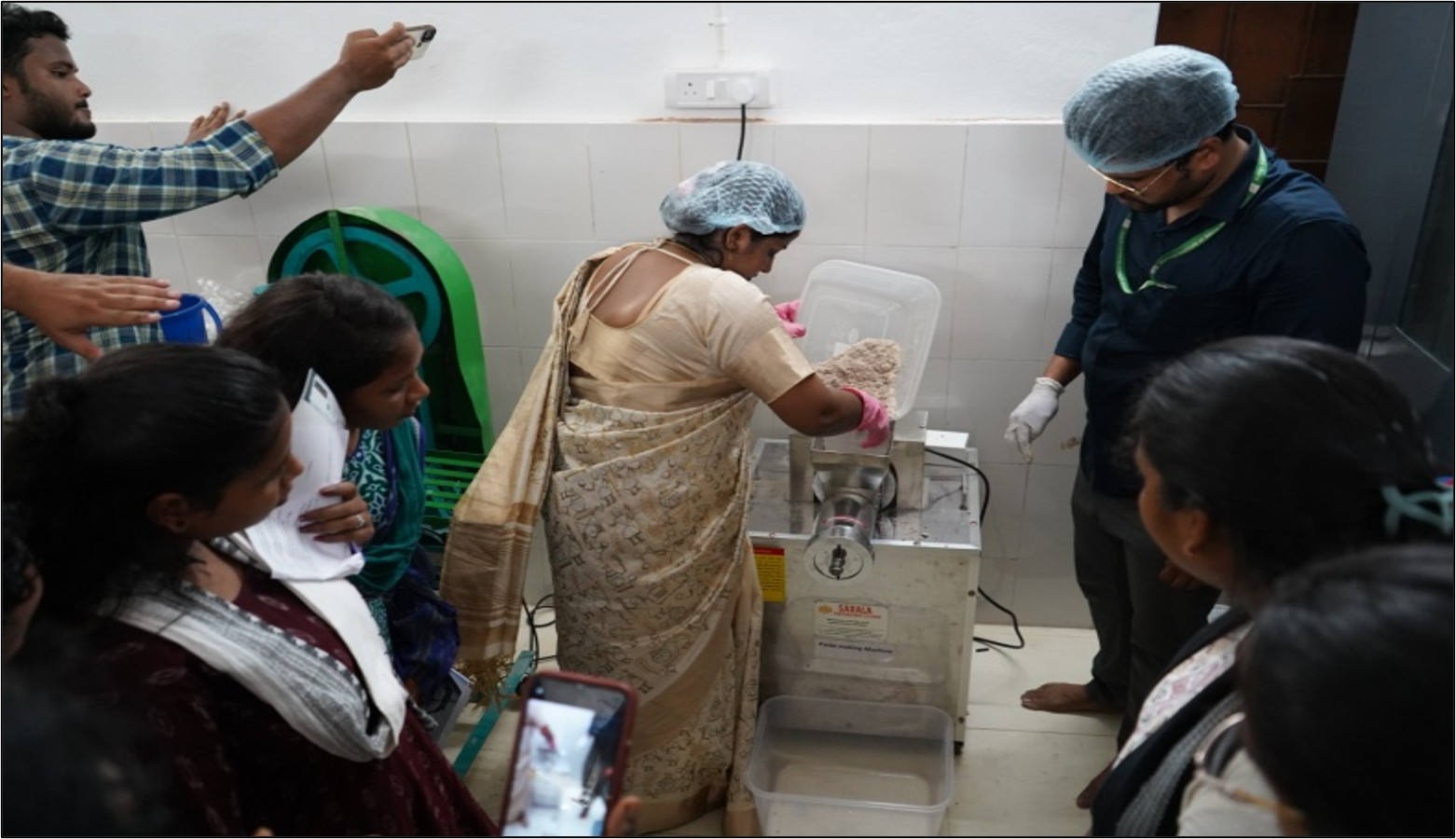
Conducted by the Key Resource Person, Mrs. Sarita Biswal, this practical session focused on the essential pre-processing and production steps required for developing quality millet-based products. Participants gained insights into Selection of suitable millet grains, Cleaning, grading, and flour preparation, Ingredient formulation and recipe standardization, Dough preparation and processing techniques and Moisture management for improved product quality.
Session III – Quality Control, Packaging, Food Safety, FSSAI Compliance, and Entrepreneurship Opportunities (12:15 – 01:30 PM)
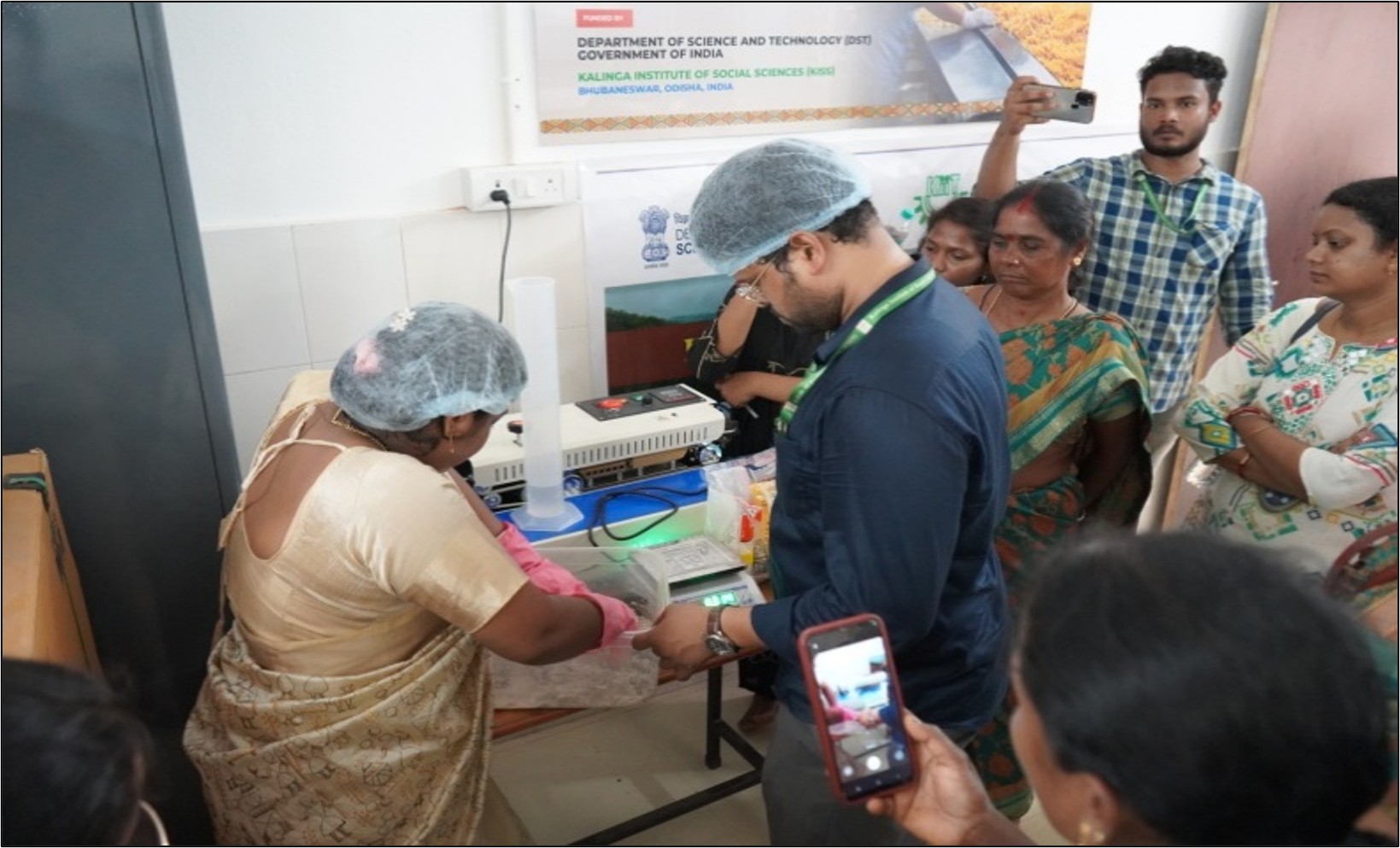
This session emphasized post-production quality assurance and enterprise development. Some of the thematic areas were Quality control parameters for millet-based products, Good Manufacturing Practices (GMP) and Good Hygiene Practices (GHP), Packaging materials, labelling, and storage techniques, FSSAI licensing and regulatory requirements and Costing, pricing, branding, government support schemes, and market linkage opportunities for millet-based enterprises.
Lunch Break (01:30 – 02:15 PM)
Session IV – Interactive Discussion, Business Planning, and Preparation for Industrial Exposure Visit (02:15 – 03:15 PM)
An interactive session was conducted focusing on entrepreneurship development, business planning, challenges in millet processing, and marketing strategies. Participants interacted with experts to clarify technical and commercial aspects of establishing millet-based food enterprises. The session concluded with instructions and briefing for the industrial exposure visit.
Programme Wrap-up (03:15 – 03:30 PM)
A brief concluding session was held to summarize the key learning outcomes, collect participant feedback, and provide guidance for the industrial visit.
Industrial Exposure Visit to Chocolaca Unit, Nayapalli (03:30 PM Onwards)
Following the technical sessions, participants visited the Chocolaca Unit, Nayapalli, for an industrial exposure programme. The visit was organized to provide practical insights into the commercial production of millet-based cookies and millet muffins. During the visit, participants gathered knowledge on Selection and preparation of millet flour for bakery applications, Formulation and mixing of ingredients for millet cookies and muffins, Dough and batter preparation techniques, Commercial baking processes and equipment operation, Cooling, packaging, labelling, and quality assurance practices, Hygiene standards and Good Manufacturing Practices followed in a commercial bakery and Marketing strategies and business opportunities for millet-based bakery products.
The exposure visits enabled participants to understand the transition from laboratory-scale processing to commercial-scale production and provided valuable practical knowledge on establishing millet-based bakery enterprises, particularly in the production of millet cookies and millet muffins.
Hands-on Practical Components
Participants gained hands-on experience in cleaning and grading of millets, Milling and flour preparation, Dough formulation and optimization, Production of millet pasta, Production of millet vermicelli, Drying and moisture management, Packaging and sealing, Quality evaluation and Cost calculation and pricing.
Outcome This programme witnessed participation from Mayurbhanj, Kandhamal, Kendujhar, Raygada,Nuapada. A total of 23 beneficiaries benefited from the programme. The major focus areas included Millet processing, pasta and vermicelli production, quality control, food safety, entrepreneurship development, and market linkages. Enhanced practical skills in millet-based food processing among participants; increased awareness of nutritional benefits and market potential of millets; strengthened capacity to establish micro-enterprises for millet product manufacturing; promotion of sustainable utilization of millets for livelihood generation and nutritional security are some of the impact achieved.
The session concluded with special thanks to Mrs. Sarita Biswal for serving as the Key Resource Person and delivering comprehensive hands-on training sessions on millet-based pasta and vermicelli processing. The organizers also extend gratitude to KIIT-TBI for their continued collaboration and support, and to all participants for their enthusiastic participation and engagement.