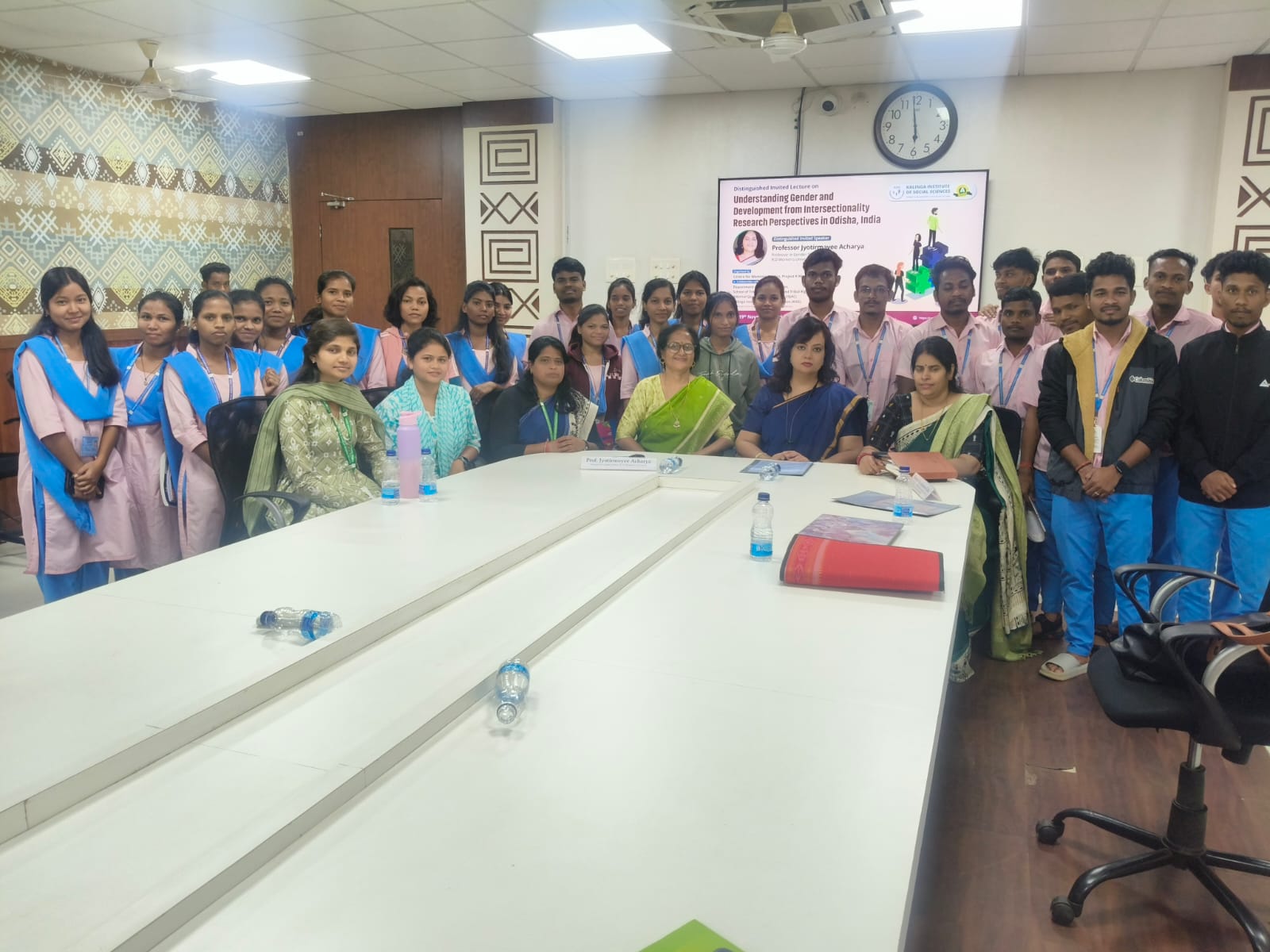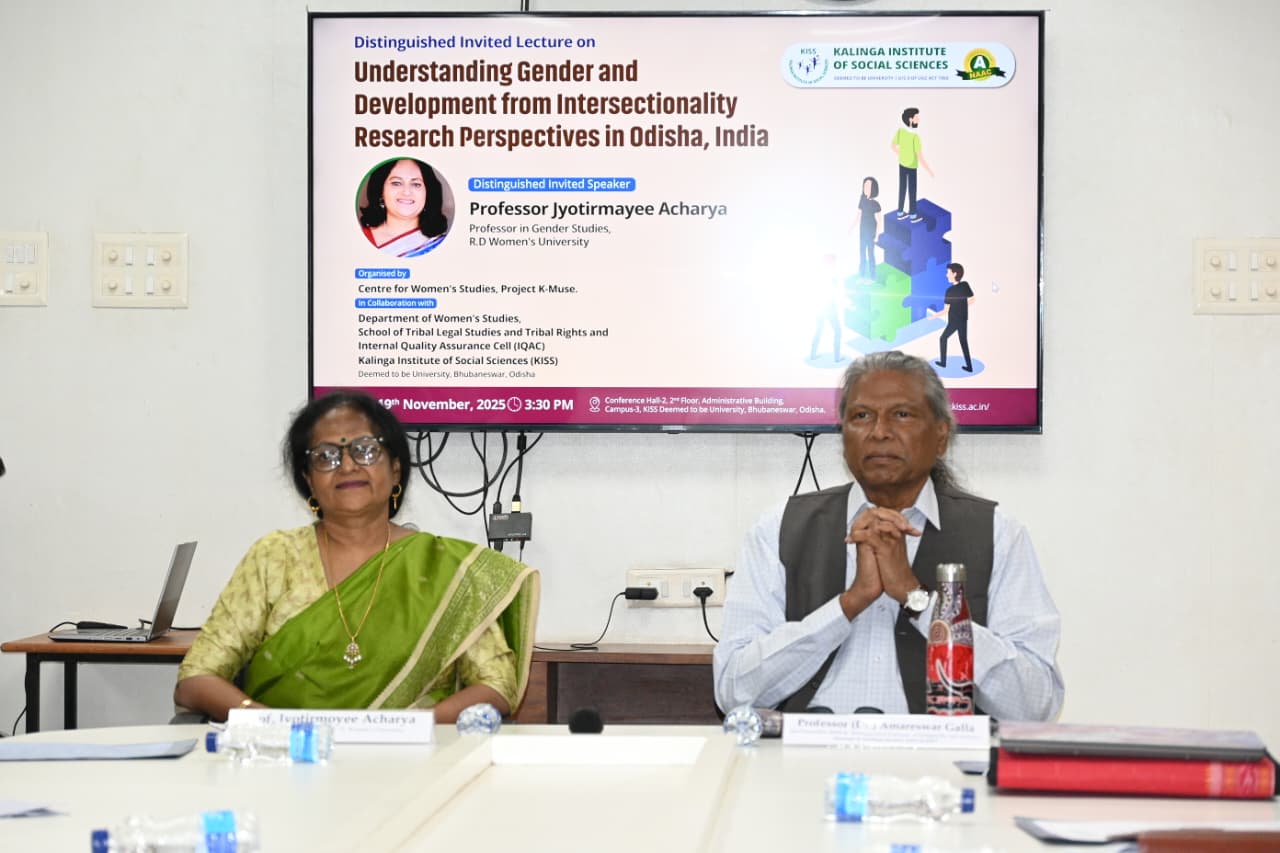
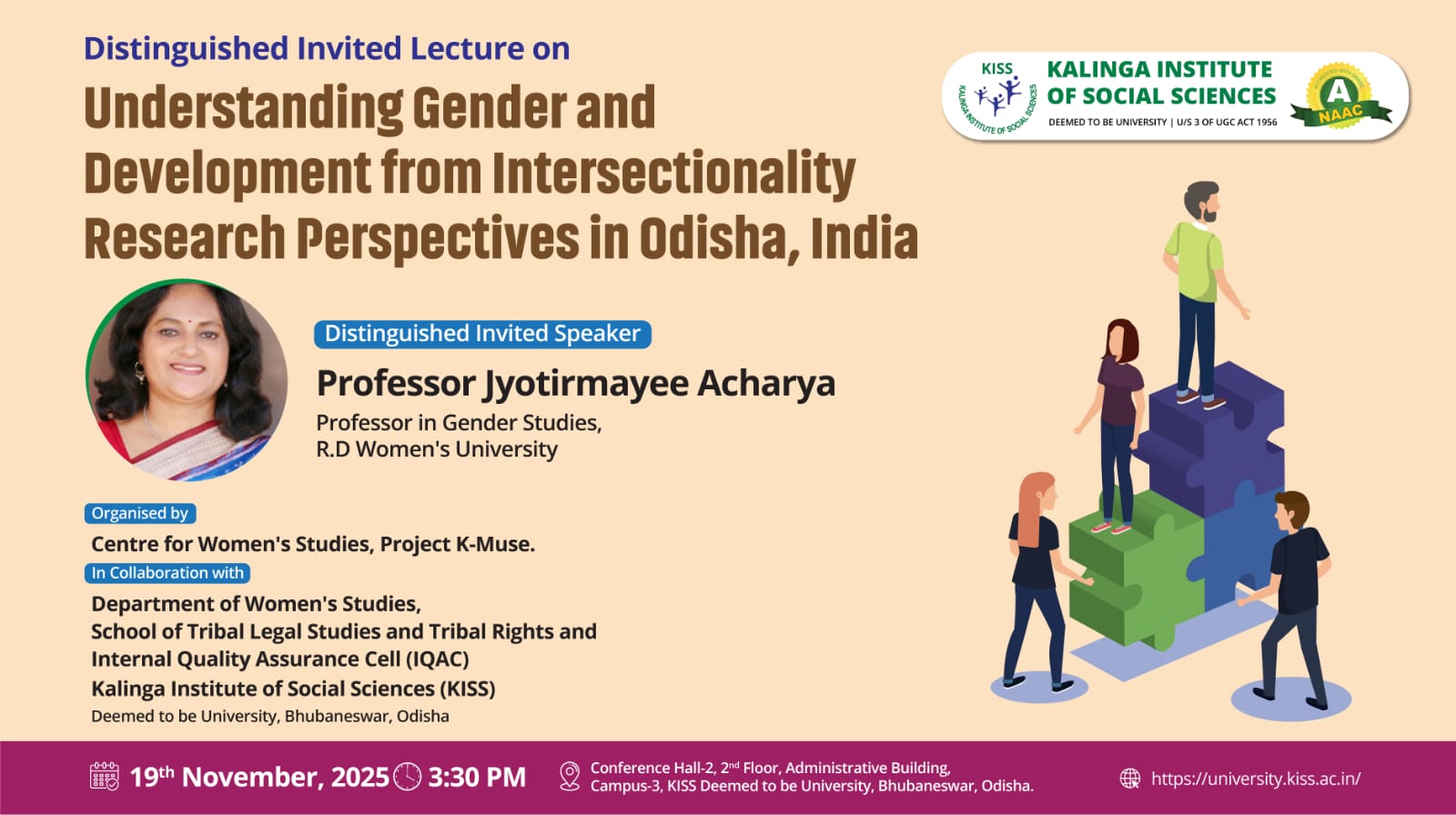
The Distinguished Invited Lecture on “Understanding Gender and Development from Intersectionality Research Perspectives in Odisha, India” was organized by Centre for Women’s Studies, Project K-Muse in collaboration with Department of Women’s Studies, School of Tribal Legal Studies and Tribal Rights (STLSTR) and Internal Quality Assurance Cell (IQAC) KISS-DU on 19th November 2025.
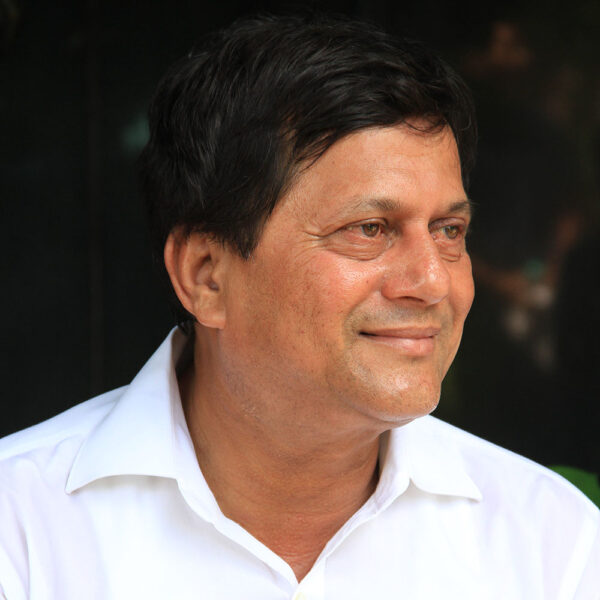
Dr Pragyan Mohanty, Dean, STLSTR and Centre Head, Centre for Women’s Studies, KISS-DU, formally introduced the esteemed guest and emphasised the relevance of intersectionality studies in strengthening gender equality in Odisha. Following this, the inaugural address by Prof. Amareswar Galla, Pro-Chancellor, KISS-DU, highlighted the growing importance of gender research in contemporary development discourse.
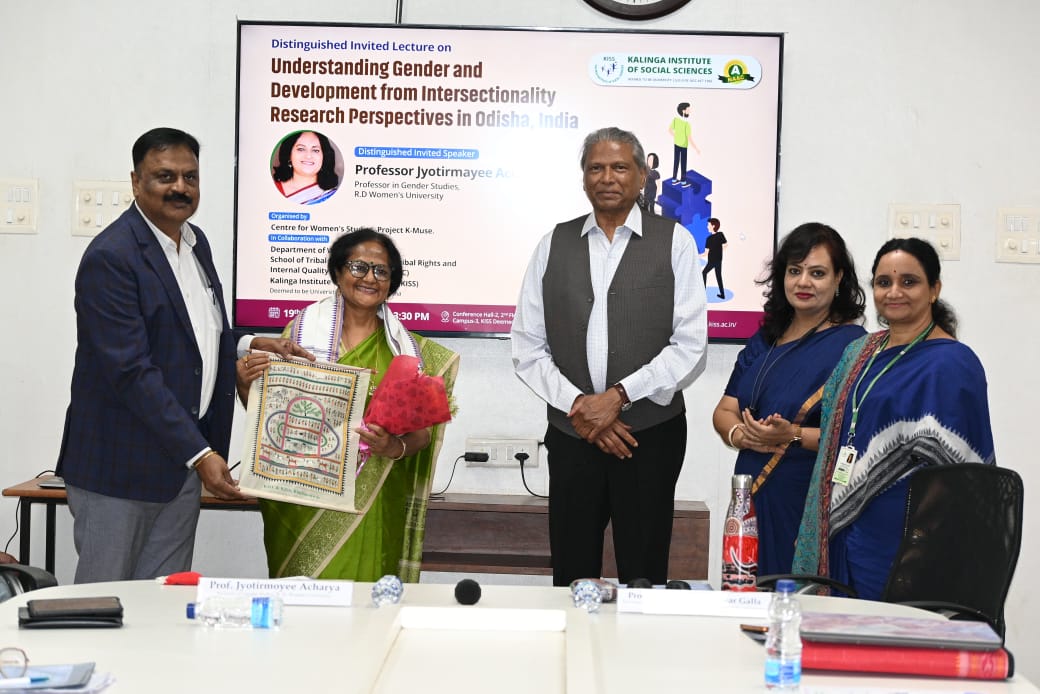
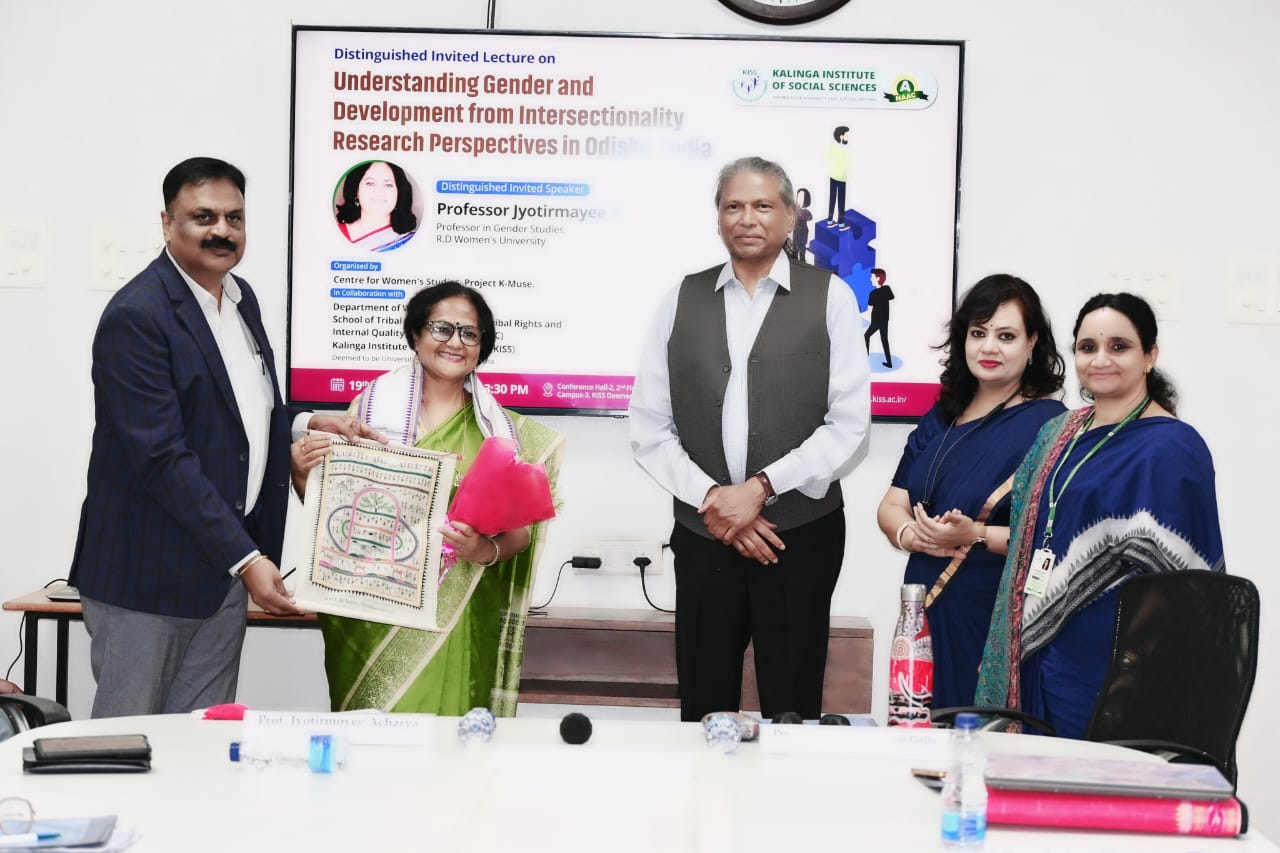
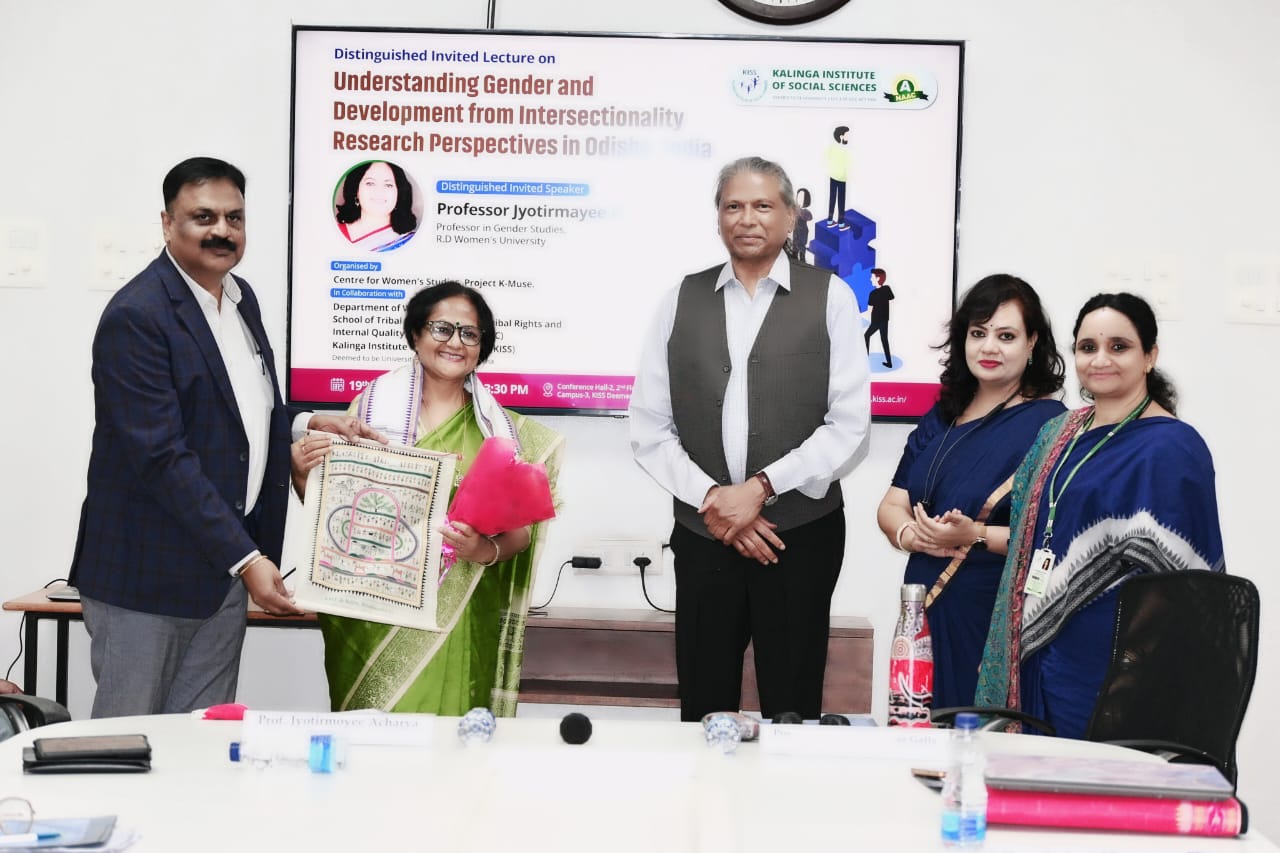
The felicitation of the guest was conducted as of institutional appreciation. Dr. Snigdharani Panda, Director IQAC and Chairperson, Council of Deans, KISS-DU addressed the audience and threw light on the institutional role in mainstreaming gender sensitisation within academic spaces in KISS-DU.
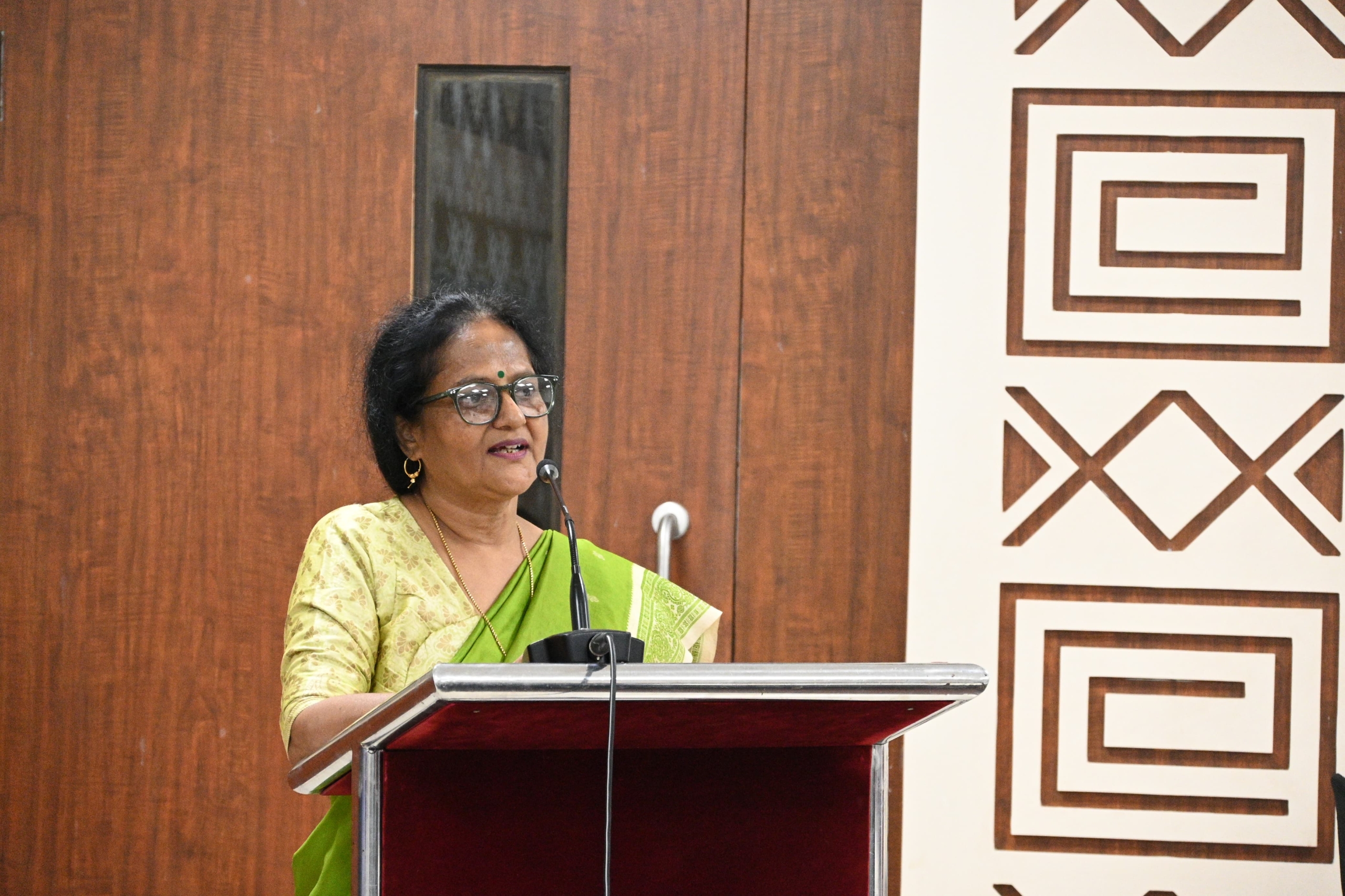
The keynote lecture was delivered by Professor Jyotirmoyee Acharya, Professor of Gender Studies (Rtd.), R.D. Women’s University, Bhubaneswar. She emphasised that gender is a social construct and not static but continually evolving due to positive discrimination measures and social change. She highlighted that gender inequality persists across various domains, including in care work, such as childcare, household responsibilities and leadership roles. She emphasised that not all women or men are inherently gender-sensitive and that sensitivity must be learned and practised in society.
Professor Acharya elaborated on aligning with SDG 5 (Gender Equality) and the need to ensure dignity and rights in areas such as local governance, the prevention of child marriage, and reducing labour exploitation. She pointed out that historically, society has not fully recognised the value of women’s contributions to the core economy, advocating for acknowledgement of unpaid domestic and caregiving work.
Professor Acharya also provided statistical insights on resource ownership, noting that only 13% of women in India and 4% in Odisha possess land rights. She discussed global gender gap indicators related to economic participation, health, education, and political involvement, and shared concerns regarding multidimensional poverty and low control over resources.
The speaker emphasised that policies should not isolate women; instead, development must consider power relations, intersectional social identities, and structural complexities across workplaces and communities.
A Question-and-Answer session followed the deliberation, during which students interacted with the speaker and sought clarifications on gender mainstreaming and the empowerment of vulnerable women.
The programme concluded with a formal Vote of Thanks by Dr. Babita Das, Head of the Department of Sociology, STLSTR appreciating the valuable insights and participation of the dignitaries and audience. Mrs. Saismita Swain, faculty, Department of Social Work, STLSTR coordinated the entire event smoothly.