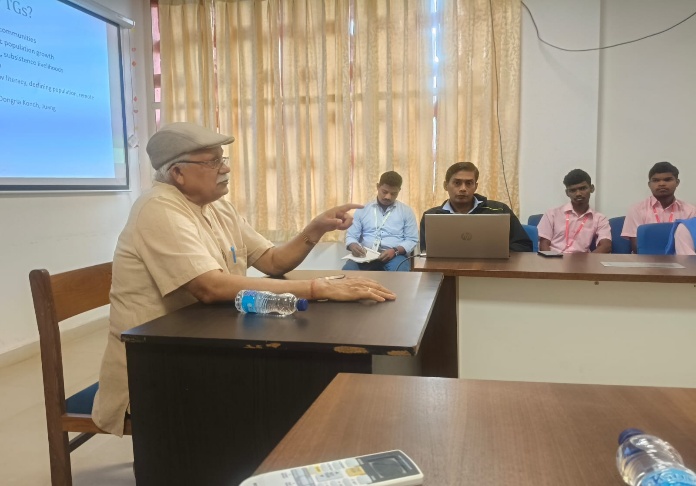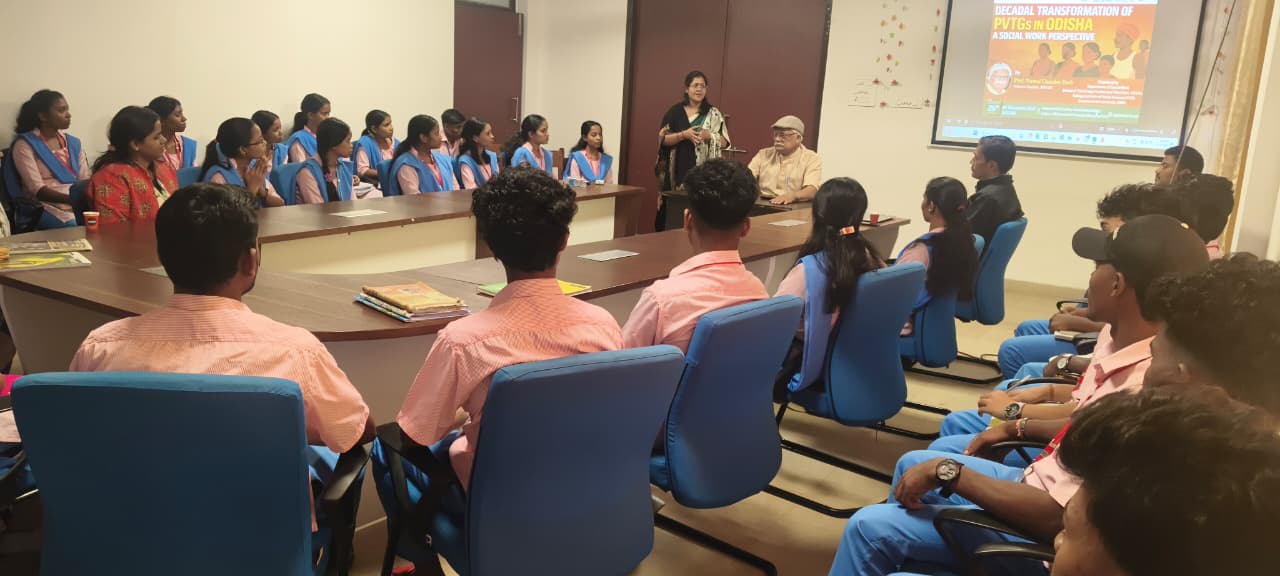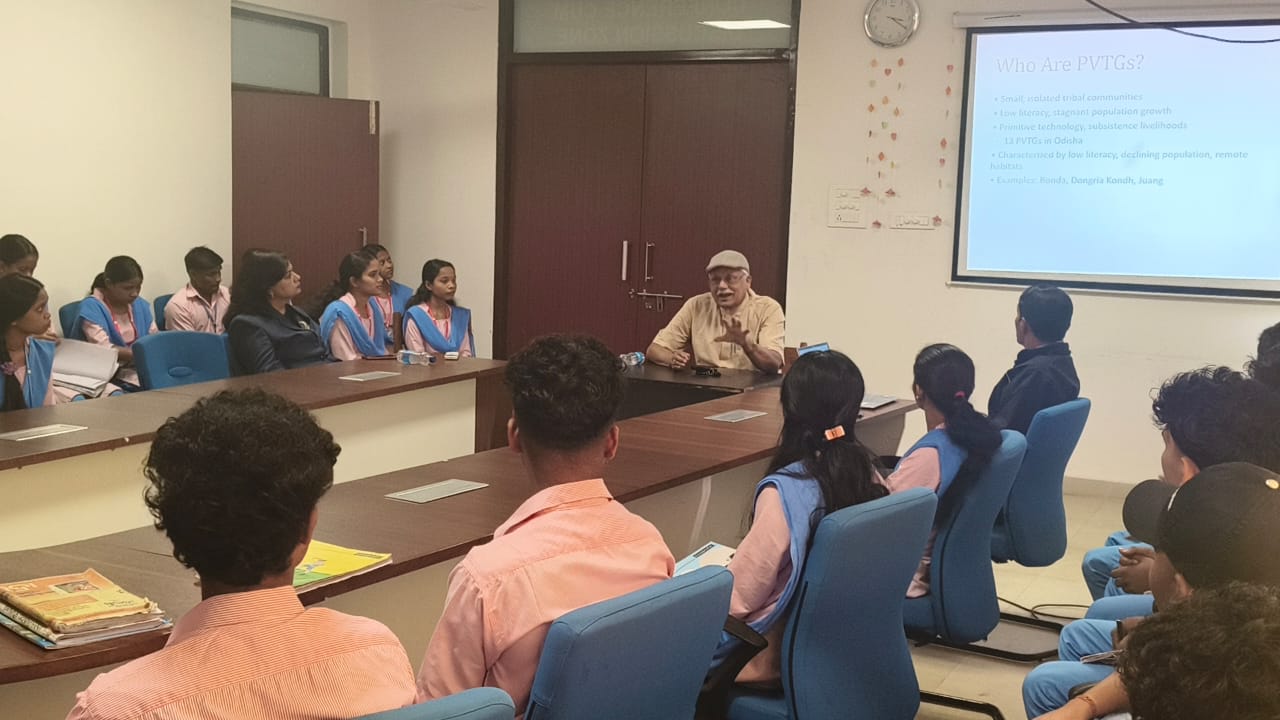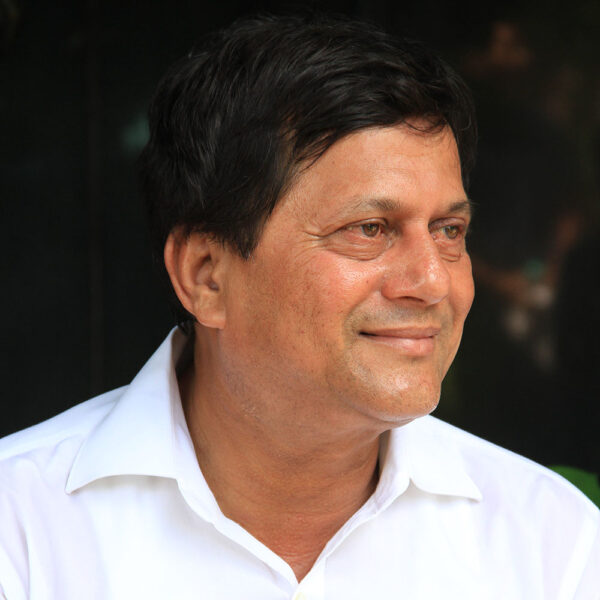
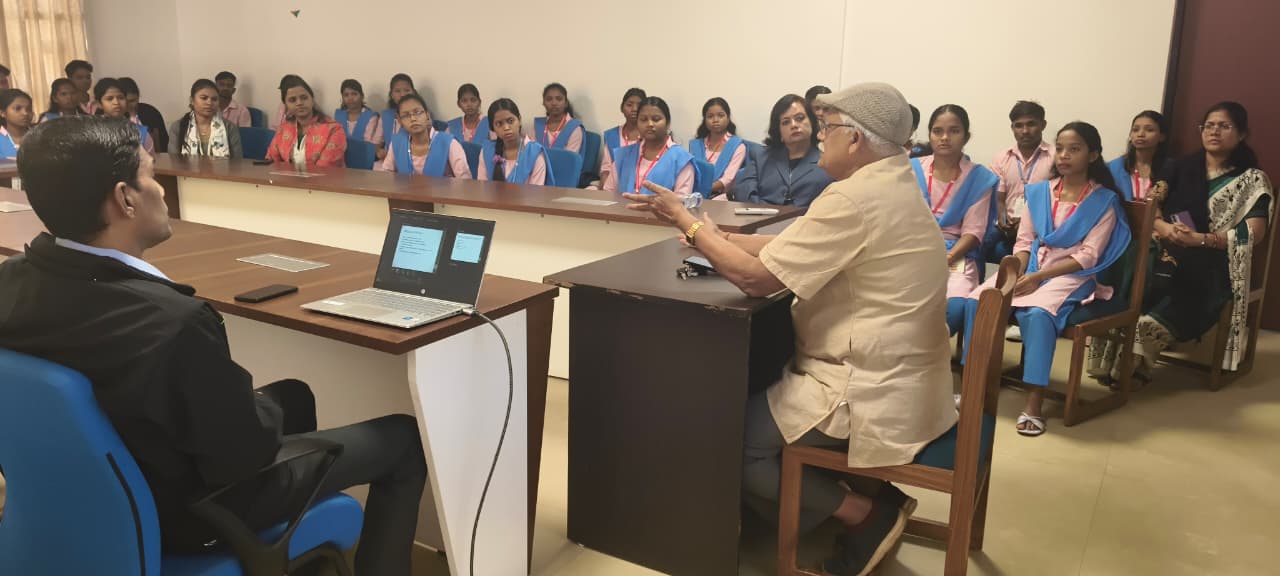
The Department of Social Work, School of Tribal Legal Studies and Tribal Rights, Kalinga Institute of Social Sciences (KISS), organised a special lecture on “Decadal Transformation of Particularly Vulnerable Tribal Groups (PVTGs) in Odisha” on 27 November 2025 at the Library Conference Hall. The session was delivered by Prof. N. C. Dash, Professor Emeritus at KISS-DU, an eminent scholar in tribal studies, who shared insightful perspectives on the socio-economic transitions among PVTGs over the last decade.
The programme began with a guest address by Dr. Pabitra Dash, Head of the Department, Social Work who welcomed the resource person, faculty members, and students. He highlighted the relevance of understanding PVTG issues in the context of social work education and practice. The event was attended by all the faculty members along with Dr. Pragyan Mohanty and Dr. Sasmita Padhi, Ms. Saismita Swain, along with UG and PG students of the Social Work Department.
During his lecture, Professor Dash elaborated on key aspects of PVTG development, including changes in demography, education, health, nutrition, livelihoods, governance, and cultural preservation. Drawing insights from the “Decadal Transformation of PVTGs in Odisha,” Professor Dash emphasized the continued challenges faced by PVTGs, including geographic isolation, climate vulnerability, limited access to higher education, and the need for culturally sensitive, community-led interventions.
He enriched the session by sharing several of his own field experiences, using them as concrete illustrations of the decadal transformation among the PVTGs across the social, economic, health, educational, livelihood, and governance domains. Through these examples, he explained how real changes are taking place at the grassroots level. He also elaborated on the significant contributions of the Government and NGOs in empowering PVTG communities through targeted programmes, participatory development. Furthermore, he highlighted the crucial role played by KISS in expanding educational opportunities for the Scheduled Tribe population and in fostering long-term social transformation. He further narrated how social work perspectives, particularly empowerment, participation, and cultural sensitivity, are essential for the sustainable development of PVTG communities.
The programme concluded with a Vote of Thanks delivered by Ms. Saismita Swain, who expressed gratitude to the resource person, faculties, and students for making the session meaningful. The session enriched the academic understanding of students and reinforced the importance of evidence-based and culturally rooted social work practice.