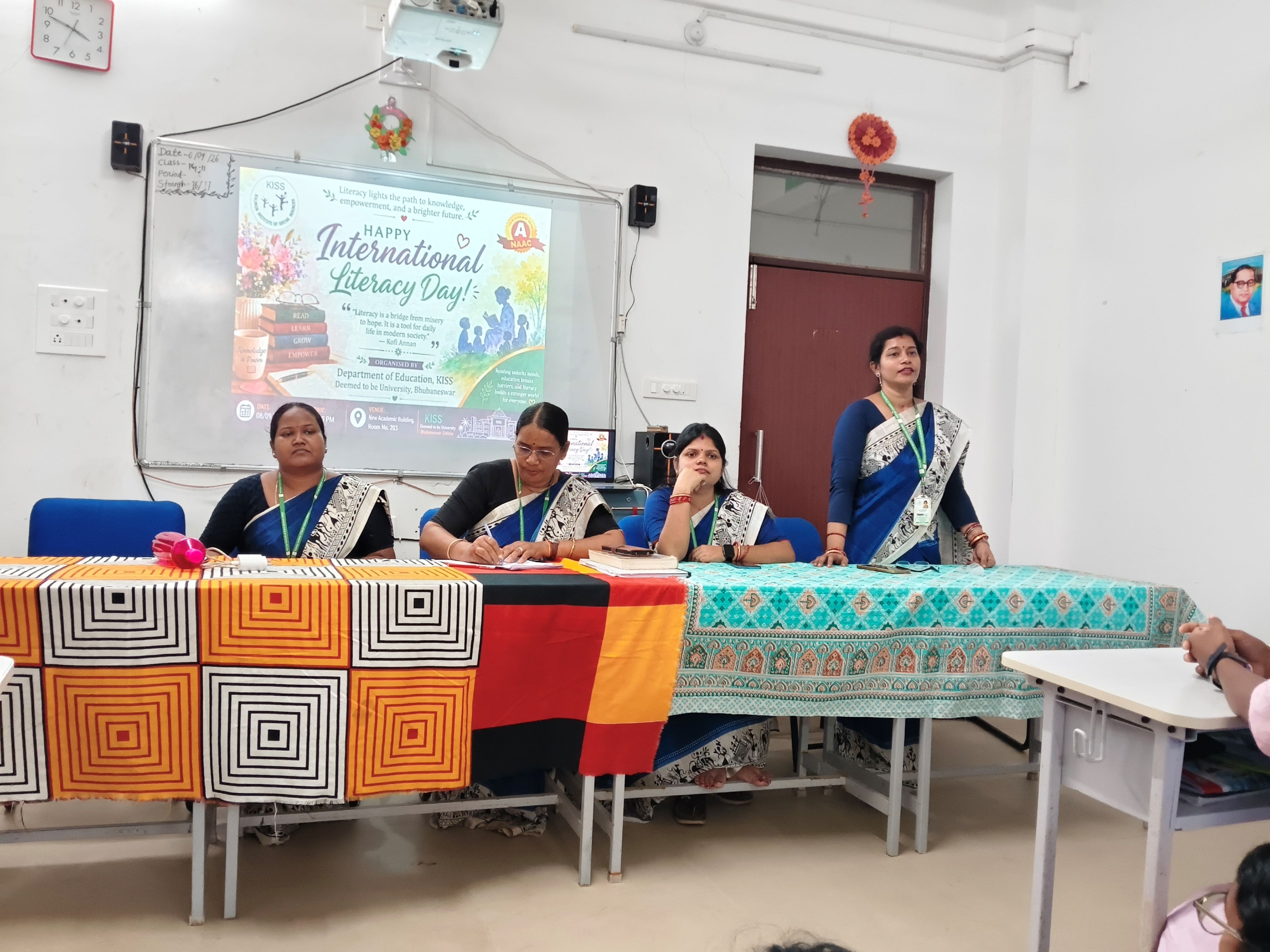
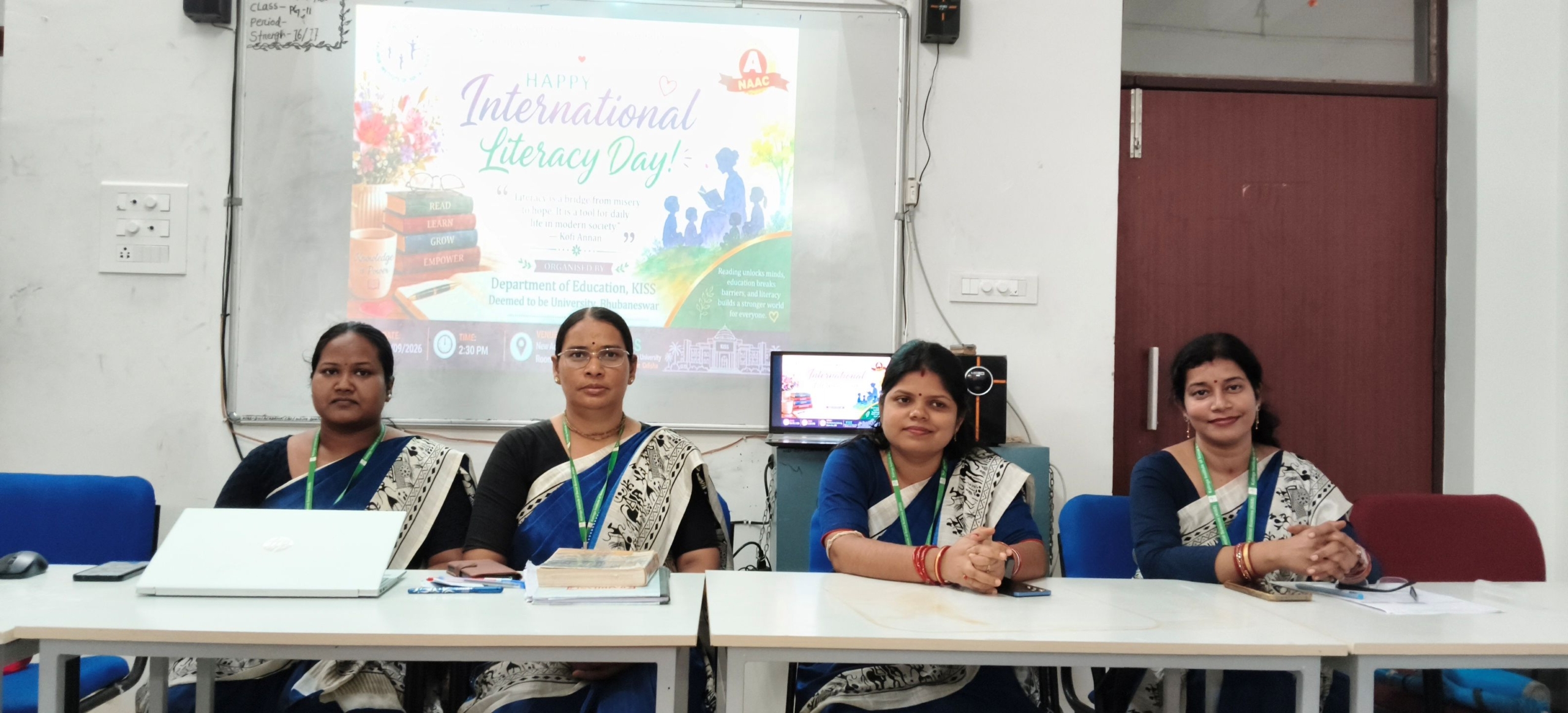
The Department of Education, School of Tribal Heritage and Tribal Indology (STHTI), observed International Literacy Day on 8th September 2026 with enthusiasm and active participation from the faculty members and Graduate and Postgraduate students of the Department. The programme was organised with the objective of creating awareness among students about the importance of literacy and its significant role in individual empowerment, social development, equality and lifelong learning.
The programme commenced with a Welcome Address by Ms. Saswati Jena, Head, Department of Education, who extended a warm welcome to all the faculty members and students. In her address, she highlighted the significance of observing International Literacy Day and emphasised that literacy extends beyond the basic ability to read and write. She explained its importance in developing knowledge, awareness, confidence and the ability to participate meaningfully in society.
Speaking in turn, Ms. Guddi Saktinanda, Faculty, Department of Education, addressed the students and shared her views on the importance of literacy and education. She emphasised the role of literacy in empowering individuals, promoting social inclusion and building an informed, responsible and progressive society.
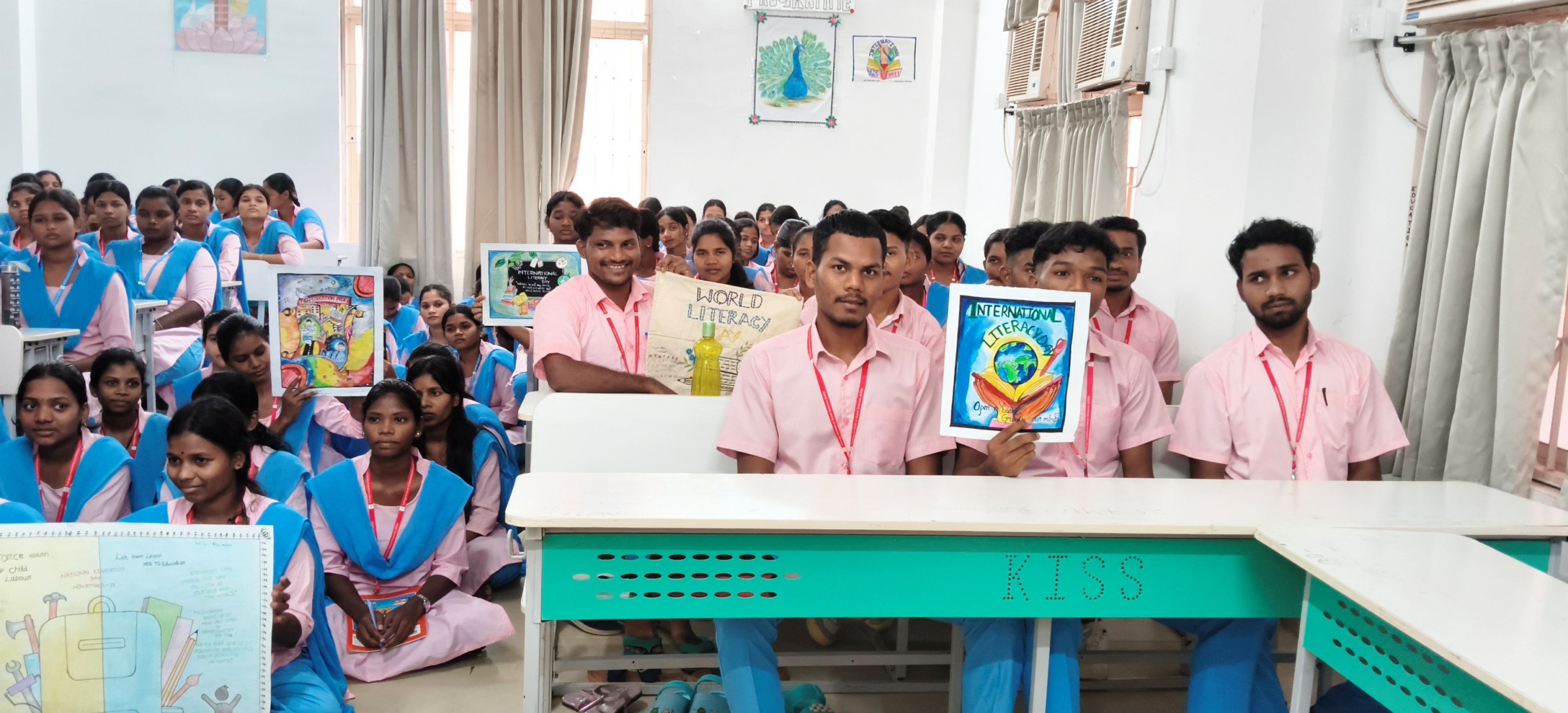
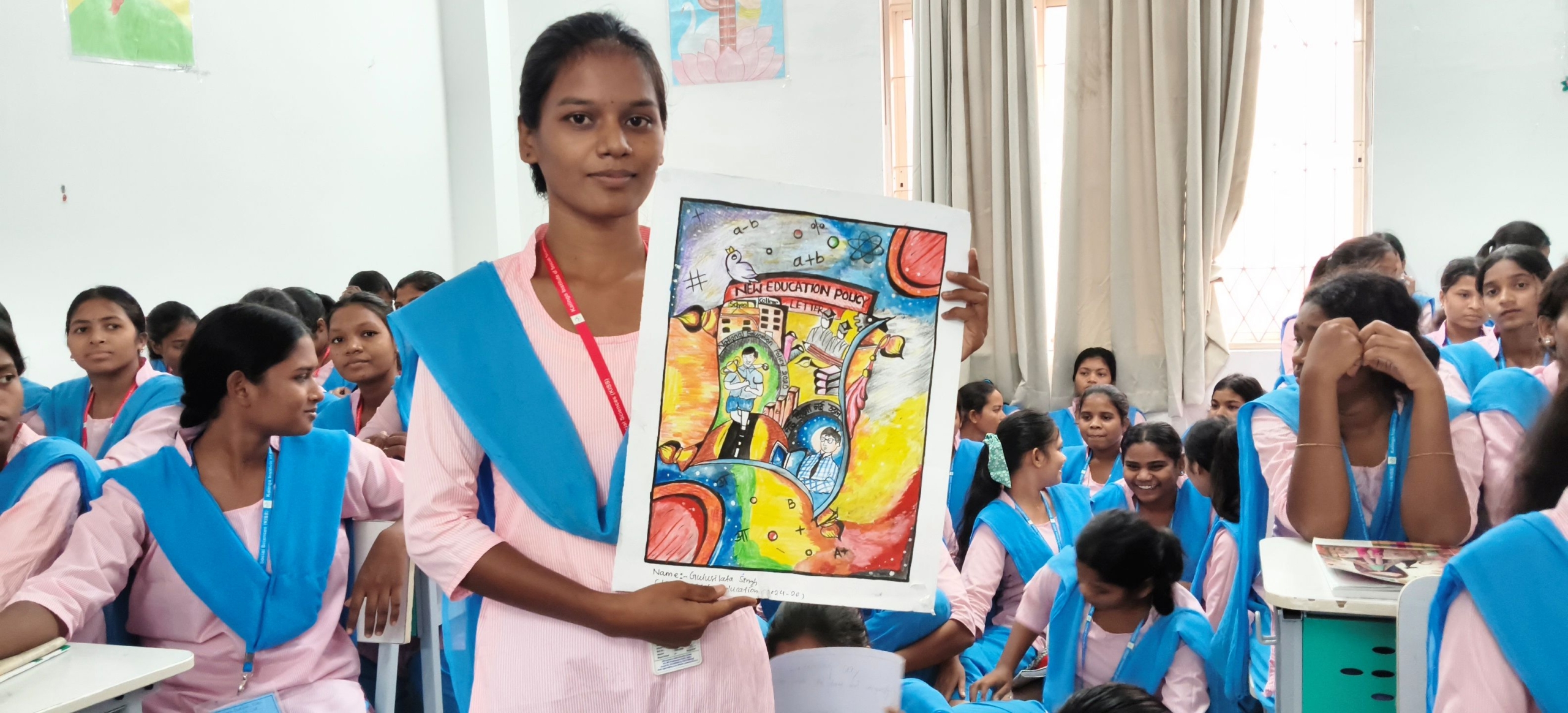
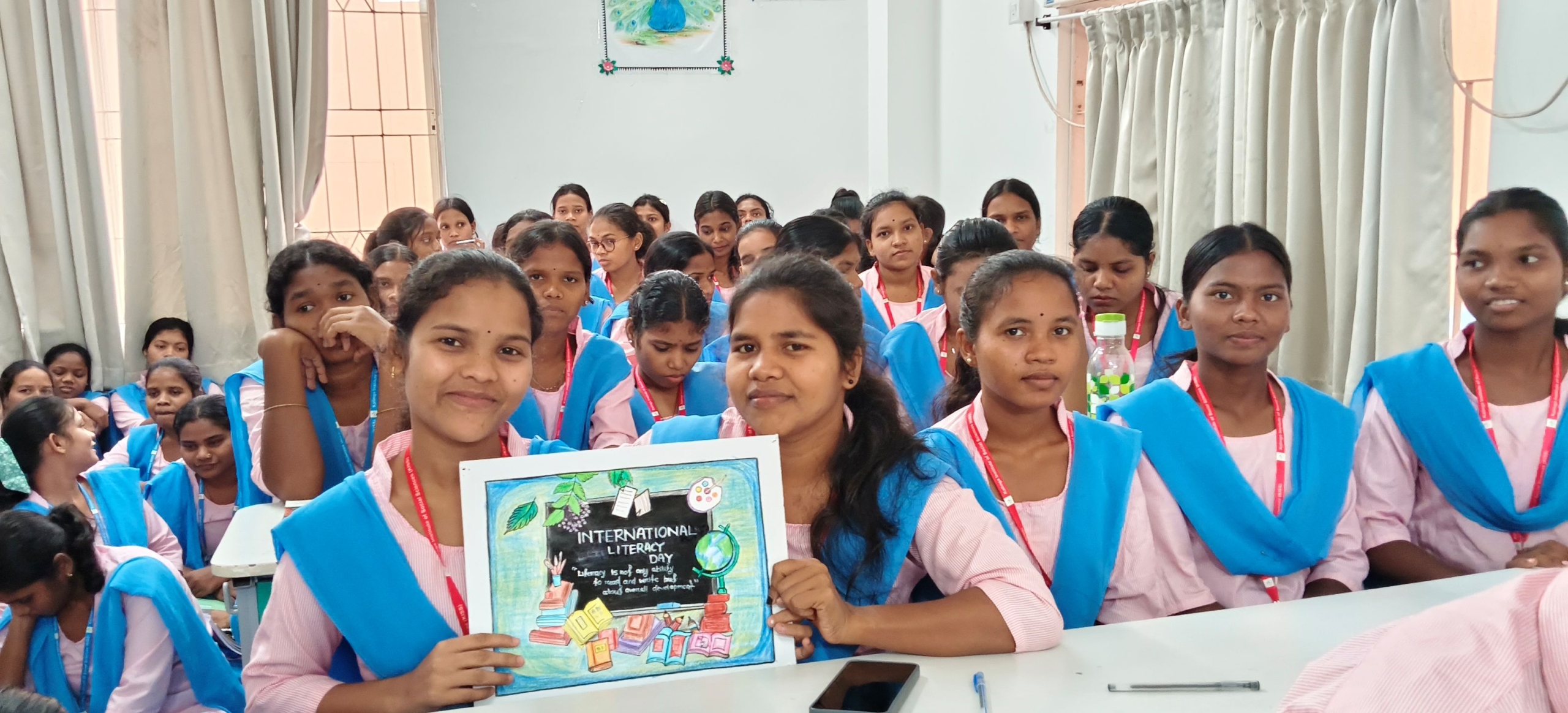
As part of the observance, students actively participated in a classroom seminar organised under the guidance of Dr. Hisi Soren, Faculty, Department of Education and also presented posters made by them. The classroom seminar provided students with an opportunity to express their views and enhance their academic presentation and communication skills. The presentation of posters encouraged students to creatively present their ideas and messages on the importance of literacy and education. The enthusiastic participation of the students made both activities engaging, informative and meaningful.
The programme concluded with a Vote of Thanks proposed by Ms. Diptishree Dash. She expressed her sincere gratitude to the Head of the Department, faculty members and students for their valuable presence, guidance and active participation in making the programme successful.
Overall, the observance of International Literacy Day was successfully conducted and served as a meaningful academic and awareness-building initiative. The programme not only sensitised students to the importance of literacy but also encouraged them to recognise their role as future educators in promoting education, awareness and social transformation.