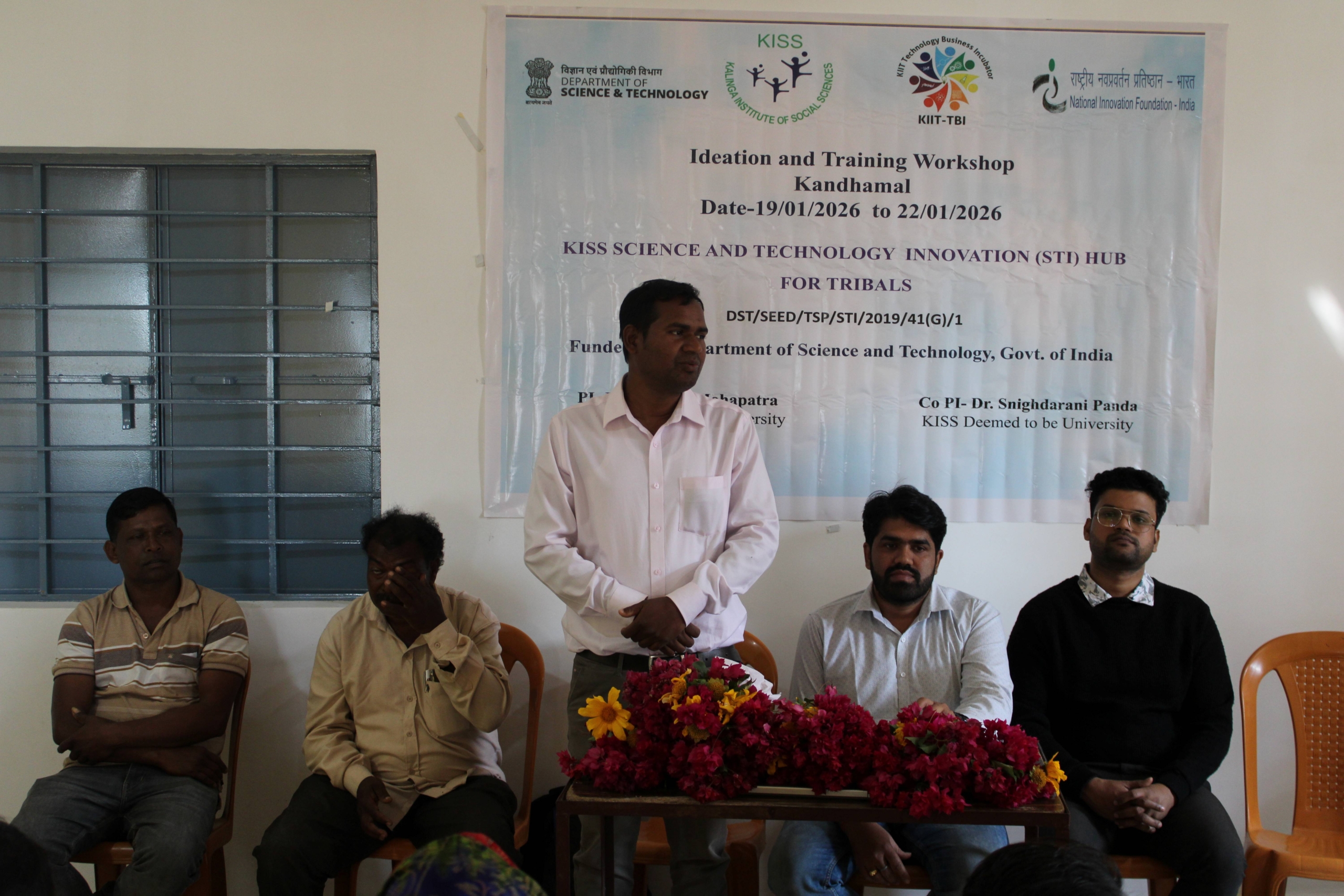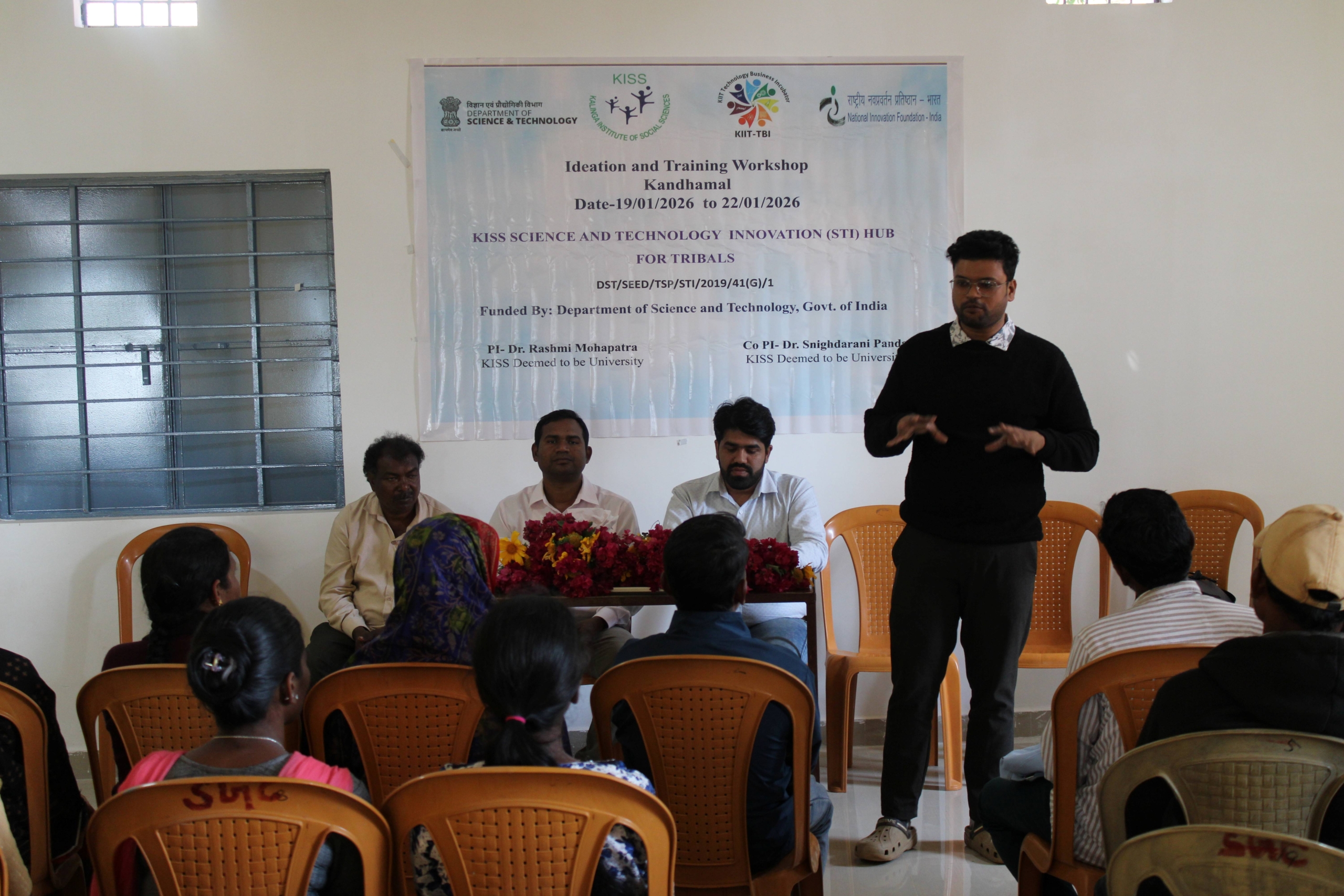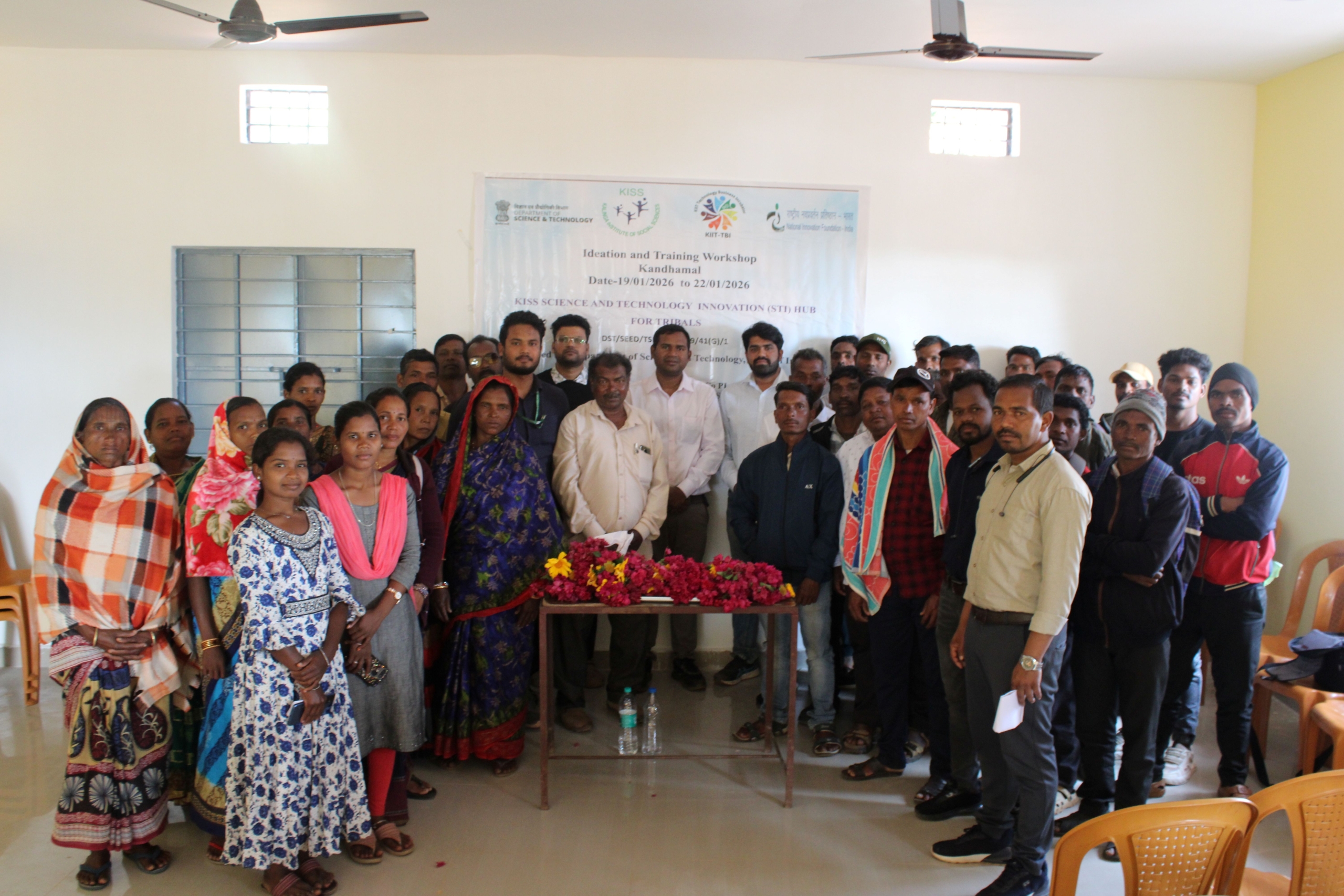
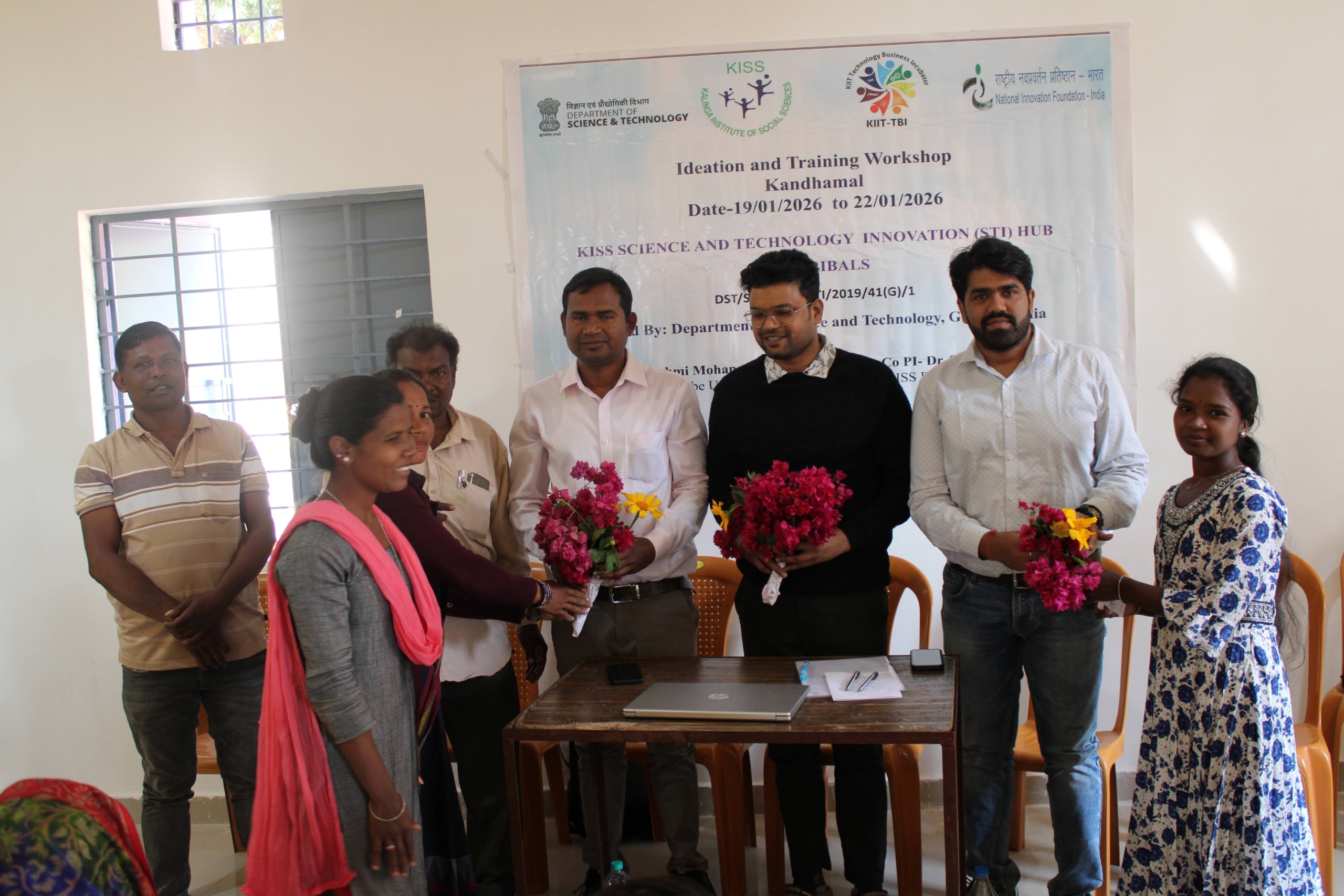
The ongoing KISS Science and Technology Innovation (STI) Hub for Tribals Project at KISS-DU, funded by the Department of Science and Technology (DST), Government of India, organized a three-day Capacity Building-cum-Training Programme in Trilory Gram Panchayat (GP), Daringbadi Block, Kandhamal District from 20th to 22nd January 2026. The core objective of the programme was to foster socio-economic empowerment among tribal communities by merging modern scientific methods with their unique, age-old indigenous knowledge systems.
The training focused extensively on sustainable livelihood creation through value-added food processing. By identifying and utilizing local forest produce and agricultural resources unique to the Kandhamal region—such as turmeric, millets, wild berries, and seasonal fruits—the program taught participants how to process, preserve, and scale these items safely into high-quality, market-ready consumer products.
A total of 120 beneficiaries from local tribal communities actively participated in the training sessions spread across three days, acquiring both vital theoretical knowledge and hands-on, practical exposure. The ultimate goal of this grassroots initiative is to inspire the participants to form self-help groups (SHGs) and micro-enterprises, paving the way for a lasting community-wide economic transformation.
The Experts demonstrated clean processing techniques while emphasizing the vast commercial potential and growing national demand for organic, tribal-sourced food products. These were carried out through a series of Technical Workshops Participants were encouraged to maintain the integrity of their ancestral food traditions while taking advantage of modern food-safety technology to boost profitability and minimize post-harvest losses.
The key outcomes included hands-on training sessions for 120 beneficiaries hailing from local tribal participants. The major focus areas were Value-added food processing, food preservation, micro-enterprise management, and blending indigenous knowledge with modern technology. Local minor forest produce, millets, and Kandhamal’s organic agricultural staples were some of the key products which were explored during the training sessions.
The beneficiaries achieved core impact like enhanced awareness regarding sustainable, non-timber forest product (NTFP) livelihoods, improved income potential, and community-led entrepreneurship.