International collaboration data gathering for SDG
Does your university as a body participate in international collaboration on gathering or measuring data for the SDGs?
- Yes, KISS Deemed to be university as a body participates in international collaboration on gathering or measuring data for the SDGs.
-
- Research output directly mapped to SDGs: KISS-DU’s official Scopus institutional profile (Elsevier database ID 60254900) publicly lists research outputs tagged to multiple Sustainable Development Goals, including SDG 1 (No Poverty), SDG 3 (Good Health and Well-Being), SDG 4 (Quality Education), SDG 5 (Gender Equality), SDG 10 (Reduced Inequalities) and SDG 13 (Climate Action).
Link: https://www.scopus.com/pages/organization/60254900?afid=60254900#tab=sdgs
Faculty researchers gather field-level data through surveys and participatory assessments within tribal and rural communities; the results are published internationally, adding measurable datasets to global SDG evidence bases.
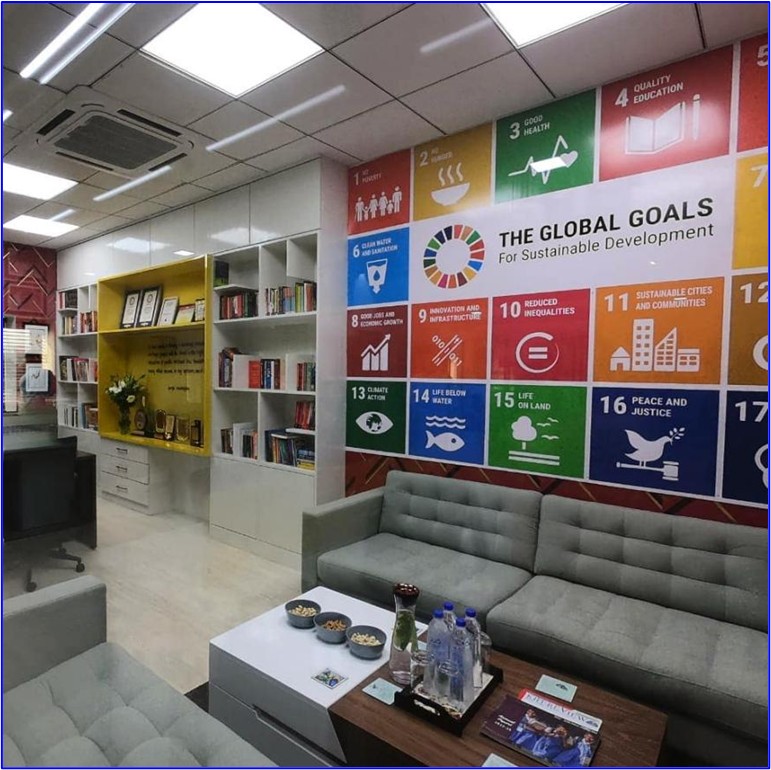
- Dedicated SDG Centre for data coordination and measurement: KISS operates a University SDG Centre, a visible commitment to evidence-driven transformation. Many projects coordinated through this centre generate quantitative data on enrolment, nutrition, gender outcomes, livelihood transitions and community well-being among Indigenous people. https://university.kiss.ac.in/about
- International research collaboration for SDG data and knowledge sharing: Centre for the Study of Indigenous Peoples Across the Globe , a KISS-DU research centre partnering with global scholars to collect, digitise, and analyse data on Indigenous knowledge systems, economic transitions and socio-cultural indicators across countries.
https://university.kiss.ac.in/groups/centre-for-the-study-of-indigenous-peoples-across-the-globe/ - Nature Positive Universities Alliance (University of Oxford + UNEP Youth & Education): KISS is a member of this global network that collates and benchmarks data on biodiversity and campus/community ecosystem restoration.
https://university.kiss.ac.in/green-initiatives/kiss-and-kiss-du-join-nature-positive-universities/ - Weather and Climate Hackathon (WATCH) with CUNY (September 2024): KISS co-hosted the Weather and Climate Hackathon (WATCH) with the City University of New York (CUNY) and the U.S. Consulate. The hackathon focused on air-quality monitoring, predictive data modelling, and scenario-based forecasting, strengthening research capacity on SDG 11 (Sustainable Cities) and SDG 13 (Climate Action). https://kiss.ac.in/hackathon/
- THRIVE – Tribal Health Research, Innovation and Vocational Empowerment Centre (October 2024): In collaboration with Jhpiego (Johns Hopkins University) and the Government of Odisha, KISS established the THRIVE Centre. It collects empirical data on tribal health, nutrition, and livelihoods, providing policy evidence and feeding into national and international SDG 3 (Good Health and Well-being) and SDG 10 (Reduced Inequalities) targets. [Source Link]( https://university.kiss.ac.in/posts/kiit-kiss-jhpiego-launches-thrive-to-enhance-tribal-health-youth-empowerment/ )
- UN Volunteers (UNV) National University Internship Programme (Oct 2023 – Nov 2024): under a formal MoU, 12 KISS students serve as National UN Volunteers collecting and reporting data on community engagement, education access and livelihood programmes. These field datasets feed into UN India’s SDG monitoring systems.
- Collaboration with CUNY CREST Institute (2024): KISS strengthened partnerships with the CUNY CREST Institute to integrate local datasets on climate resilience and land use into broader international models. This collaboration facilitates cross-institutional data validation and supports research on adaptation strategies for vulnerable communities. (https://kiss.ac.in/wp-content/uploads/2024/11/Activity-Report-American-Centre-27-12.pdf)
- External evaluation and data validation (ASCI Report)
The Administrative Staff College of India (ASCI), Hyderabad, conducted an independent assessment of KISS’s impact. The report recognised KISS as “a national model institution for sustainable development and data-driven impact measurement,” highlighting its quantitative monitoring framework for education, nutrition and gender equality. The ASCI study confirms that KISS’s data collection systems and monitoring practices align with national and international SDG indicators, validating its measurement approach through an independent expert institution. https://university.kiss.ac.in/posts/asci-praises-the-impact-of-kiss/ - Longitudinal community and education datasets
KISS maintains a comprehensive database tracking indicators such as retention rates, nutrition status, health outcomes, gender parity and employability. These datasets serve as a valuable input for policy and SDG reporting frameworks in India and South Asia.
https://university.kiss.ac.in/about/annual-report/ - Centre for the Study of Indigenous Peoples across the Globe: The Centre is dedicated to acquiring a wider understanding and appreciation of the ideas and knowledge of the indigenous peoples and the social, economic and political realities of various indigenous nations. KISS Deemed to be University intends to accomplish it through planning research on the intellectual and cultural traditions of the indigenous peoples across the globe in different historical circumstances. https://university.kiss.ac.in/groups/centre-for-the-study-of-indigenous-peoples-across-the-globe/
- Research output directly mapped to SDGs: KISS-DU’s official Scopus institutional profile (Elsevier database ID 60254900) publicly lists research outputs tagged to multiple Sustainable Development Goals, including SDG 1 (No Poverty), SDG 3 (Good Health and Well-Being), SDG 4 (Quality Education), SDG 5 (Gender Equality), SDG 10 (Reduced Inequalities) and SDG 13 (Climate Action).
Through its research outputs, institutional SDG Centre, community datasets, and international partnerships — including the Nature Positive Universities Network, UN Volunteers, and the Centre for Indigenous Peoples Across the Globe — KISS-DU actively contributes to the international collection and measurement of SDG data. The independent ASCI Report further substantiates that KISS’s impact and data systems meet rigorous evaluation standards, positioning the university as a model for evidence-based progress toward the 2030 Agenda.
-