Measure and track applications and admissions of underrepresented (and potentially underrepresented) groups including ethnic minorities, low income students, non-traditional students, women, LGBT students, disabled students, and newly settled refugee students.
Yes, the university as a body measures/tracks applications and admissions of underrepresented and potentially underrepresented groups including ethnic minorities, low income students, non-traditional students, women, LGBTQ students, disabled students, and newly settled refugee students.
Admission Cell, KISS-DU maintains the database and tracks applications and admissions of underrepresented (and potentially underrepresented) groups including ethnic minorities, low income students, non-traditional students, women, LGBTQ students, disabled students, refugee/displaced students etc.
KISS Deemed to be University (KISS-DU) is an institution in Bhubaneswar, Odisha, that aims to eradicate poverty and uplift marginalized communities by providing quality education. As the world’s first residential university, it offers free education, accommodation, and comprehensive care to underprivileged tribal youth. KISS-DU’s eco system supports holistic growth, promoting sustainability, community engagement, and cultural preservation. The vibrant ecosystem that encourages faculty and students to contribute actively towards indigenous knowledge and contemporary issues.
The Admission Cell maintains a database of applications and admissions from different backgrounds, states, tribes and ethnic groups and the same is updated from time to time. Reports are also collected from mentors allotted to these students to counsel, understand their needs and aspirations. Information is also gathered from alumni from different places through a dedicated alumni cell. The university has conducted different need-based surveys in order to delve deep into the educational requirements and needs of the students from different backgrounds.
- KISS Deemed to be University meticulously monitors and evaluates applications and admissions from underrepresented and marginalized groups, with a primary focus on indigenous communities, low-income students, and other underserved sections of society.
- In line with its mission to uplift and empower these communities, the university maintains demographic data to ensure that educational opportunities are accessible to those most in need.
- While KISS-DU is particularly dedicated to indigenous and low-income populations, it upholds an inclusive policy that also extends to women, differently-abled students, and other underrepresented groups.
- By tracking these statistics, the university can assess the effectiveness of its outreach, community engagement programmes and affirmative action policies, ensuring that its programs continue to align with its goals of inclusivity and social justice.
- Currently, the university has provision for admissions of LGBTQ or newly settled refugees students, however as of now, no applications have been received. However, KISS-DU continually evolves its data practices to stay in line with best practices for inclusivity and diversity.
- Admission notification for U.G, P.G. and Ph.D. programmes for the Academic Session 2024-25:
https://university.kiss.ac.in/wp-content/uploads/2024/06/Notification-UG-Admission-2024-25.pdf
https://university.kiss.ac.in/wp-content/uploads/2024/07/Notification-for-PG-Ph.D.-KISS-DU-2024-25.pdf - Admission information brochure for academic year 2024-25 : https://university.kiss.ac.in/wp-content/uploads/2024/07/Admission-Information-Brochure-PG-Ph.D-KISS-DU-2024-25.pdf
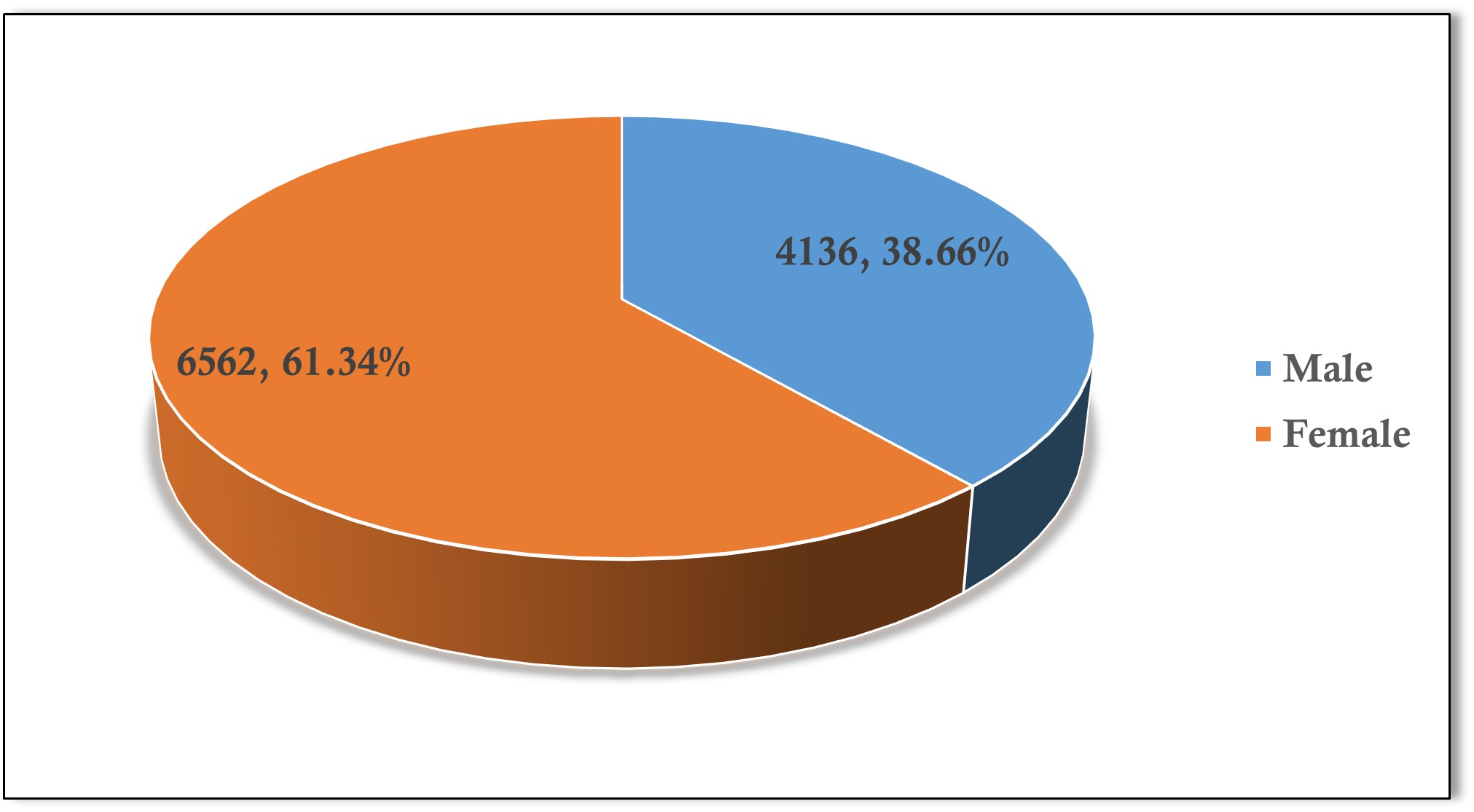
- Data showing ratio of Male and Female Applications received in 2024:
- UG Programmes

- PG Programmes
- Ph.D. Programmes
- UG Programmes
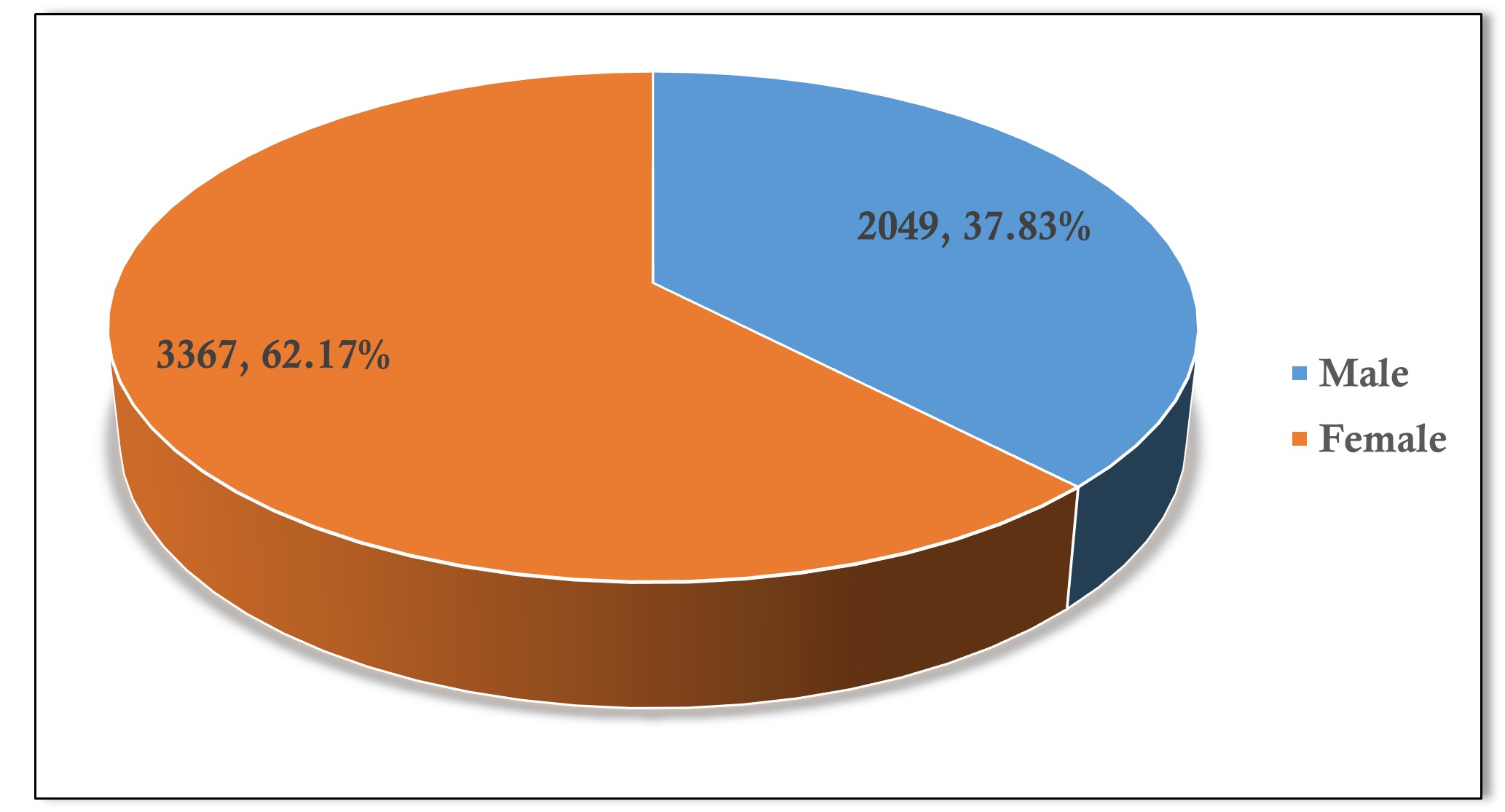
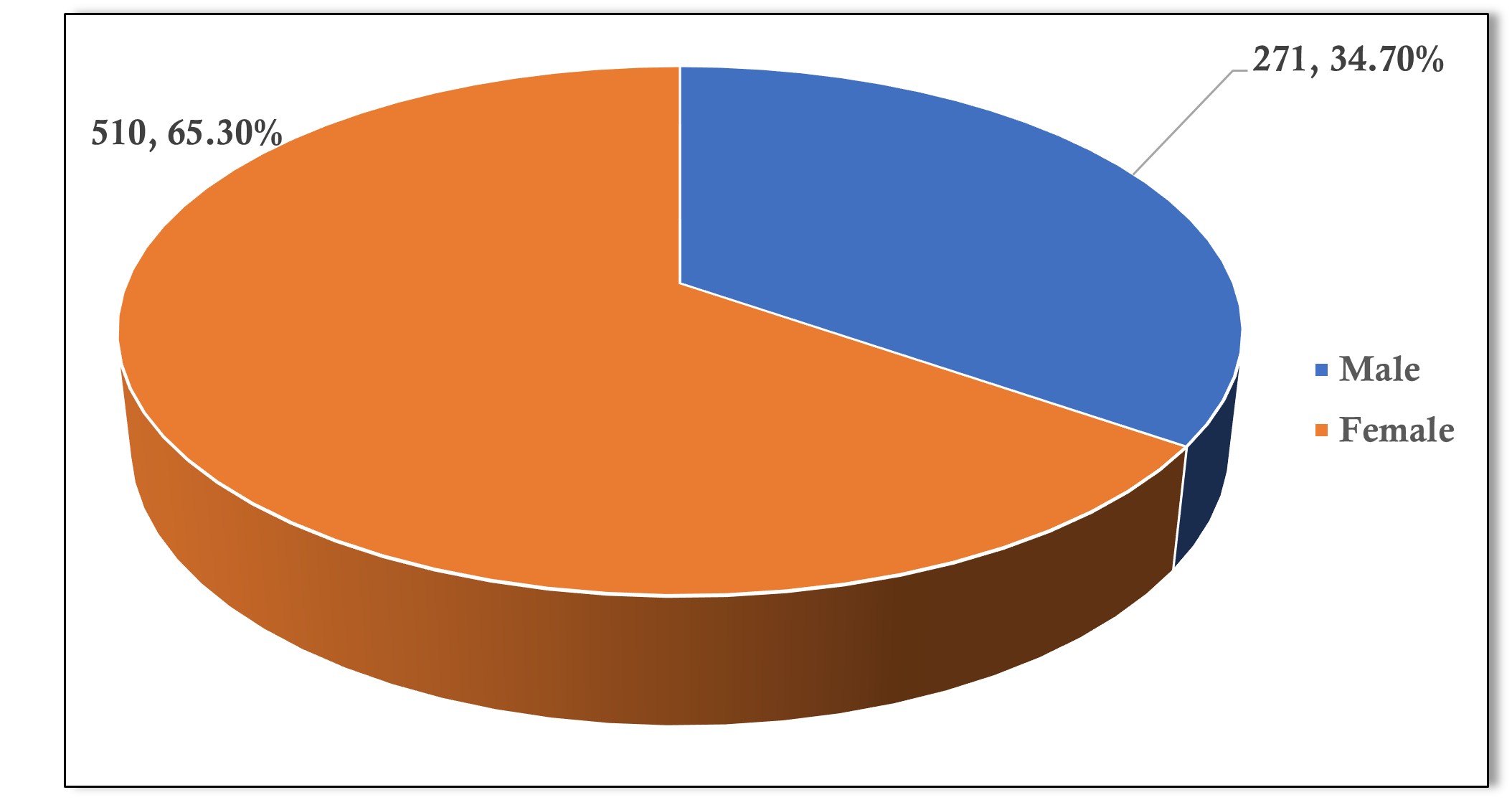
- There are sixty-four tribal communities living in Odisha. Together they form 22.87 percent of the total population of the State and 9.7 percent of the total tribal population of the country. Among these, thirteen tribal communities are recognized as Particularly Vulnerable Tribal Groups or PVTGs. Immersive outreach activities and community connect programmes like mega plantation drives in various districts of the state; awareness and sensitization programmes; projects focusing on impact study have led to a good number of applications.
Data showing ratio of Applications received from students from different tribes in 2024:
 Others include: Banjara, Mahali, Mundari, Juang, Kora, Paudi Bhuyan, Bhunjia, Binjhia, Dharua, Dongria Khond, Holva, Kulis, Madia, Matya, Didayi, Kotia, Lanjia Saora, Pentia, Kharya, Mirdhas, Omanatya, Bagata, Desua Bhumij, Kol, Kondadora, Kutia Khond and Parenga tribes.
 Others include: Banjara, Mahali, Mundari, Juang, Kora, Paudi Bhuyan, Bhunjia, Binjhia, Dharua, Dongria Khond, Holva, Kulis, Madia, Matya, Didayi, Kotia, Lanjia Saora, Pentia, Kharya, Mirdhas, Omanatya, Bagata, Desua Bhumij, Kol, Kondadora, Kutia Khond and Parenga tribes.
Other Active Work Carried out:
- Ensuring more than 50% female enrolment – presently 60% girl students are pursuing graduate and post graduate programmes in KISS-DU.
- Implementation of Nua Maa pilot project on behavioral change communication by engaging with the community network of transgenders to deliver change messages in addressing knowledge, attitude and practice gaps in media dark areas, to help pregnant women and lactating mothers while ensuring Infant and Young Child feeding practices. https://kiss.ac.in/nua-maa/
- Life skill project for differently-abled children in special schools
- Institutionalized grievance Redressal mechanisms for the prevention of sexual harassment include the Gender Sensitization Cell and the Internal Complaints Committee. https://university.kiss.ac.in/administration/internal-complaints-committee-for-prevention-of-sexual-harassment/ , https://university.kiss.ac.in/wp-content/uploads/2023/09/2022-23.pdf
- Child Protection policy, Gender Policy and Anti sexual harassment Policy: https://kiss.ac.in/wp-content/uploads/2023/05/KISS_Protection_Policies-1.pdf
- Kalinga Fellowship: The Kalinga Fellowship is a systemic change societal leadership platform to facilitate a breakthrough in thinking and strategy on the United Nations’ Sustainable Development Goal 5, that concerns gender equality and sex based trafficking. https://kiss.ac.in/kalinga-fellowship/ . KISS was instrumental in establishing this project in joint partnership with the BRIDGE Institute, Ashoka Foundation, FXB India, Prajwala, UN Women and the US Consulate Hyderabad. This global programme annually brings together the most progressive leaders from business, government and civil society to facilitate a breakthrough in thinking and strategy to answer a moot question: How can the senior leaders of the government, business sector and civil society come together to combat trafficking of women and children globally. 500+ fellows have been provided this fellowship till date.
- Workshop on Gender Equity and Inclusion: Transformative Pathways in Higher Education Organised by #WISCOMP is an initiative of the Foundation for Universal Responsibility and hosted by KIIT and KISS. Experts from US and Indian colleges are facilitating discussion and internal consultation to envision and design institute specific templates to conduct Gender Audits as required by NAAC guidelines and to ensure HEI preparedness on the implementation of #SPARSH (Sensitization, Prevention and Redressal of Sexual Harassment) policy of Government of India.

- Inclusive Cultural Leadership–An Intercultural Dialogue at KISS: https://university.kiss.ac.in/posts/kalinga-conversations-5-inclusive-cultural-leadership-an-intercultural-dialogue-at-kiss/ KISS’s Project K-MUSE, in collaboration with KIIT School of Law, hosted the fifth edition of Kalinga Conversations under the theme “Inclusive Cultural Leadership–An Intercultural Dialogue.” The event was organized in association with the School of Tribal Legal Studies and Tribal Rights and the Centre for Indigenous Languages & Narratives, KISS-DU. This interdisciplinary forum emphasized the importance of cultural inclusivity and leadership, highlighting the relevance of living cultures and traditions in a global context.
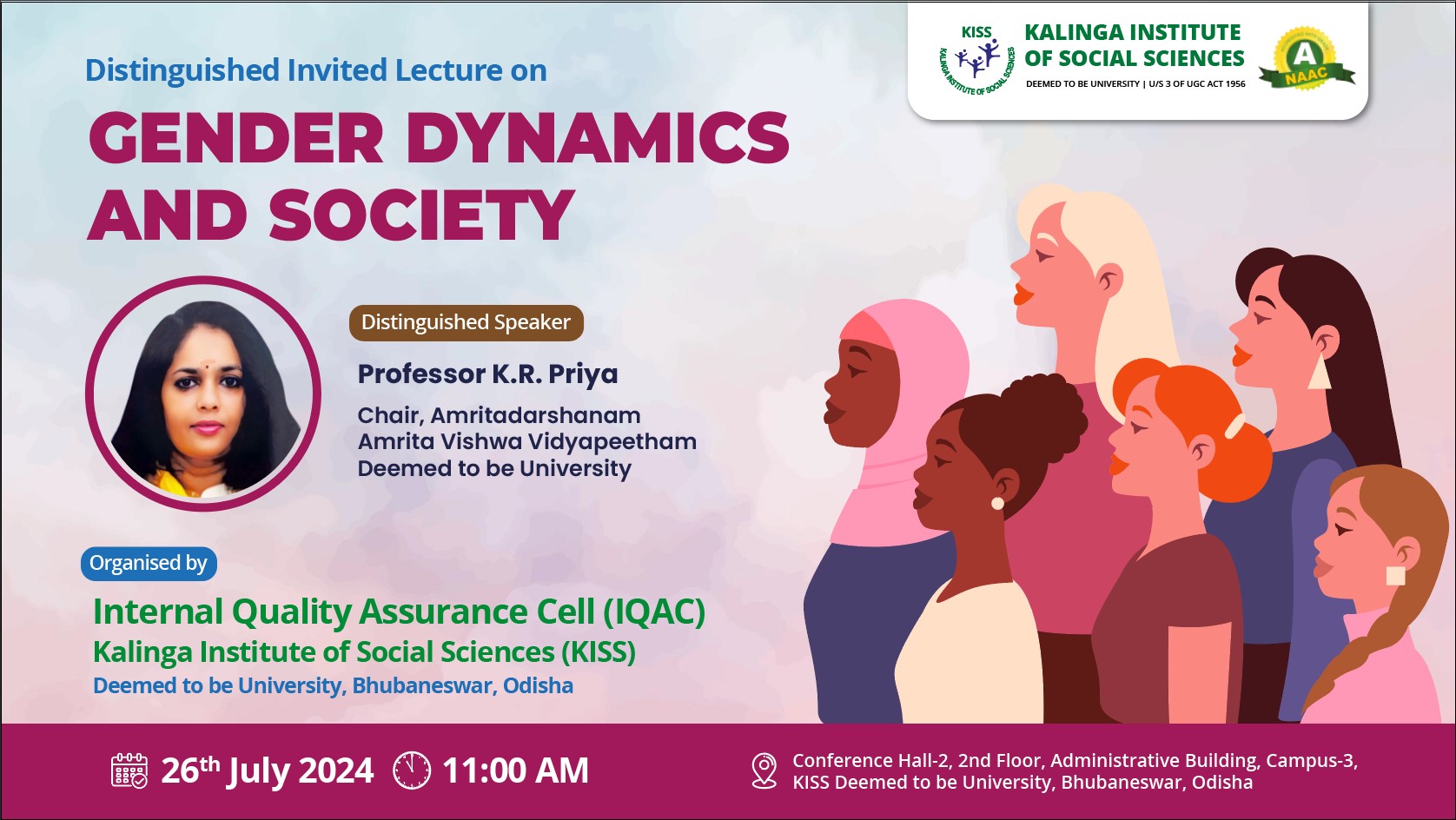
- Distinguished Invited Lecture on the topic “Gender Dynamics and Society”: https://university.kiss.ac.in/posts/kiss-du-inks-mou-with-amrita-vishwa-vidyapeetham/ The Kalinga Institute of Social Sciences (KISS) Deemed to be University, Bhubaneswar signed MoU with Amrita Vishwa Vidyapeetham Deemed to be University, Coimbatore on 26th July 2024. On the occasion, Professor K. R. Priya, Chair, Amritadarshanam delivered a Distinguished Invited Lecture on the topic “Gender Dynamics and Society”. During the course of her deliberation, she conducted activities revolving around gender roles and presented various perspectives.
- Centre for Women’s Studies: The Kalinga Institute of Social Sciences (KISS) inaugurated the Centre for Women’s Studies on 3rd September 2024, marking a significant milestone in its commitment to fostering interdisciplinary dialogue and promoting research on women’s rights and leadership. The launch event was organized under the banner of Kalinga Conversations, an initiative by Project K-MUSE, KISS, dedicated to engaging with critical contemporary issues related to living cultures and traditions. It is an inspirational intervention by the founder of KIIT & KISS, Dr. Achyuta Samanta. https://university.kiss.ac.in/posts/kiss-project-k-muse-launches-centre-for-womens-studies/