
Policy addressing poverty
KISS-DU works with a multi-level approach that spans local, regional, national and global efforts to address poverty. Given its role as an academic institution with a focus on social justice, it plays a pivotal role in policy making and the implementation of the programs which aim to combat poverty in indigenous communities.
- Local Level – At the local level, KISS-DU actively engages with the district administration in community mobilization, identification of beneficiaries and implementation of poverty alleviation programs.
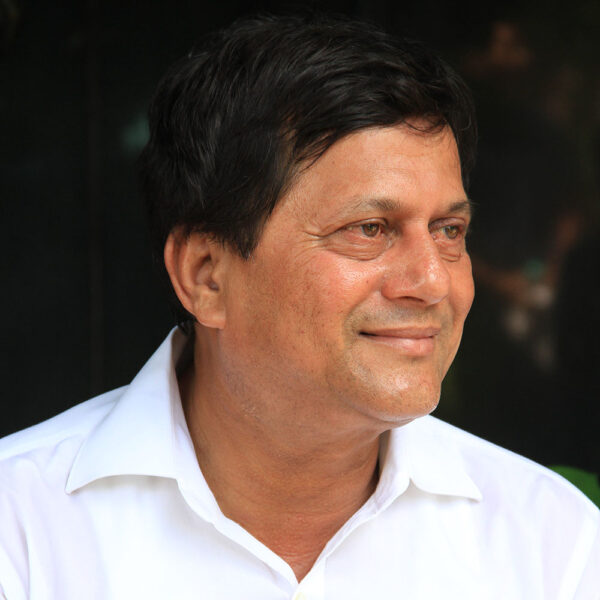
- KISS Foundation Extends Educational Support to Children of Daringbadi Who Lost Their Mother: KISS Foundation has come forward to support two young children from Mandipanka village under Daringbadi block of Kandhamal district, following the untimely demise of their mother Rumita Pattamajhi after consuming mango kernel. Her two children, a two-and-a-half-year-old son and a six-month-old daughter, have been left deprived of maternal care. Learning of their plight through media reports, Dr. Achyuta Samanta, the founder of KIIT, KISS, and the KISS Foundation, has extended a helping hand to the family.
- Regional and national level – KISS-DU conducts workshops, dialogues to advocate for poverty reducing policies, such as affordable rural housing, social protection programs, livelihood schemes etc. to ensure that these services are accessible and equitable. The University plays a key role in influencing state level policies for indigenous communities and their social welfare. https://university.kiss.ac.in/posts/four-kiss-alumni-selected-as-eco-fellows/
- Research :
- The Kalinga Institute of Social Sciences (KISS) Deemed to be University received a project titled “Exploring Unsung Heros of Odisha: A Case Study on the undivided district of Balasore” of Rs 3,50,000 /- (Three Lakhs Fifty Thousand Only) funded by the Indian Council of Historical Research (ICHR), an Autonomous Organization, Ministry of Education, Govt. of India) as per Intimation Letter dated 10th January 2024 for a period of two years. https://university.kiss.ac.in/groups/balasore-ichr-2023/ This project delves into defining the criteria for identifying “unsung heroes” and capture their life stories, struggles, achievements and impact on the community. This also endeavours to raise awareness about the contributions of these unsung heroes to inspire future generations and analyze the impact of their contributions on the socio-economic development of the region. This two-year project advocates for the preservation of the heroes’ legacies or contributing to existing efforts.
- Migration and Inequality- Migration Patterns and Inequality Among Tribal Populations: Causes and Consequences
- Land Rights and Economic Inequality- Land Rights and Economic Inequality in Tribal Areas: A Study of Legal and Social Dimensions
- From Home to Market: A Brief Anthropological Study of the Tribal Monpa and Tibetan Female Vendors and Entrepreneurs of Tawang, Arunachal Pradesh: This study, aligned with SDG 1 (No Poverty), explores women’s entrepreneurship and self-sustenance in Tawang, Arunachal Pradesh. Based on ongoing postdoctoral fieldwork, it highlights how Monpa and Tibetan women combat poverty by generating income through shops, cafés, and small ventures, fostering economic resilience and gender-inclusive community development.
- Roots to Routes: Mankirdia Tribe Development in the 21st Century: A Study of Jashipur Block of Mayurbhanj District in Odisha: Aligned with SDG 1 (No Poverty), this study examines the socio-economic transformation of Odisha’s Mankirdia tribe, a Particularly Vulnerable Tribal Group, through a decade of development under the Tribal Sub Plan (TSP). Using mixed methods across 150 households, it highlights gains in livelihoods, education, and health, while emphasizing the need for inclusive, culturally rooted poverty alleviation strategies.
- Resettled Reality: Social implication on tribes in the Lower Suktel Region: Aligned with SDG 1 (No Poverty), this study examines the socio-economic and cultural impacts of the Lower Suktel Irrigation Project on displaced tribal communities in Odisha. Based on qualitative interviews and observations, it reveals livelihood loss, disrupted social networks, and inadequate compensation. Despite developmental goals, marginalization deepened, highlighting the urgent need for inclusive resettlement policies that ensure cultural preservation, livelihood sustainability, and equitable community participation to achieve poverty reduction and social justice.
- Empowering Dongria Kandha community through GI-Tagged Products: Planning and Introduction for Inclusive Development in Rayagada District: Aligned with SDG 1 (No Poverty), this study focuses on empowering the Dongria Kandha, a Particularly Vulnerable Tribal Group of Odisha, through the promotion of GI-tagged traditional products like Kapdaganda shawls, turmeric, and millets. By integrating indigenous knowledge with sustainable value chains—covering documentation, quality control, and market linkage—the initiative fosters income generation, cultural preservation, and self-reliance. Institutional partnerships and capacity building ensure inclusive, eco-friendly economic growth, transforming traditional livelihoods into sustainable, poverty-alleviating opportunities for the Dongria Kandha community.
- Development, Displacement, and the SDG Gap: Aligned with SDG 1 (No Poverty) and related goals (SDGs 10, 11, and 13), this paper critically analyses the paradox of state-led development projects—dams, mining, and infrastructure—in Odisha. While framed as progress, these initiatives often cause displacement, inequality, and ecological harm. Through qualitative analysis, the study reveals inadequate rehabilitation and exclusion of tribal communities, emphasizing the need for people-centered, rights-based, and ecologically balanced development models that uphold human dignity and truly advance the SDGs.
- Financial Decision-Making Patterns and Their Impact on the Livelihoods of Indigenous Communities: Aligned with SDG 1 (No Poverty), this study examines the impact of financial literacy on socio-economic empowerment among indigenous communities in Kendujhar, Odisha. Using mixed methods, it shows that low financial literacy limits access to banking, welfare programs, and informed financial decisions, often pushing communities toward high-interest informal loans. Targeted, culturally sensitive programs—especially for women—improve savings, entrepreneurship, and economic confidence, emphasizing the need for universal, context-specific financial education to bridge gaps between formal financial services and indigenous livelihoods.
- Livelihood and Identity: The Socio-Cultural and Economic Significance of Land among the Ho and Paraja Tribes of Odisha: Aligned with SDG 1 (No Poverty), this study examines the critical role of land in sustaining the livelihoods and cultural identity of Odisha’s tribal communities, particularly the Ho and Paraja. Ethnographic analysis reveals that industrialization, mining, and state-led development have caused displacement and disrupted traditional land-use patterns. The paper advocates for inclusive land policies that respect indigenous rights, preserve cultural heritage, and secure sustainable livelihoods, emphasizing that land is both an economic and socio-cultural cornerstone for poverty alleviation and community resilience.
- Financial inclusion and social upliftment: A pathway to strengthen Micro enterprises in the rural region of Balasore District: Aligned with SDG 1 (No Poverty), this study examines the impact of financial inclusion on social upliftment and microenterprise development in rural Balasore District. Access to banking and financial services enhances economic opportunities, empowers rural entrepreneurs, and promotes sustainable livelihoods. The findings underscore the role of inclusive financial policies in reducing poverty and fostering local development.
- Millets as a Catalyst for Achieving Sustainable Development Goals: Impact on Nutrition, Climate, and Livelihoods: Millets, or “nutri-cereals,” have regained importance in addressing global food security, climate resilience, and rural development. Nutrient-rich, they combat malnutrition and support SDG 2 (Zero Hunger) and SDG 3 (Good Health and Well-being). Their drought tolerance, low input needs, and climate resilience advance SDG 13 (Climate Action) and SDG 15 (Life on Land), promoting sustainable agriculture. Economically, millet cultivation provides income for small farmers (SDG 1, No Poverty; SDG 8, Decent Work), while women’s involvement in production and marketing fosters SDG 5 (Gender Equality). Sustainable local value chains further SDG 12 (Responsible Consumption and Production), making millets a catalyst for multiple SDGs.
- Global Level – KISS-DU partnered with international organizations, academic institutions, such as University of Cambridge, UK, University of East Anglia, UK, World Food Programme to facilitate cutting edge research on sustainable food systems, indigenous food practices, food and nutrition security etc. The outcomes from the research significantly contribute to the policy planning and design interventions to eradicate poverty in indigenous communities(SDG-1). In partnership with UNDP, KISS-DU has set up a Centre of Excellence for Skills and Entrepreneurship at its campus. Through this centre the university introduced technology enabling blended training for indigenous learners to equip them for the future. Further the University organizes SDG workshop in collaboration with UN Agencies, government to dialogue and deliberation and prepare roadmap for localizing SDGs.