Background:
Odisha is widely recognized as one of India’s most climate-vulnerable states due to its unique geographic location, diverse agro-ecological regions, and high dependence on climate-sensitive livelihoods. While the state is endowed with major river basins and receives an average annual rainfall of around 1,450 mm, the spatial and temporal distribution of rainfall has become increasingly erratic due to climate change, resulting in recurrent floods, cyclones, droughts, and prolonged dry spells. These changing climatic patterns are exerting significant pressure on water resources, agriculture, ecosystems, and rural livelihoods. The state has witnessed an increasing frequency and intensity of hydro-meteorological disasters, with severe cyclones, flash floods, and droughts often occurring within the same year, posing complex challenges for water resource management and livelihood security.
Nearly 60 percent of Odisha’s workforce continues to depend directly on agriculture and allied activities, making climate-induced water stress a major development concern. Although the state has substantial surface water resources, agriculture in many districts remains heavily dependent on the southwest monsoon and local groundwater sources. Recent scientific studies analysing three decades of groundwater data (1990–2020) reveal significant spatial variability across Odisha. While groundwater levels have improved in some coastal districts due to increased recharge, several hard-rock regions in western and southern Odisha are experiencing declining groundwater levels, driven by changing rainfall patterns, rising irrigation demand, land-use change, and population pressures. These trends underscore the need for region-specific and integrated water management strategies.
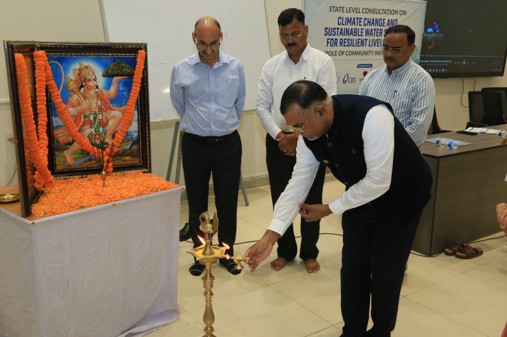
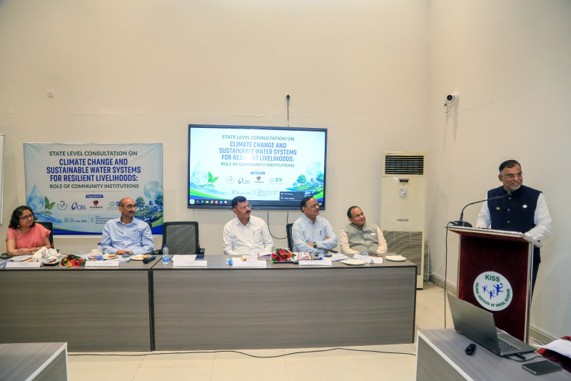
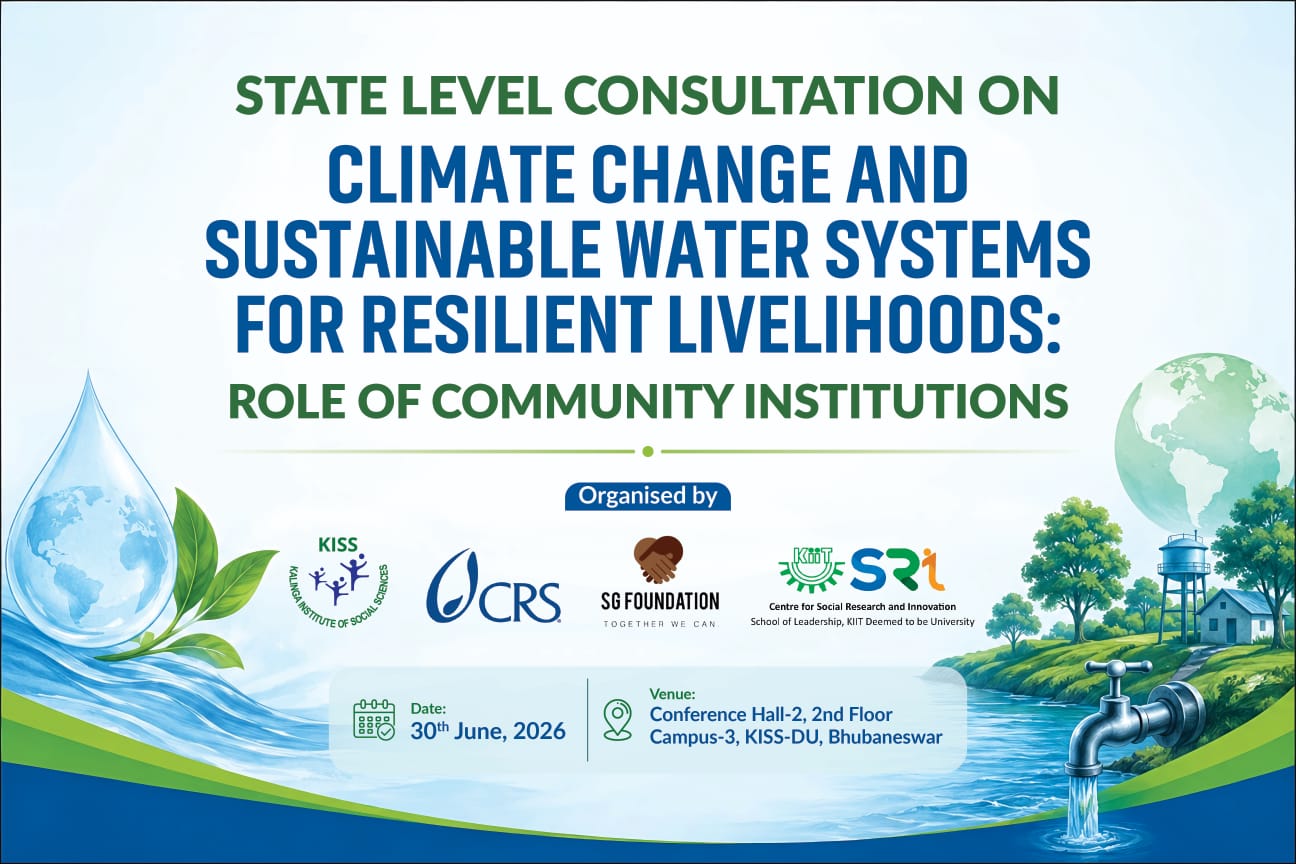
The consultation was organised on 30th June, 2026, by KISS-DU and Centre for Social Research and Innovation, KIIT-DU, in collaboration with CRS and SG Foundation, with an objective to find measures to sustain water systems in the context of climate change, and how community institutions can contribute to resilient and lasting outcomes. The focus of the consultation was on understanding the factors that influence sustainability, including community ownership, institutional capacity, and alignment with local livelihoods and climate realities
The proceedings began with a warm welcome by Dr. Debasish Mohapatra, Coordinator, Centre for Social Research and Innovation, School of Leadership, KIIT-DU who reiterated that meaningful transformation begins when institutions work with communities rather than merely for communities.
Setting the context, Ms. Deepti Pant, Head of Programme, CRS, eloquently highlighted that climate resilience cannot be achieved through isolated interventions; it demands accompaniment support, integrated action, local ownership and sustained institutional collaboration.
The inaugural session was further enriched by the Special Address of Dr. Prashanta Kumar Routray, Registrar, KISS Deemed to be University, who emphasized that resilient societies are built when education, leadership and community empowerment advance together.
Our Guest of Honour, Shri Vinod Kumar Arya, CGM, NABARD, drew attention to the transformative role ofNABARD in bringing the ethos of participatory models, rural financial institutions, Village watershed committees, and community-led and community involved projects for ensuring livelihood security amidst changing climatic realities.
The Chief Guest, Shri Sachidananda Swain, Deputy Director, Soil Conservation & Watershed Management, Government of Odisha, underscored the importance of a sustainable water system through scientific watershed planning, soil and water conservation, and participatory natural resource management as the foundation of long-term climate resilience.
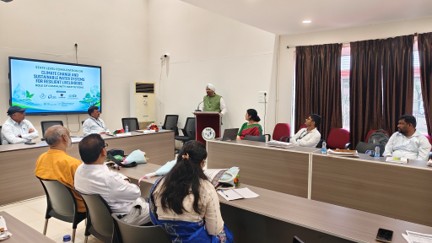
The inaugural session concluded with the inspiring address of Professor Raju K. D., Pro Vice Chancellor, KIIT Deemed to be University, who spoke about the importance of technology in watershed management and the translation of the knowledge into action trickling down directly to the farmers.
The consultation then transitioned seamlessly into its technical deliberations.
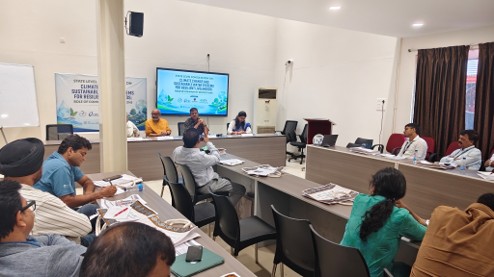
The first panel discussion, ‘Community-driven Sustainable Water System’, moderated by Mr. Nirmalendu Jyotishi, brought together Mrs. Ankita Mishra, Mrs. Saswati Nayak Mohapatra and Dr. Subrat Kumar Mishra. The discussion offered diverse perspectives from government, development practice and grassroots implementation. The panel explored watershed development, community participation, decentralized governance, convergence among line departments and the need for strengthening local ownership of water resources. A recurring theme throughout the discussion was that sustainable water systems are not created through infrastructure alone; they endure when communities become informed decision-makers, responsible custodians and equal partners in development.
The second panel discussion, ‘Sharing Institutional Strengthening Approaches’, moderated by Dr. Debasish Mohapatra, featured Mr. Saroj Dash, Mr. Ramya Mishra, Mr. Gedela Tirumala, Mr. Ajit Kumar Sahoo and Dr. Biswaprakash Bhattacharya. Drawing from years of field experience, the panel reflected on institution building, leadership development, monitoring and learning systems, capacity enhancement, community mobilisation and adaptive management. Their collective experiences reinforced an important message: resilient institutions are not built overnight; they evolve through trust, accountability, inclusive leadership and a continuous willingness to learn from communities themselves.
Building on these insights, the third panel discussion, ‘Linking Community Institutions for Sustainability’, moderated by Dr. Saswat Kishore Mishra, and brought together Mr. Rajinder J. Singh, Dr. Bibudha Parasar and Er. Niranjan Sahu. The panel examined how strategic partnerships between government agencies, academic institutions, civil society organizations, technical experts and development partners can create sustainable ecosystems for climate adaptation. The discussion emphasized convergence, innovation, evidence-based policymaking and knowledge sharing as essential pillars for scaling successful community initiatives across the State.
Across all three sessions, the discussions were marked by thoughtful engagement, practical insights and a remarkable willingness to learn from one another. Rather than focusing solely on challenges, the consultation consistently sought solutions—solutions rooted in collaboration, strengthened institutions, community ownership and shared responsibility.
Through this deliberation, it has resonated that resilience is not built by institutions working in isolation; it is built through partnerships that place people, participation and purpose at their very heart.
In the valedictory session, Prof. Saranjit Singh, Vice Chancellor, KISS-DU and KIIT-DU shared his valuable insights on sustainable models and promised to work on key deliverables from the consultation.
Conclusion:
The consultation has been far more than a series of technical discussions. It has created a common platform where policy met practice, research met experience, and institutional wisdom met community realities. It has strengthened networks, generated new ideas and reaffirmed our collective commitment to building climate-resilient livelihoods through empowered community institutions.
The deliberations will inspire collaborative action towards achieving the Sustainable Development Goals especially goals 6, 12 and 13, informed policies, stronger institutions and resilient communities that will shape a sustainable and climate-secure future for Odisha, India and Mother Earth.