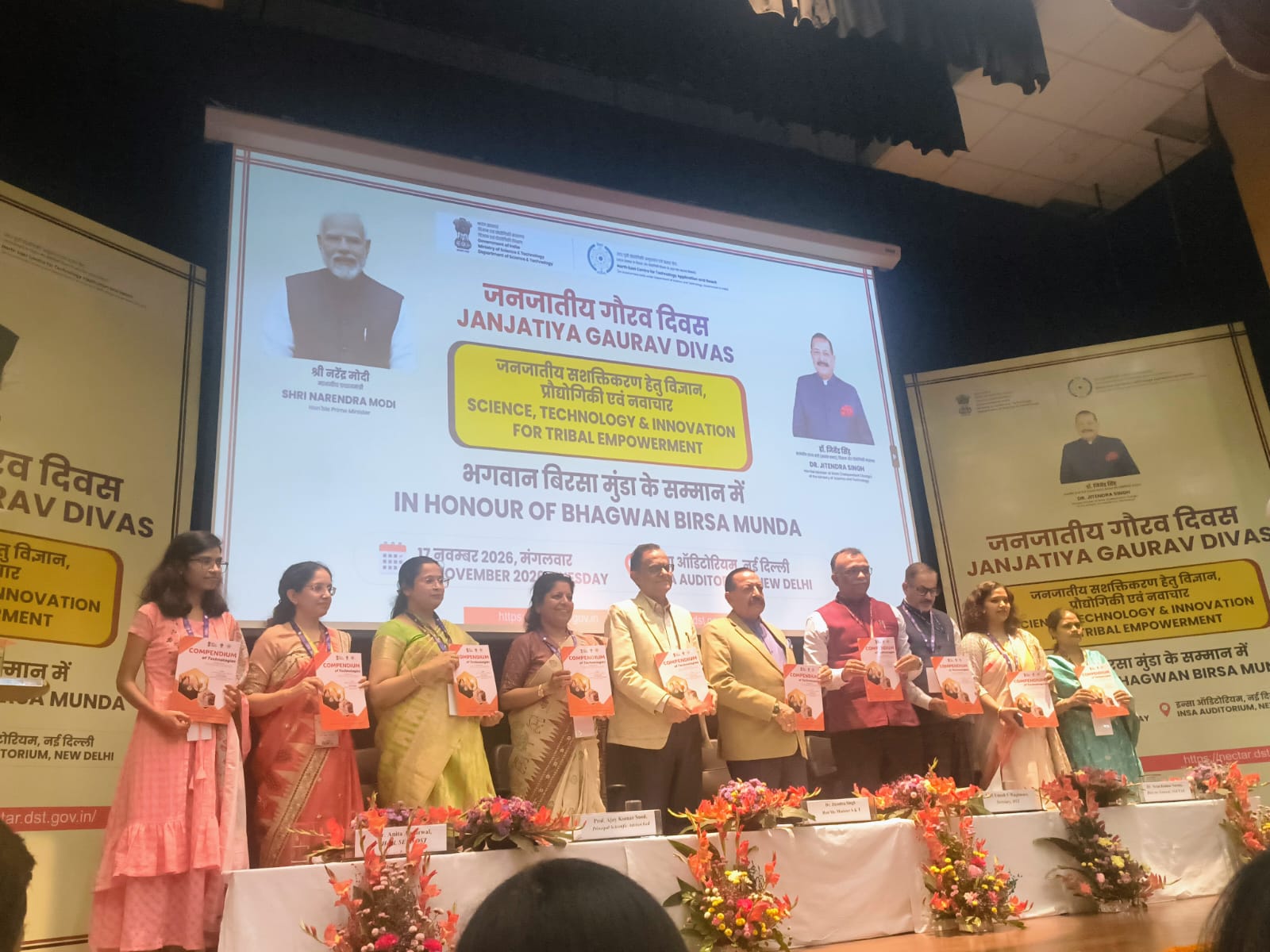
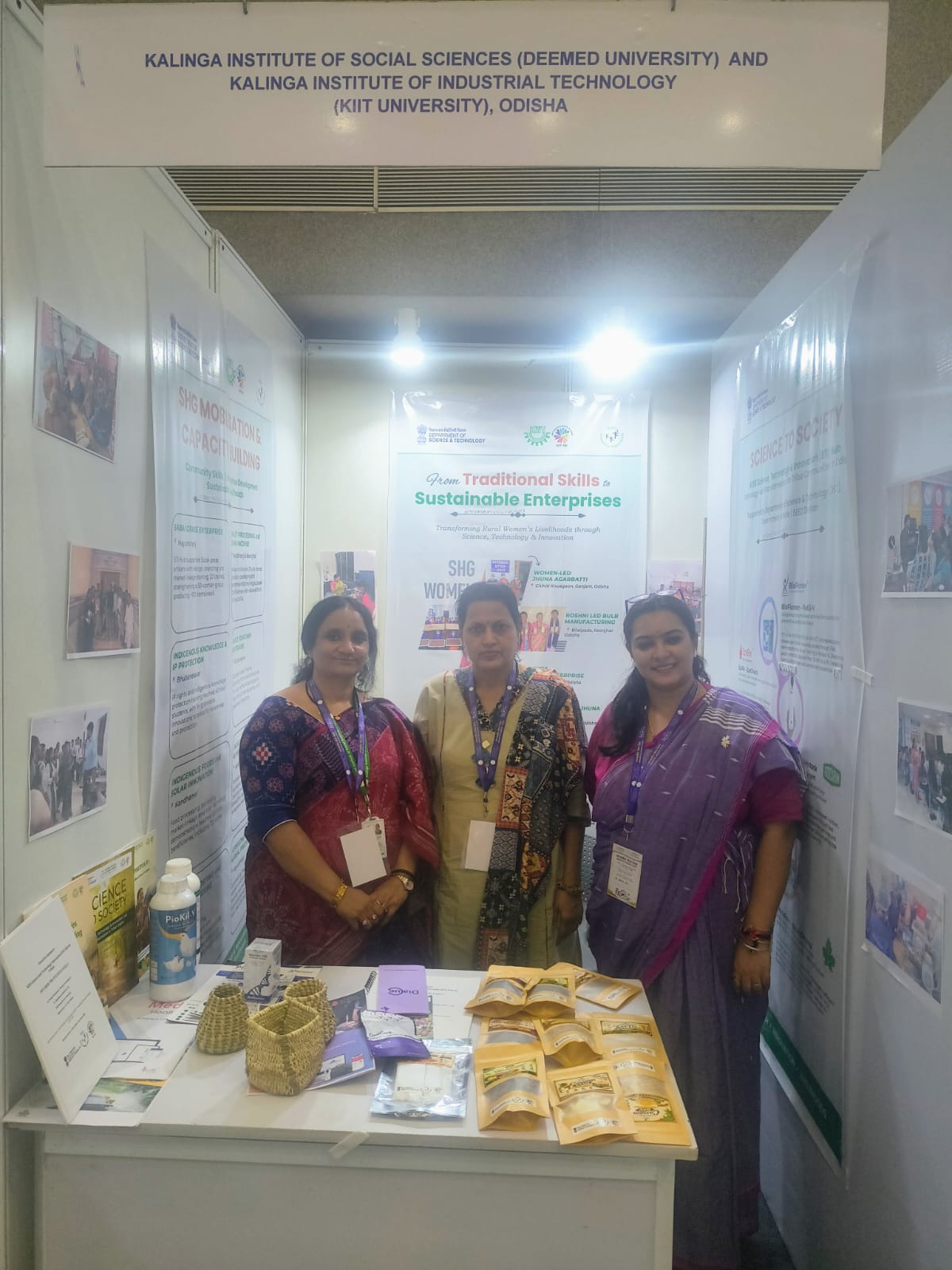
The Kalinga Institute of Social Sciences (KISS) Deemed to be University, in collaboration with KIIT-TBI through its Science, Technology and Innovation (STI) Hub for Tribals, participated in the Jan Jatiya Gaurav Divas celebration-cum-Expert Committee Review Meeting on 17th November 2026 at INSA Auditorium, New Delhi. Commemorating Bhagwan Birsa Munda’s birth anniversary under the theme “Science, Technology and Innovation for Tribal Empowerment,” the event was jointly organized by the DST-SEED Division and NECTAR.
The programme featured media interactions, an expert panel discussion, a grassroot-level worker’s talk, project reviews, and 26 exhibition stalls showcasing DST and NECTAR-supported tribal innovations. The Chief Guest, Dr. Jitendra Singh, Hon’ble Union Minister of State (Independent Charge) for Science and Technology & Earth Sciences, inaugurated the event and exhibition and released a Technology Compendium, Booklet, and video on SEED initiatives. The session also included addresses by Guest of Honour Prof. Ajay K. Sood (Principal Scientific Advisor), Prof. Umesh Waghmare (Secretary, DST), Dr. Anita Aggarwal (Head, SEED Division, DST), Dr. Arun Sarma (DG, NECTAR), and Ms. Rajni Rawat (Scientist ‘D’, DST).
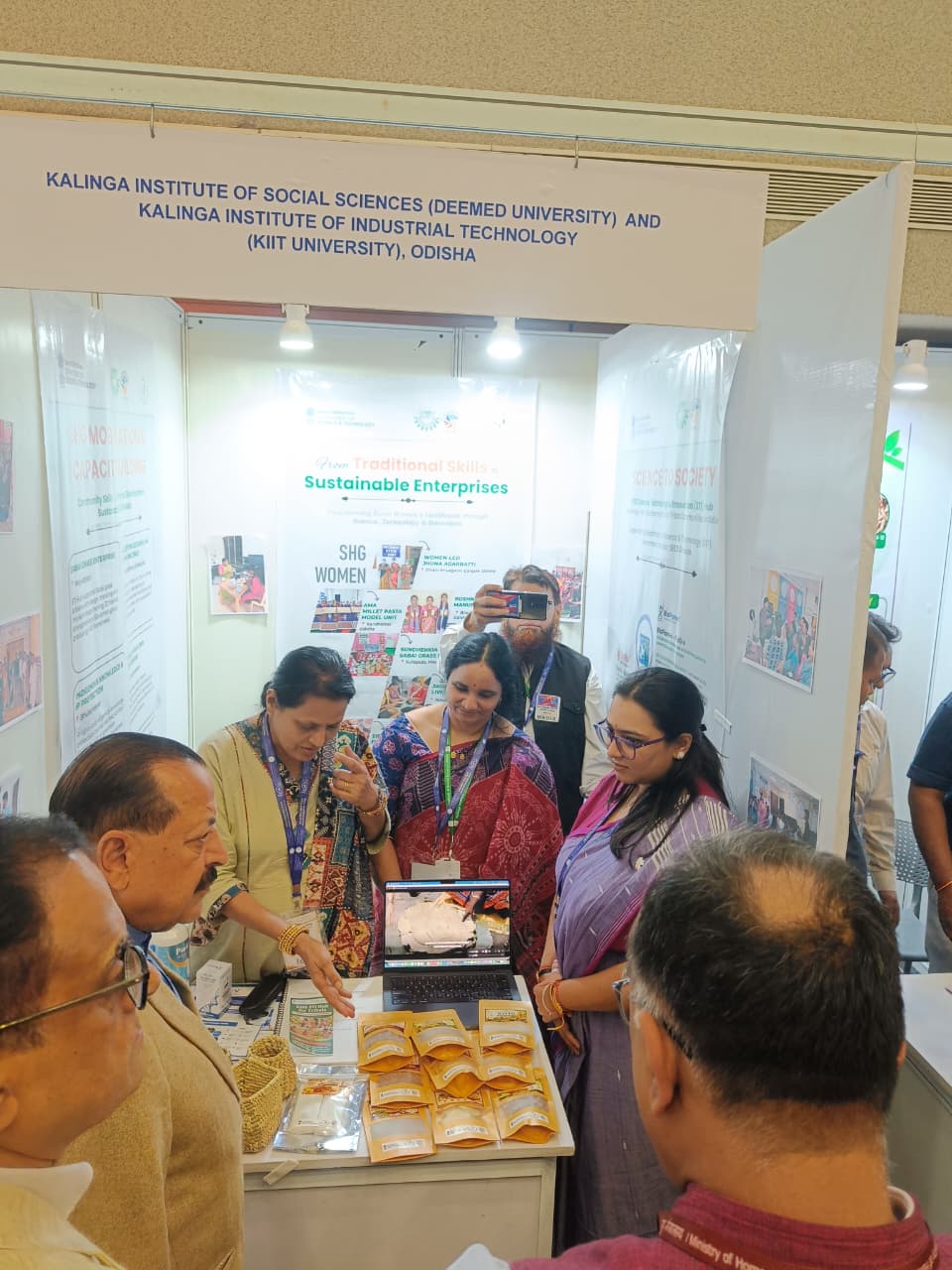
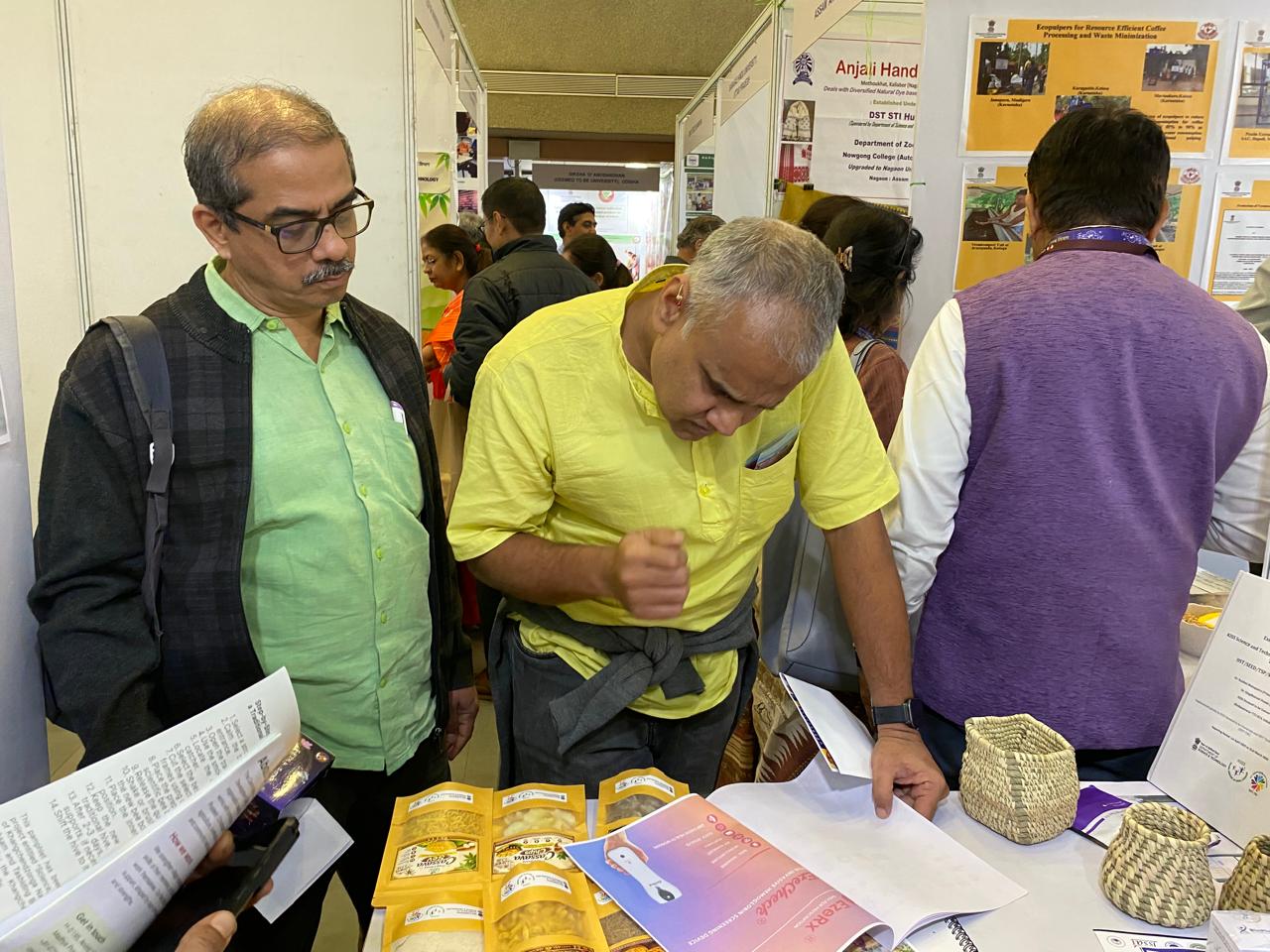
At the exhibition, KISS STI Hub showcased indigenous knowledge-based products and grassroots innovations co-developed with tribal communities and Self-Help Groups (SHGs) under the leadership of Principal Investigator (PI) Dr. Rashmi Mahapatra, Co-Principal Investigator (Co-PI) Dr. Snigdharani Panda and Project Associate Ms. Aditi Roy. The showcase highlighted initiatives in food processing, value addition, and fabrication, demonstrating how the integration of traditional knowledge with modern scientific practices can improve product quality, empower micro-enterprises, and promote sustainable livelihood opportunities, particularly for tribal women and rural entrepreneurs.
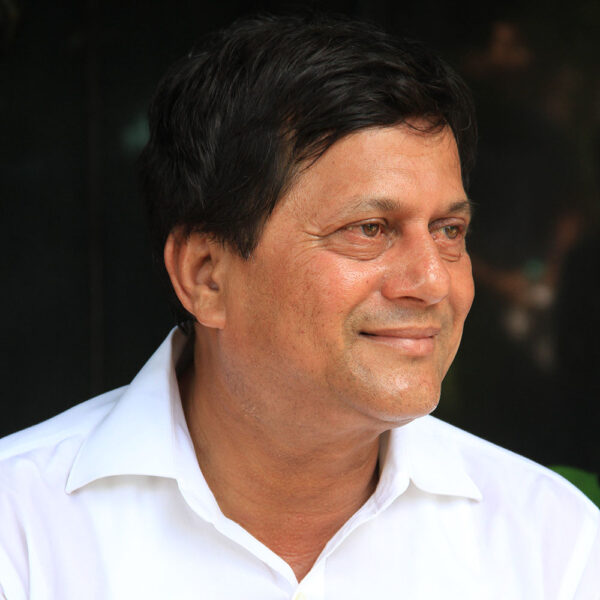
Reaffirming the vision of Founder Prof. Achyuta Samanta for tribal empowerment and inclusive development, KISS STI Hub’s participation highlighted the importance of institutional partnerships and science-driven initiatives in safeguarding traditional knowledge while fostering equitable socio-economic progress.