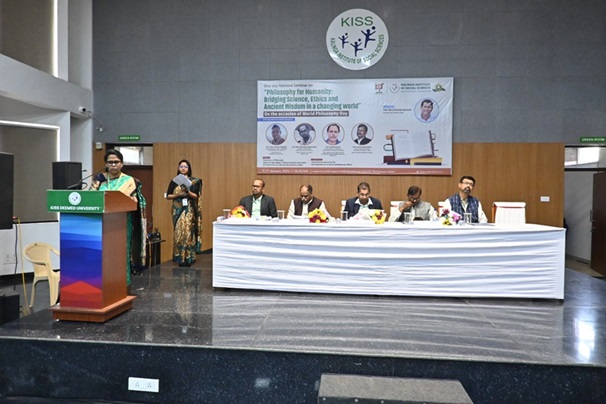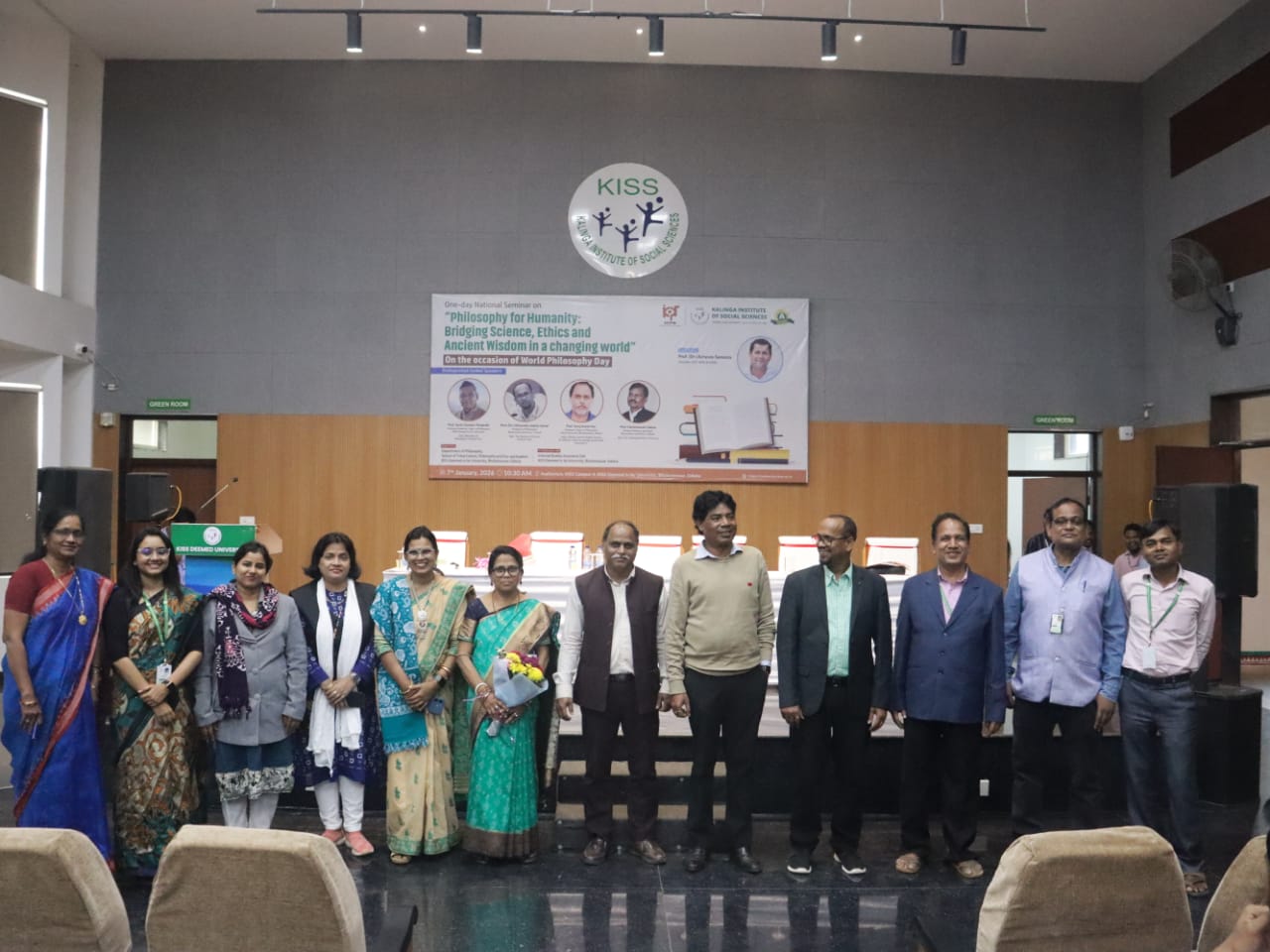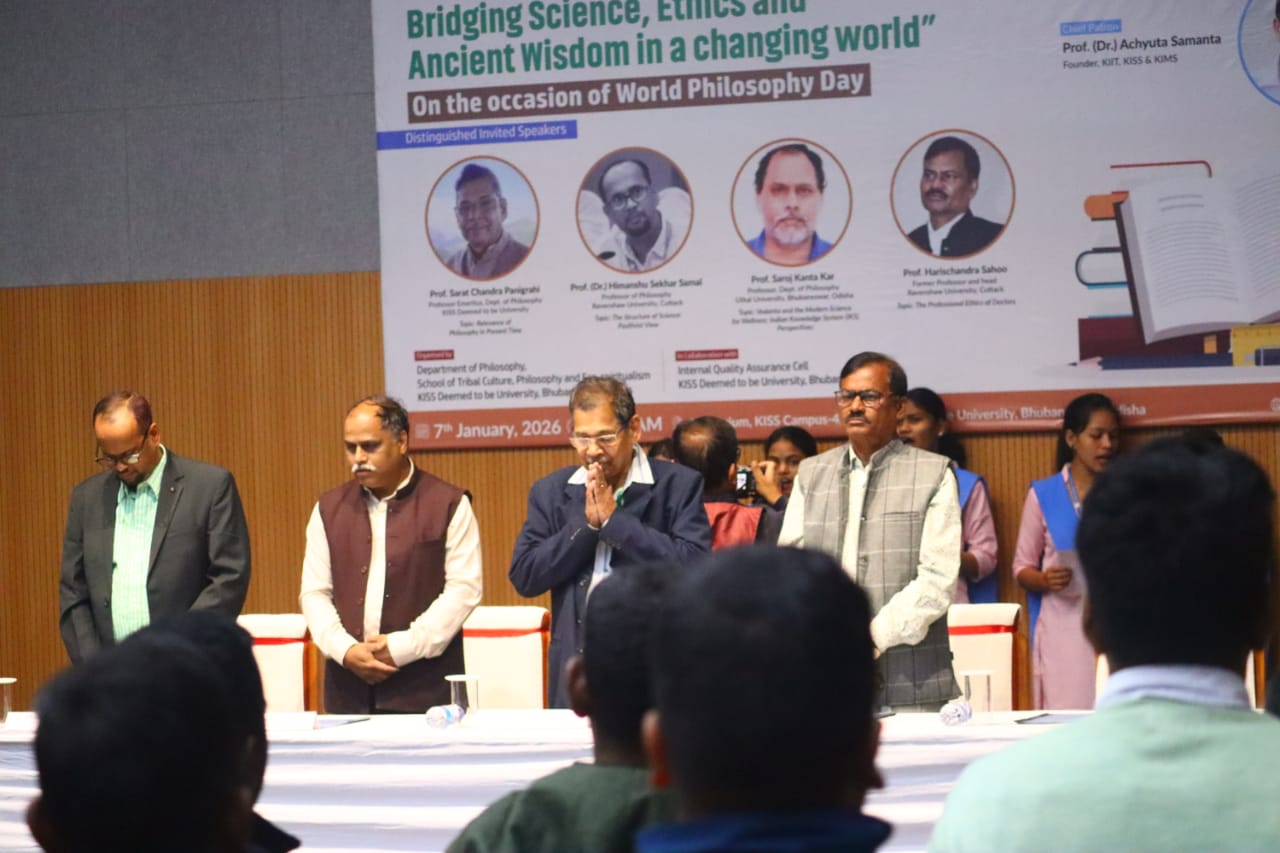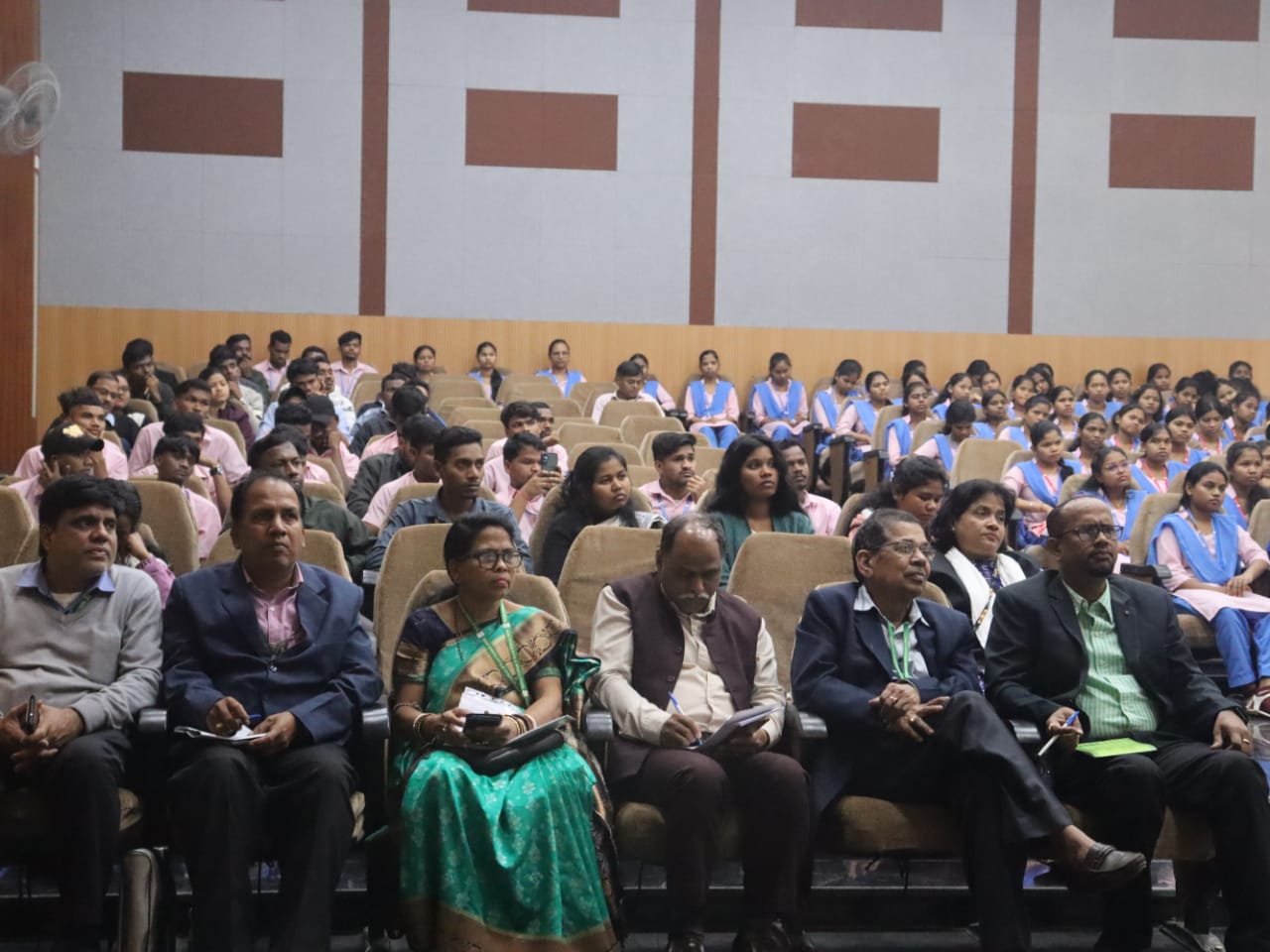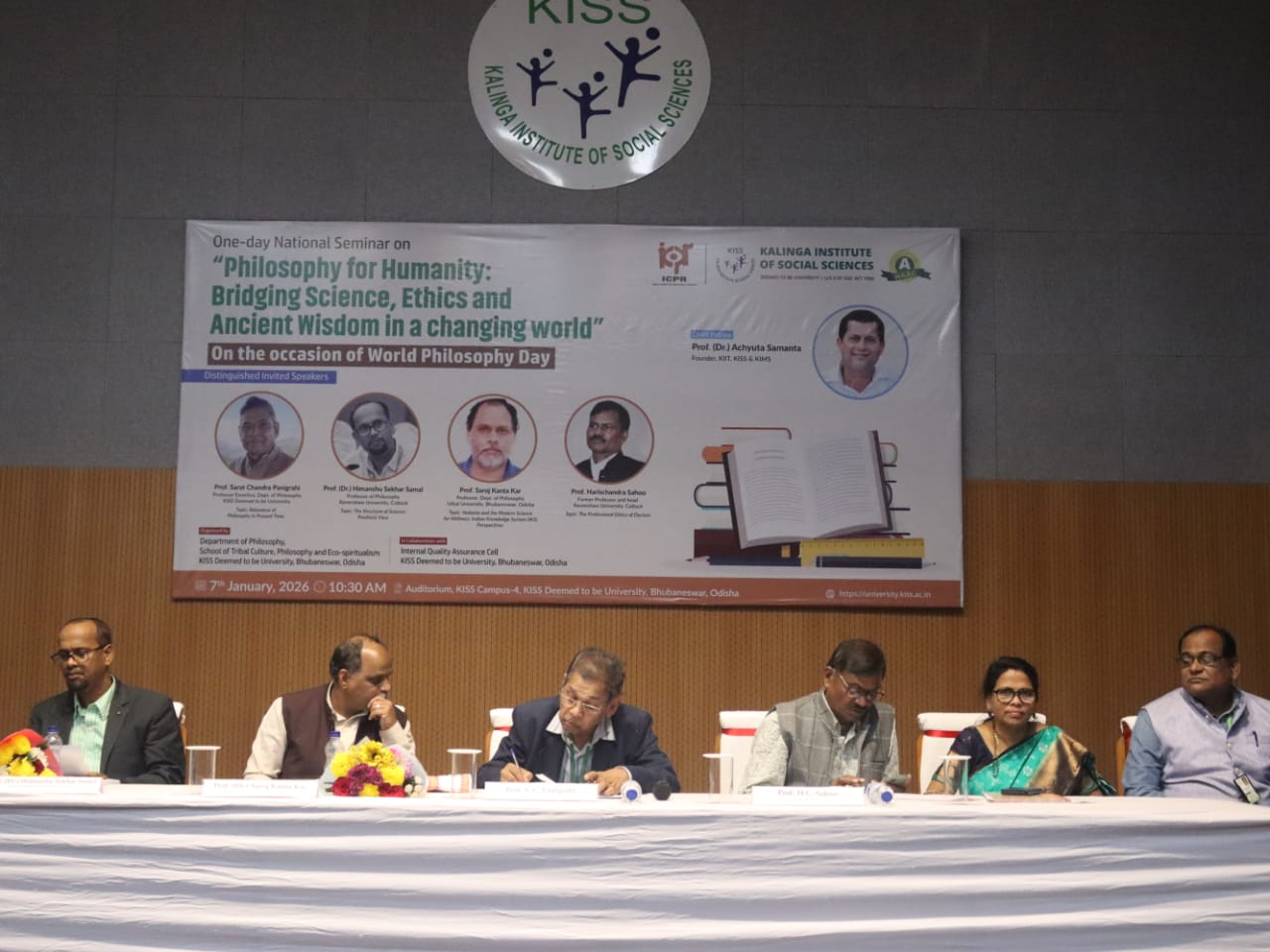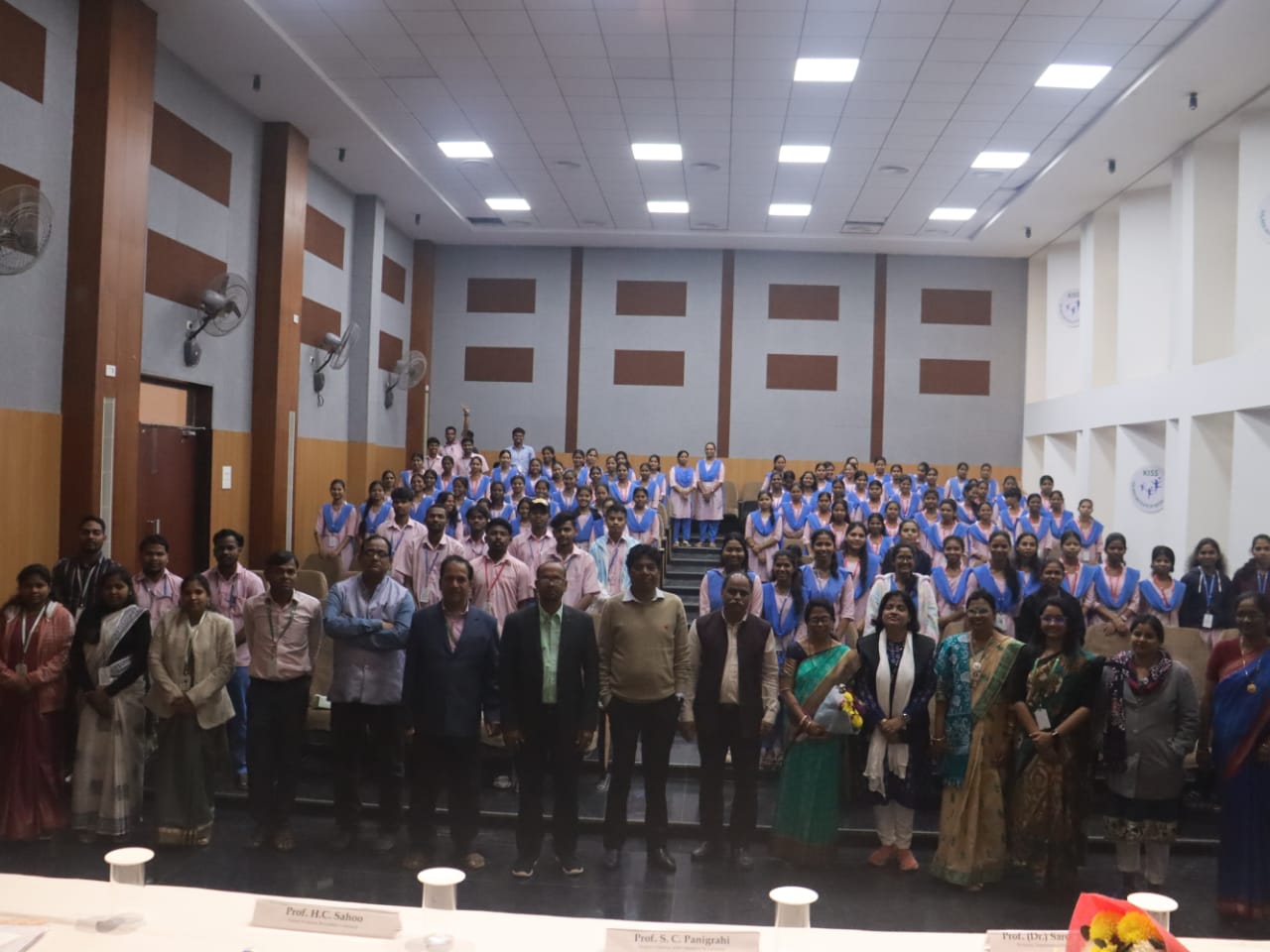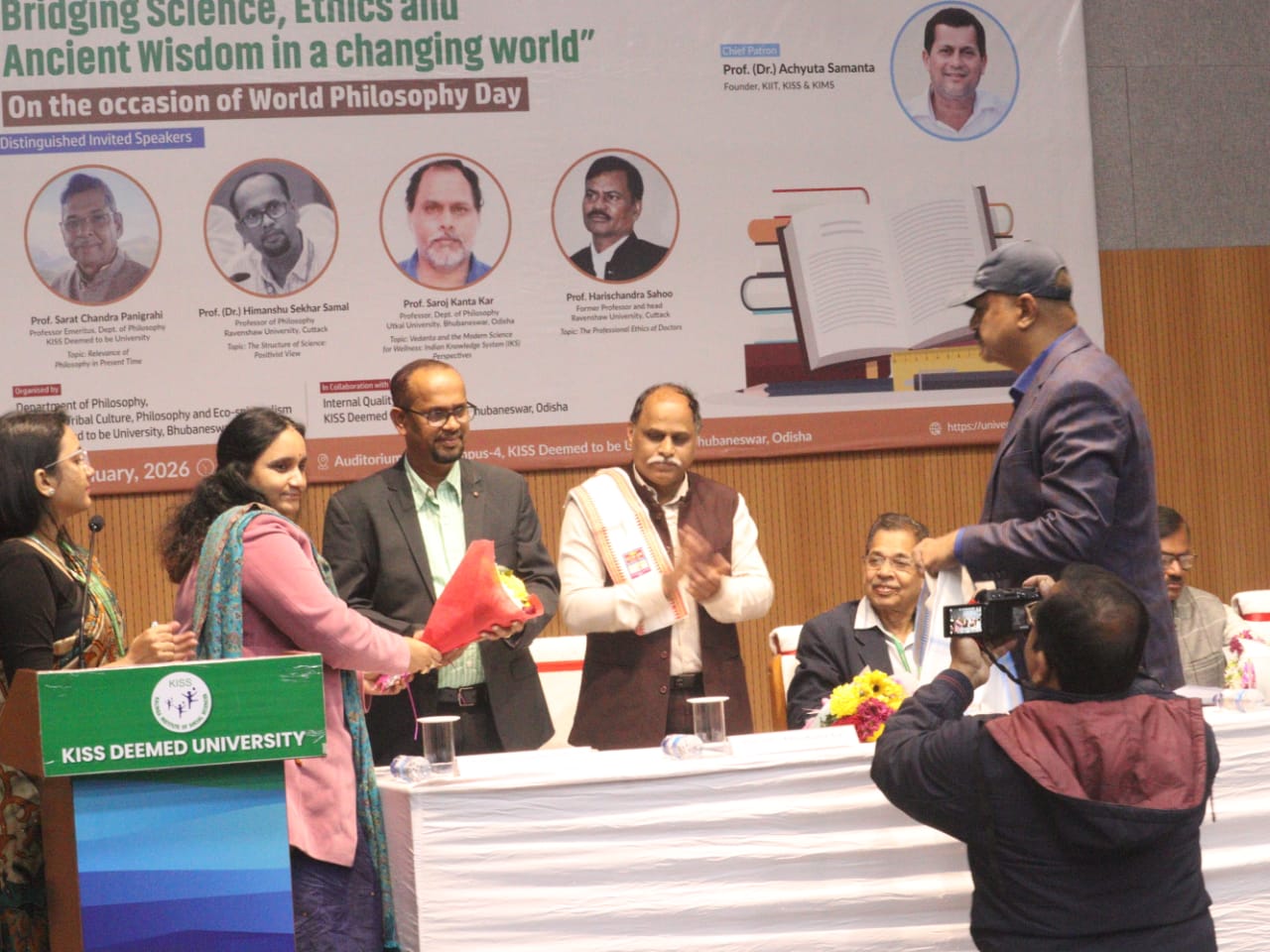
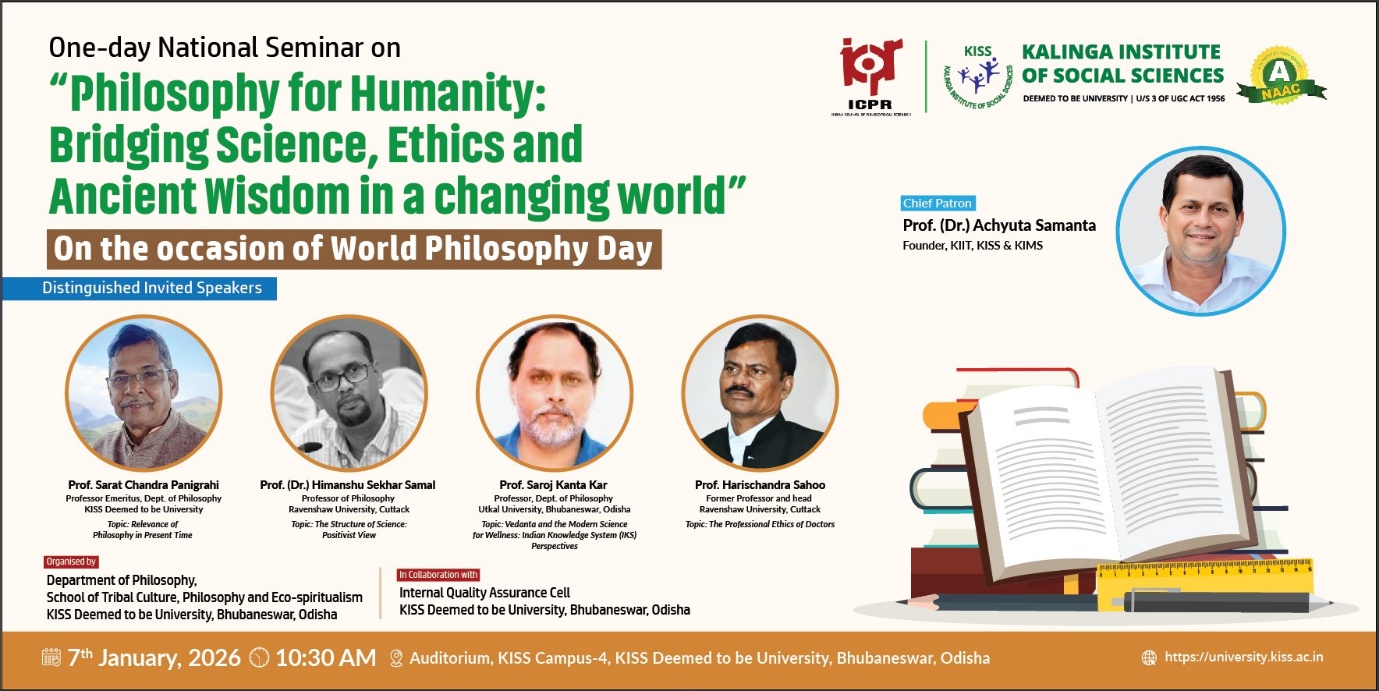
The Department of Philosophy, School of Tribal Culture, Philosophy and Eco-Spiritualism (STCPE), KISS-DU observed World Philosophy Day on 7th January 2026. This event was organized with the support of Indian Council of Philosophical Research (ICPR), New Delhi and the theme of the seminar was Philosophy for Humanity: Bridging Science, Ethics and Ancient Wisdom in a Changing World.
The seminar was organised with the objective of highlighting the relevance of philosophy in contemporary society and its interconnection with education, science, wellness, and professional ethics. The programme brought together eminent scholars who shared profound philosophical insights, enriching the intellectual atmosphere of the event.
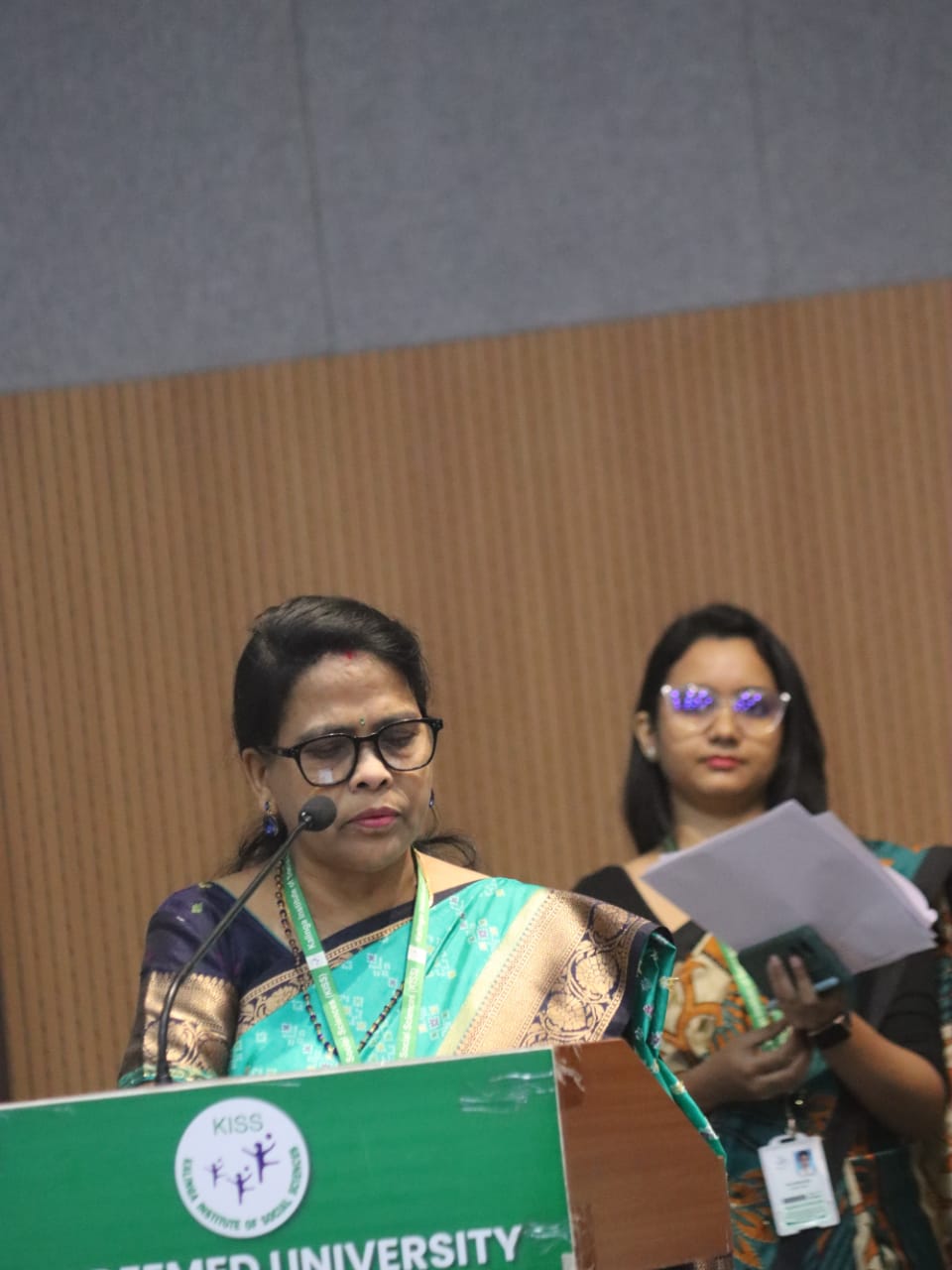
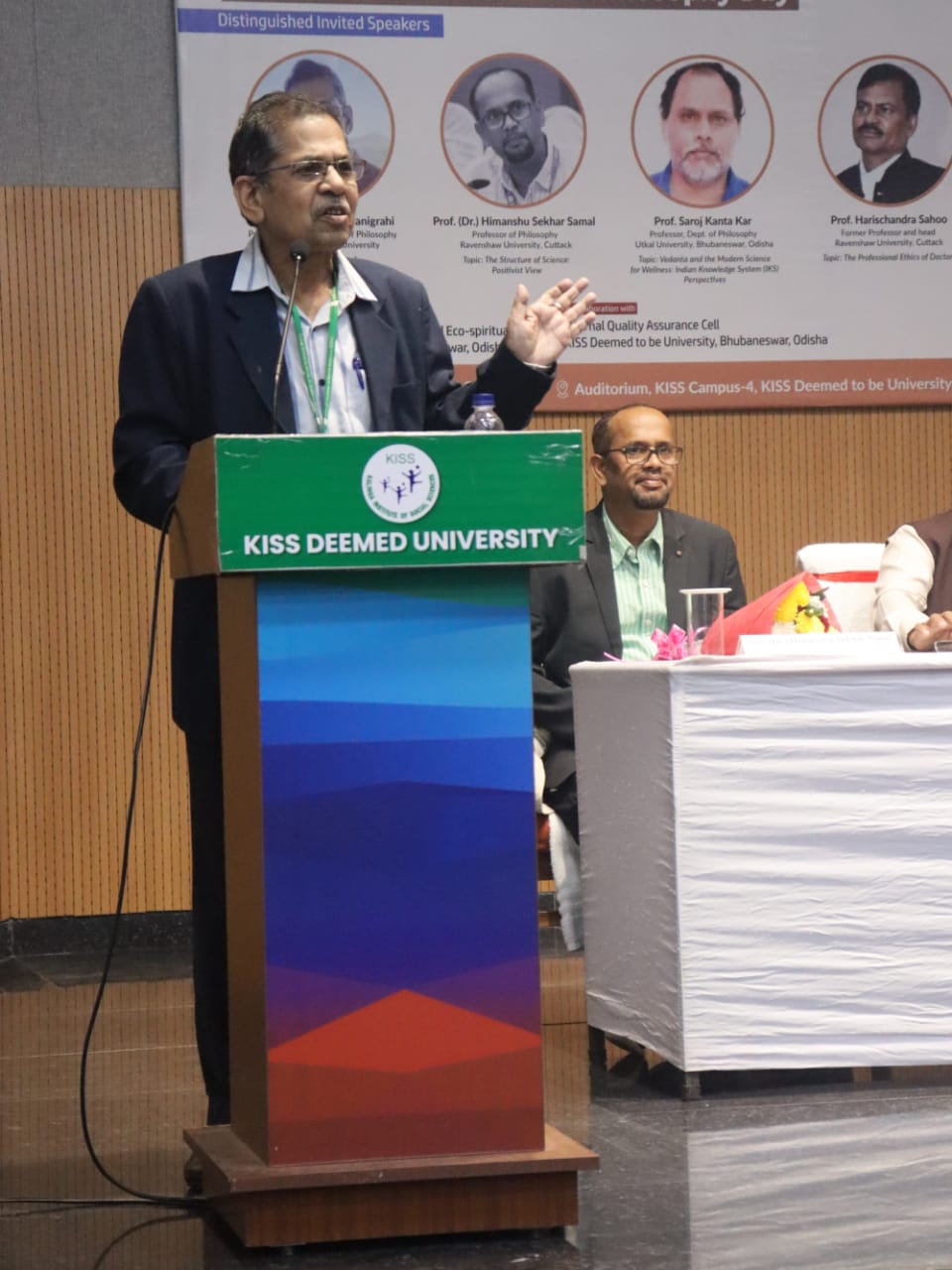
Speaking at the Inaugural Session, Dr. Anirban Bandyopadhaya, Dean, STCPE, presided over the function and delivered the welcome address. He addressed the gathering, emphasizing the importance of philosophical thinking in nurturing ethical values, critical reasoning, and holistic education in the present era. Dr. Mamta Rani Pati, the Convenor of the seminar set the tone of the event by presenting the concept note wherein she emphasized philosophy as a unifying discipline capable of bridging all other disciplines. She highlighted that in a rapidly changing world characterised by technological advancement, ecological crisis, and moral uncertainties, philosophy plays a crucial meditating role by offering critical reflection, value-oriented and holistic understanding. Dr. Pati also introduced the speakers.
Addressing the first session, Professor Sarat Chandra Panigrahi, Professor Emeritus, KISS-DU spoke on the topic The Role of Philosophy in our Educational System. Professor Panigrahi elaborated on the enduring relevance of philosophy in contemporary society. He emphasized that philosophy plays a vital role in shaping ethical reasoning, value-based education, and critical thinking among students. He highlighted how philosophical inquiry strengthens the education system by fostering rational thinking, moral responsibility, and intellectual discipline, which are essential for addressing present-day social and educational changes. His address reaffirmed that philosophy remains central to human life as it guides individuals in making informed, ethical and meaningful choices in an increasingly complex world.
The second session was chaired by Professor Saroj Kanta Kar, Associate Professor, spoke on Vedanta and Modern Science for Wellness: Indian Knowledge System Perspectives. Professor Kar offered an insightful synthesis of metaphysical wisdom and scientific understanding. He explored the harmony between Vedantic philosophy and modern scientific thought, particularly in the context of human wellness. He explained how Indian Knowledge System offer holistic approaches to physical, mental and spiritual well-being. His lecture demonstrated how ancient philosophical insights can complement modern science to promote sustainable and balanced living.
Professor Harish Chandra Sahoo former Professor, Ravenshaw University deliberated on Professional Ethics of Doctors. He threw light on the ethical foundations of the medical profession. He discussed the moral obligations of doctors towards patients, society, and humanity at large. His address stressed principles such as compassion, integrity, accountability, and respect for human dignity, highlighting the relevance of philosophical ethics in professional conduct, especially in healthcare.
Professor Himanshu Sekhar Samal, Associate Professor, Ravenshaw University spoke on the topic The Structure of Science: Positivists view at the fourth session. He presented a scholarly discussion on the positivist view of science, focusing on empirical observation, logical reasoning, and verification. He explained the philosophical foundations of scientific knowledge and highlighted how positivism has shaped modern scientific methodologies, contributing to objectivity and systematic inquiry. His lecture reinforced the idea that science and philosophy are not adversaries but complementary modes of inquiry, jointly contributing to a more comprehensive and responsible understanding of the world.
The session aptly reflected the core objectives of Indian Council of Philosophical Research (ICPR) by promoting philosophical inquiry, interdisciplinary dialogue and critical thinking among scholars and students. The seminar successfully demonstrated that philosophy remains indispensable in bridging science, ethics and ancient wisdom for the betterment of humanity. The deliberation highlighted the need for integrative and interdisciplinary approaches to address contemporary challenges, reaffirming philosophy’s role as a guiding force for intellectual inquiry, ethical reflection, and holistic human development.
The session concluded with a Vote of Thanks by Dr. Mamta Rani Pati, Head of Philosophy Department and the Convenor of the Seminar.