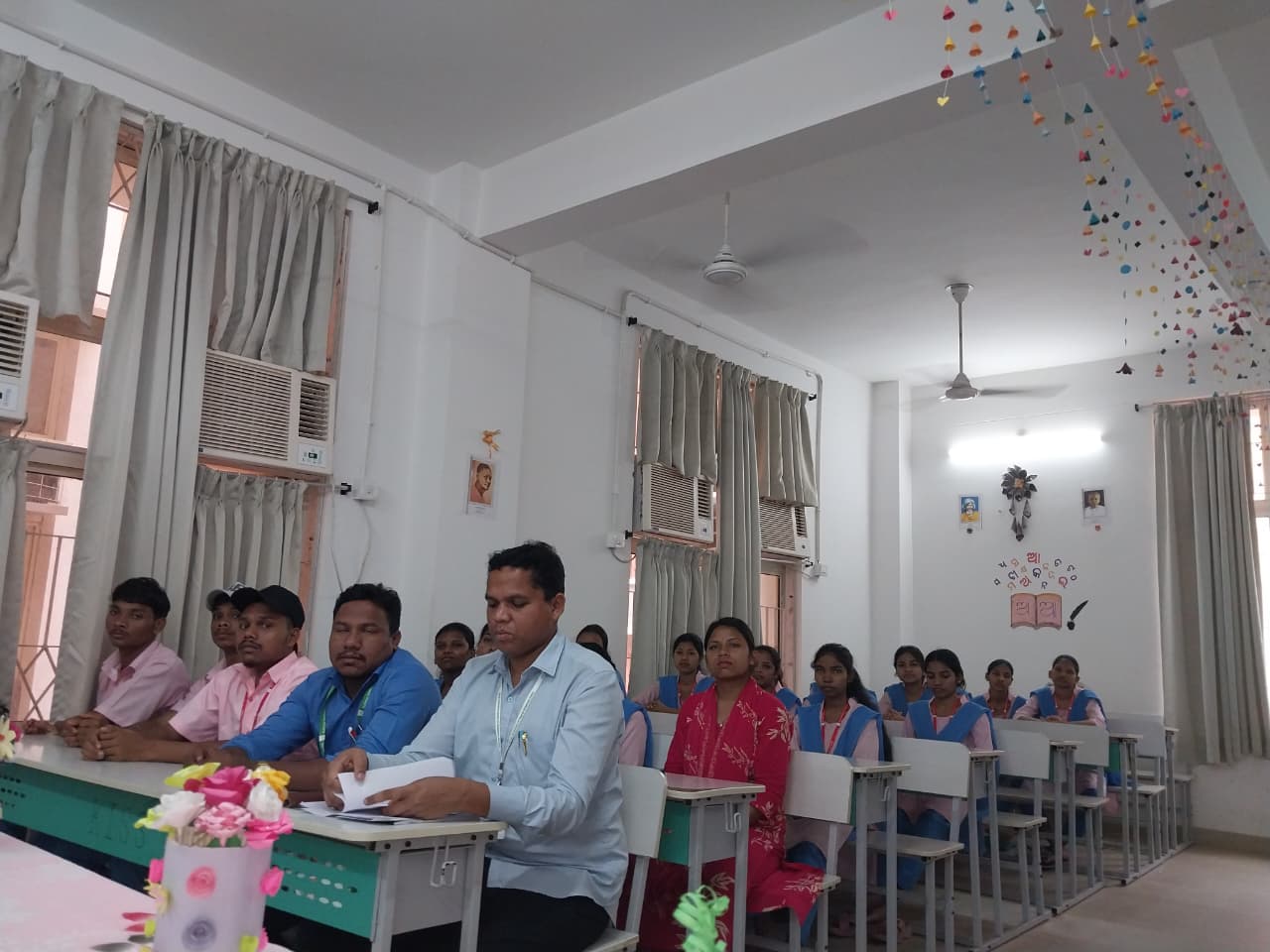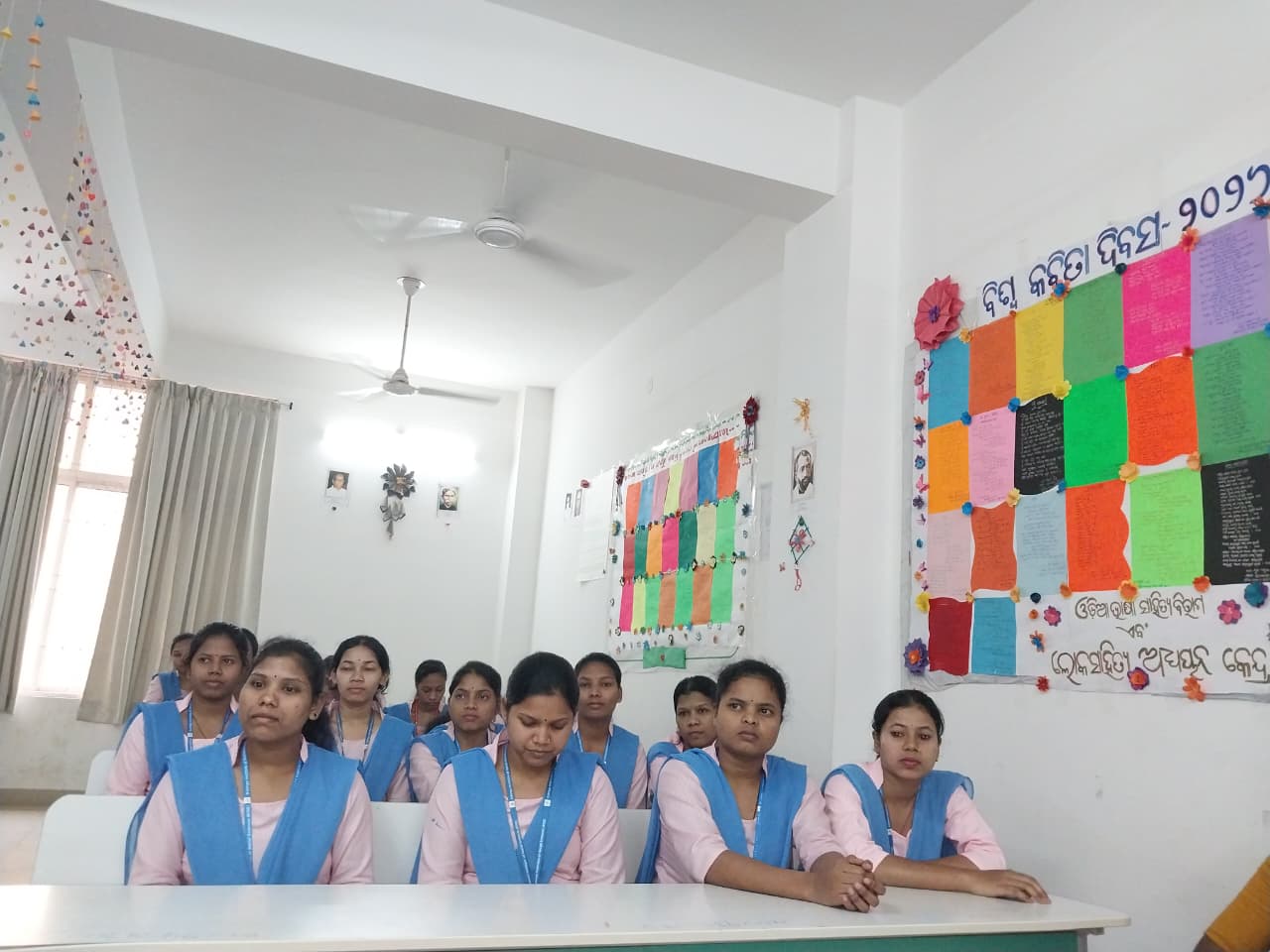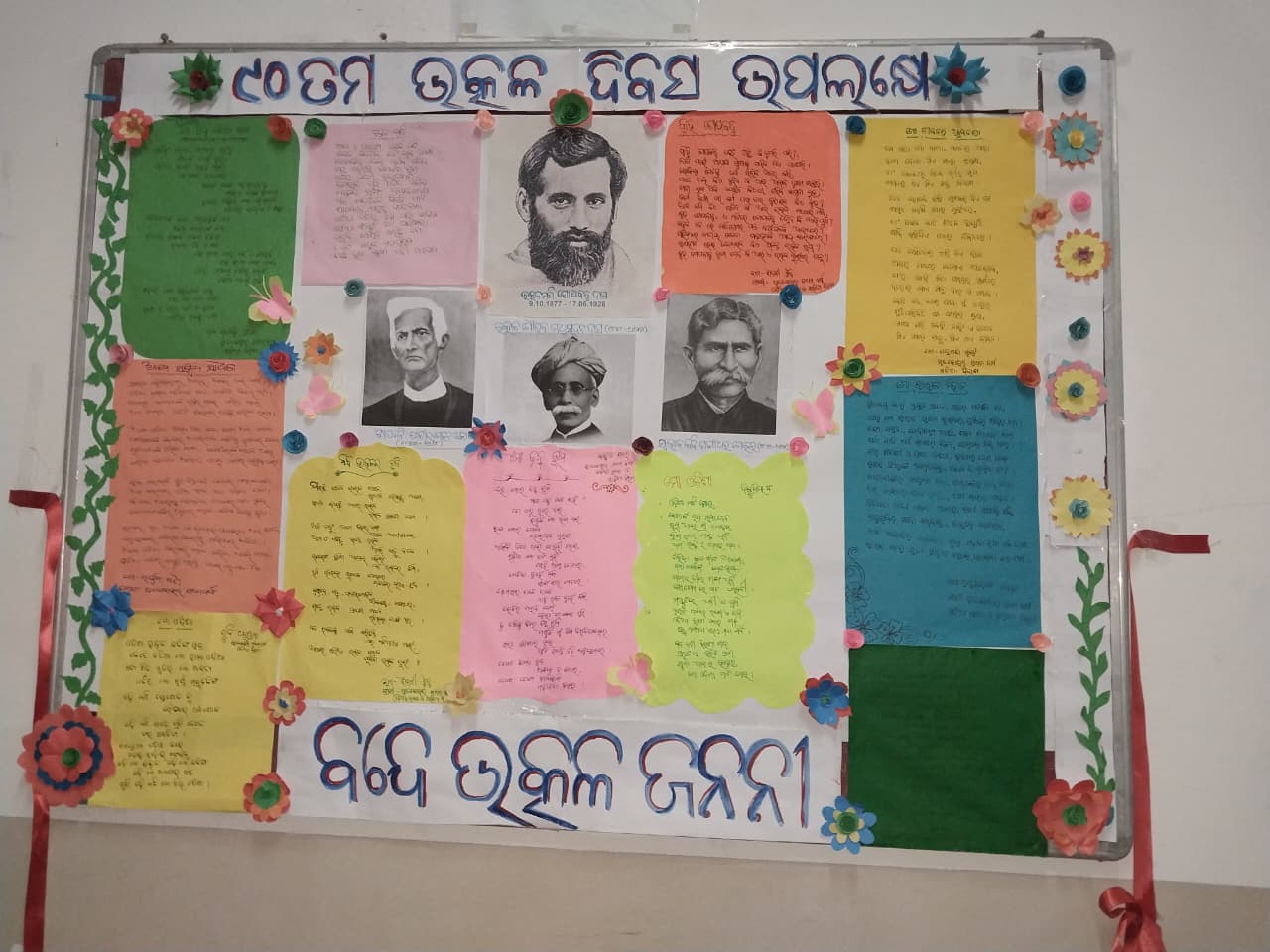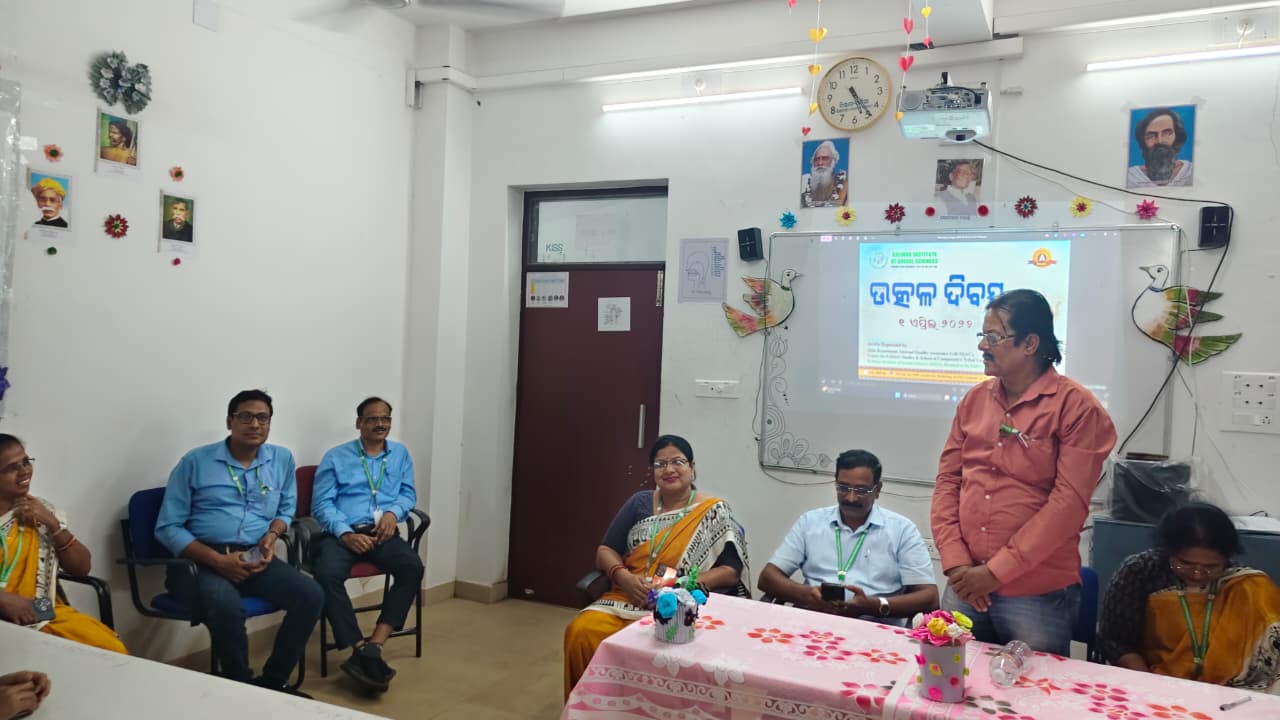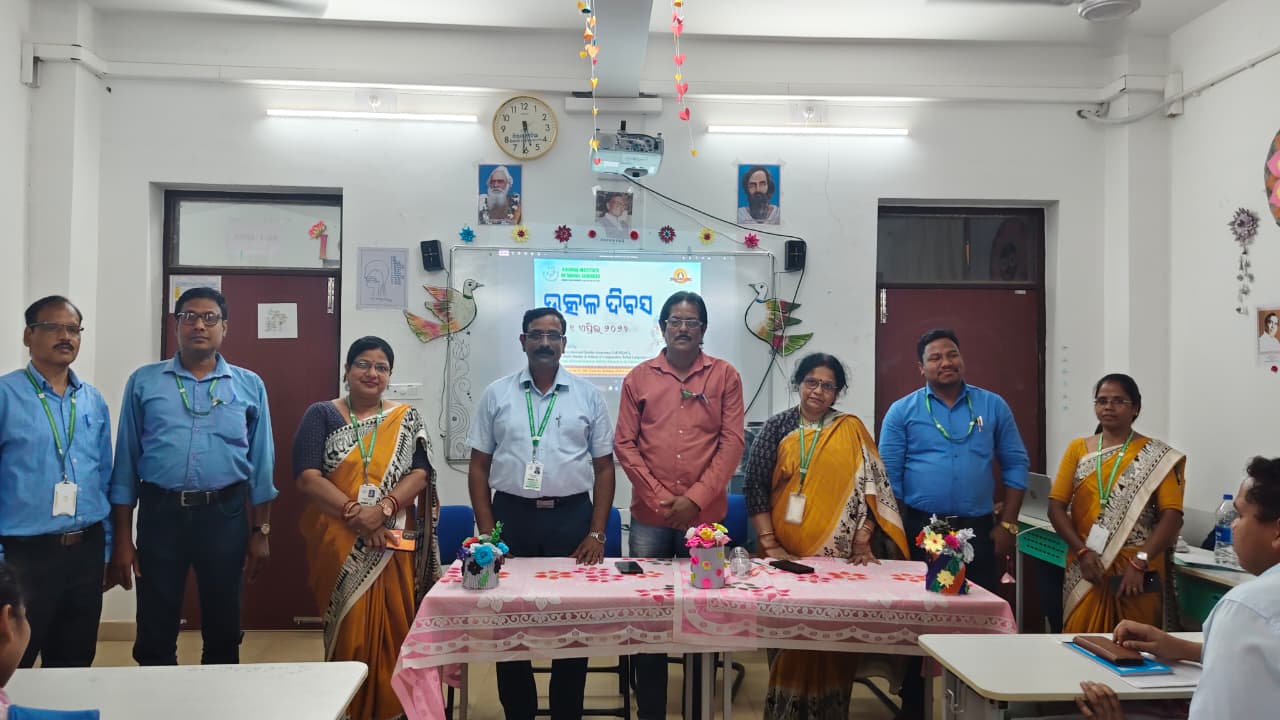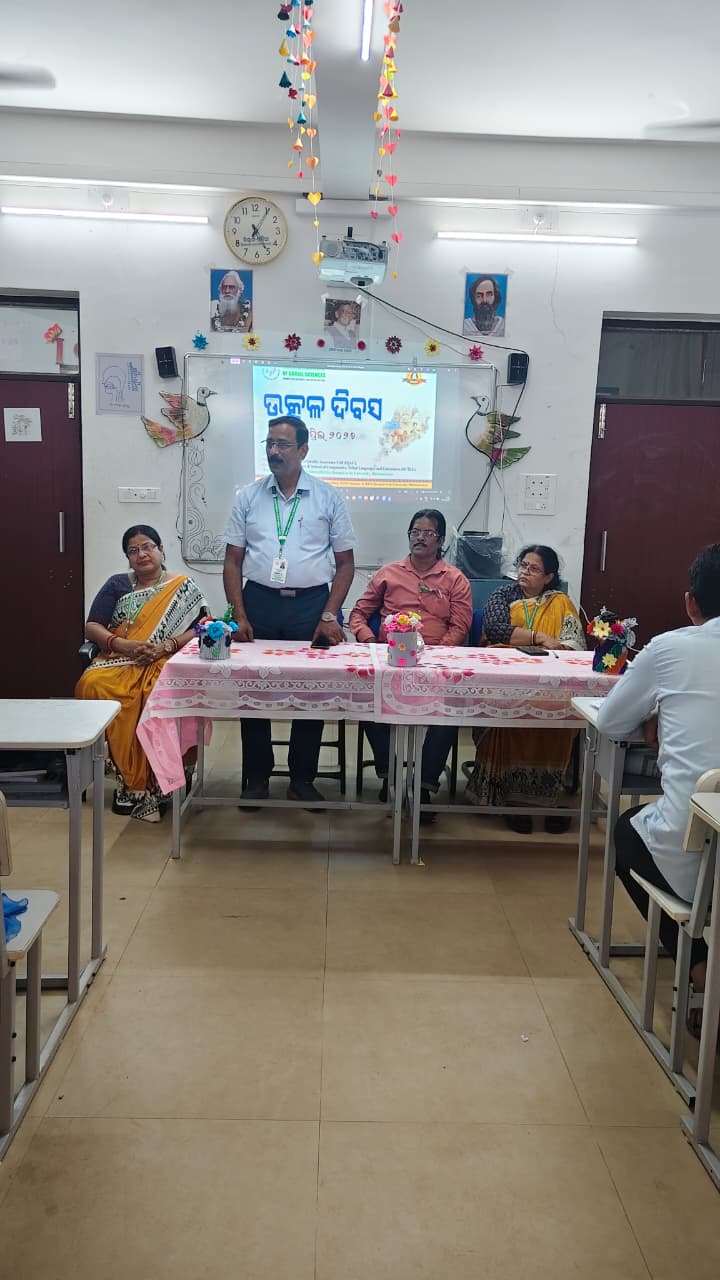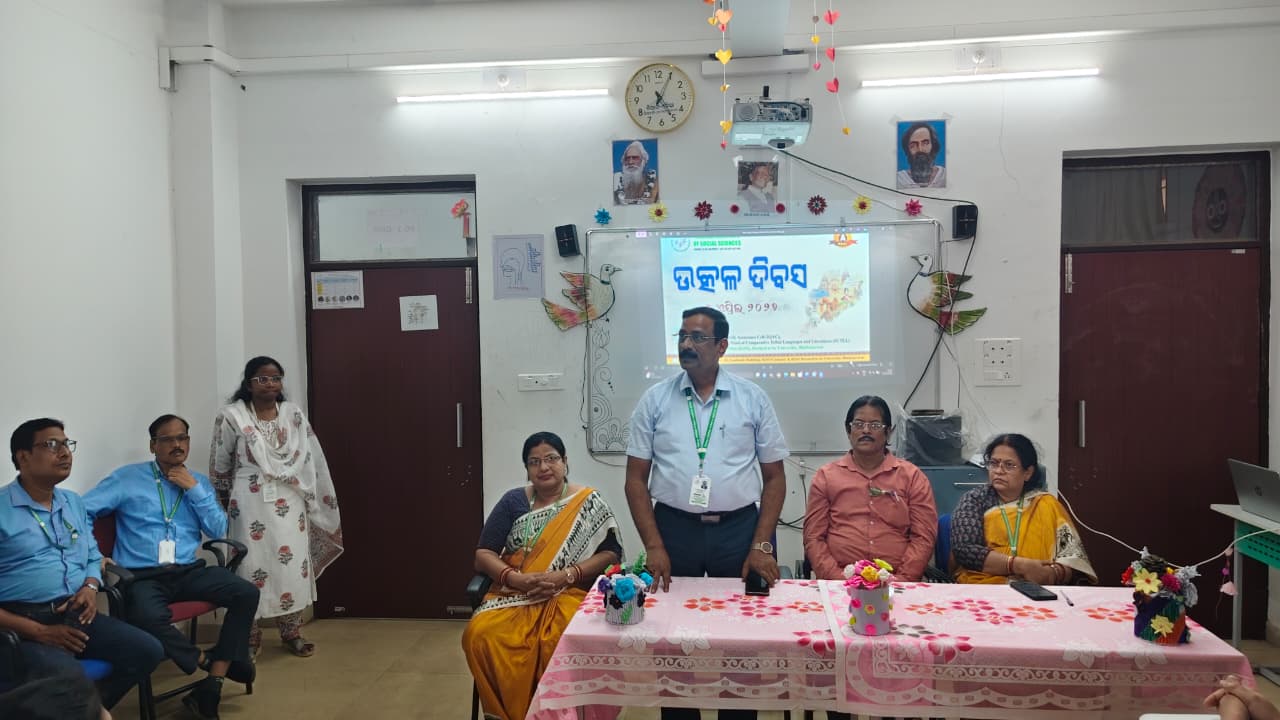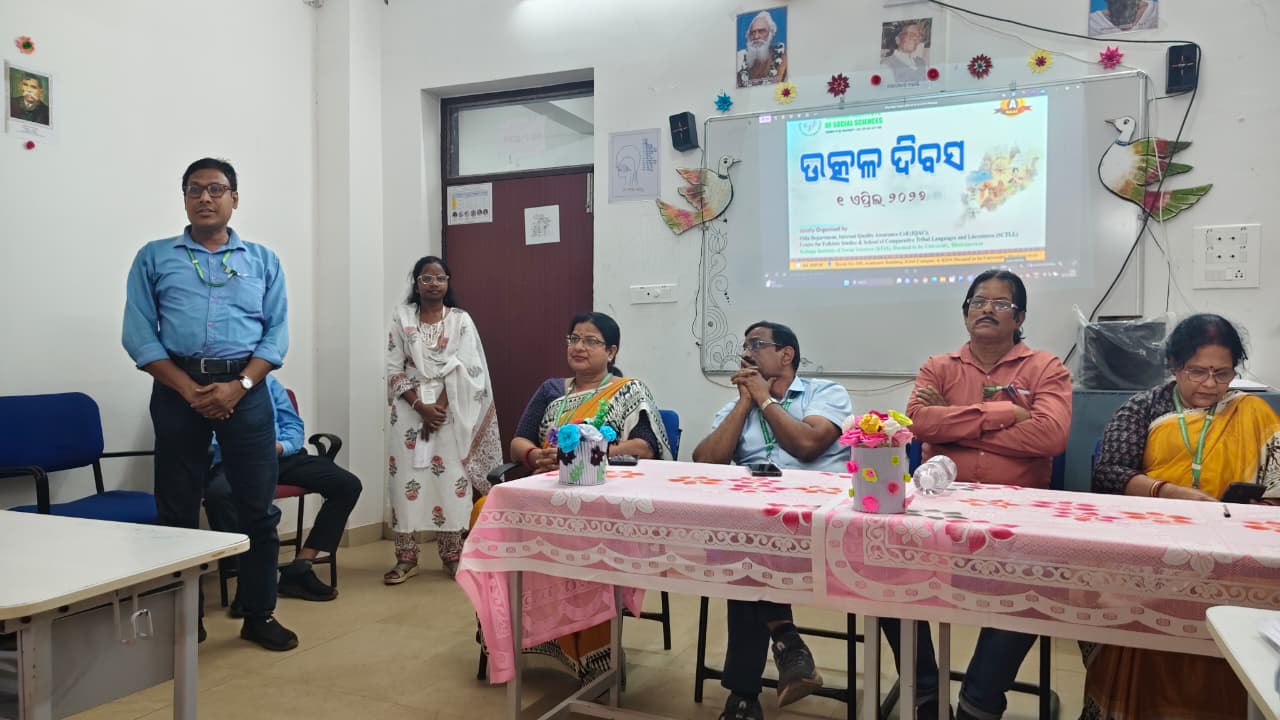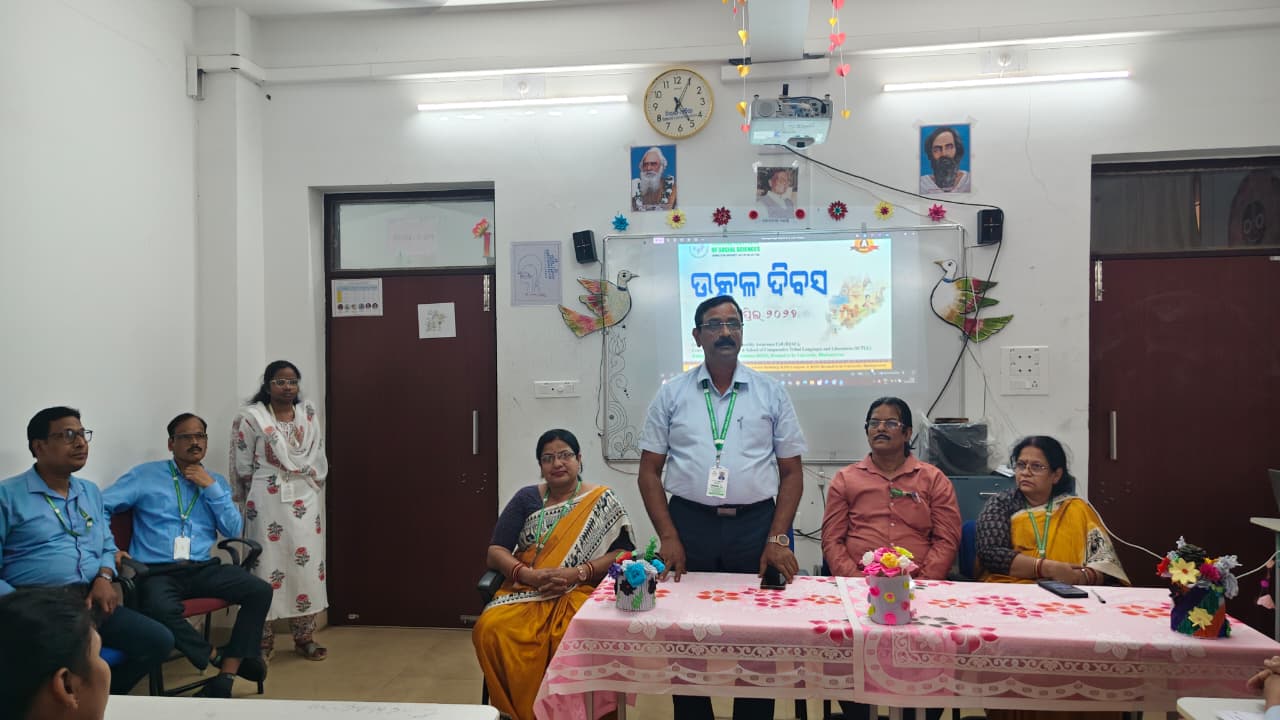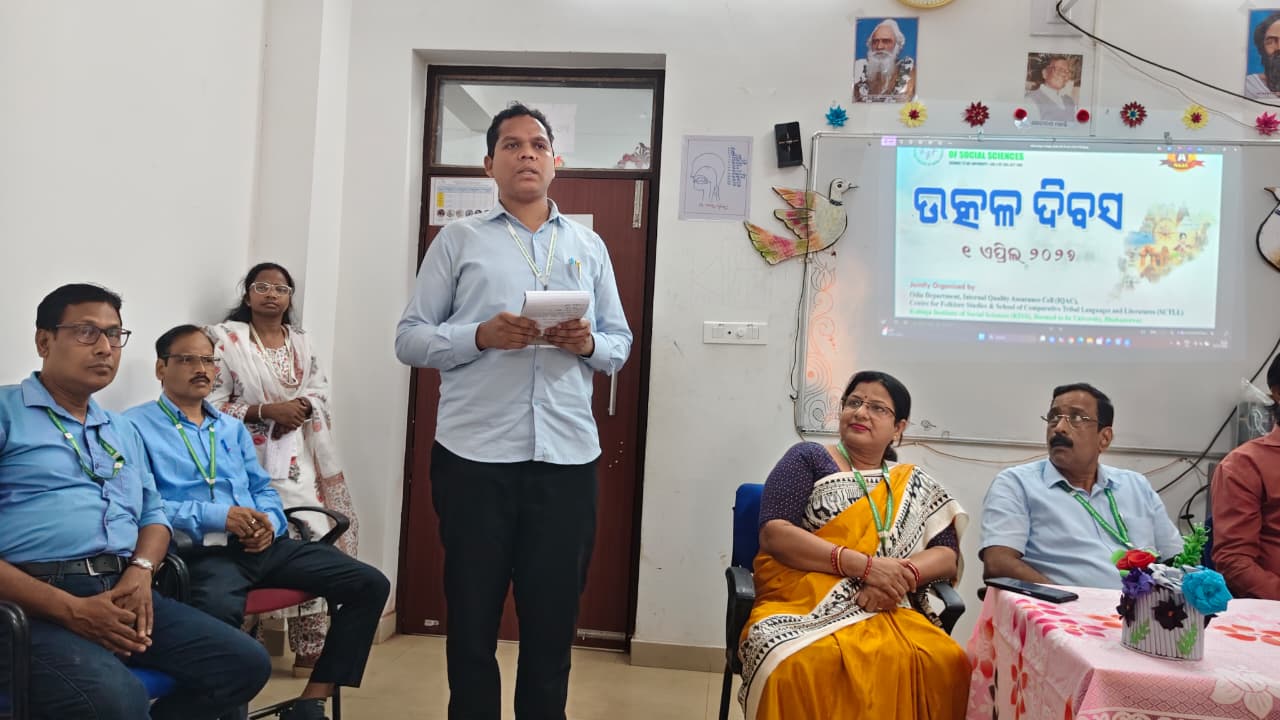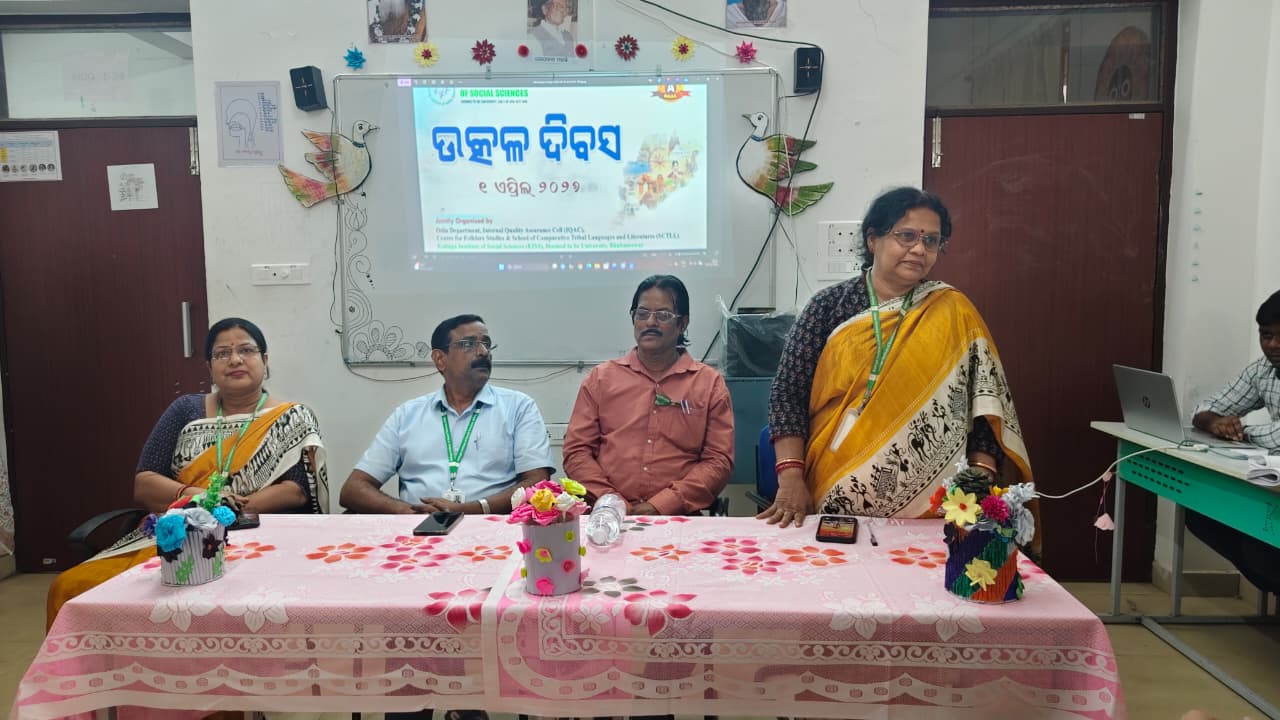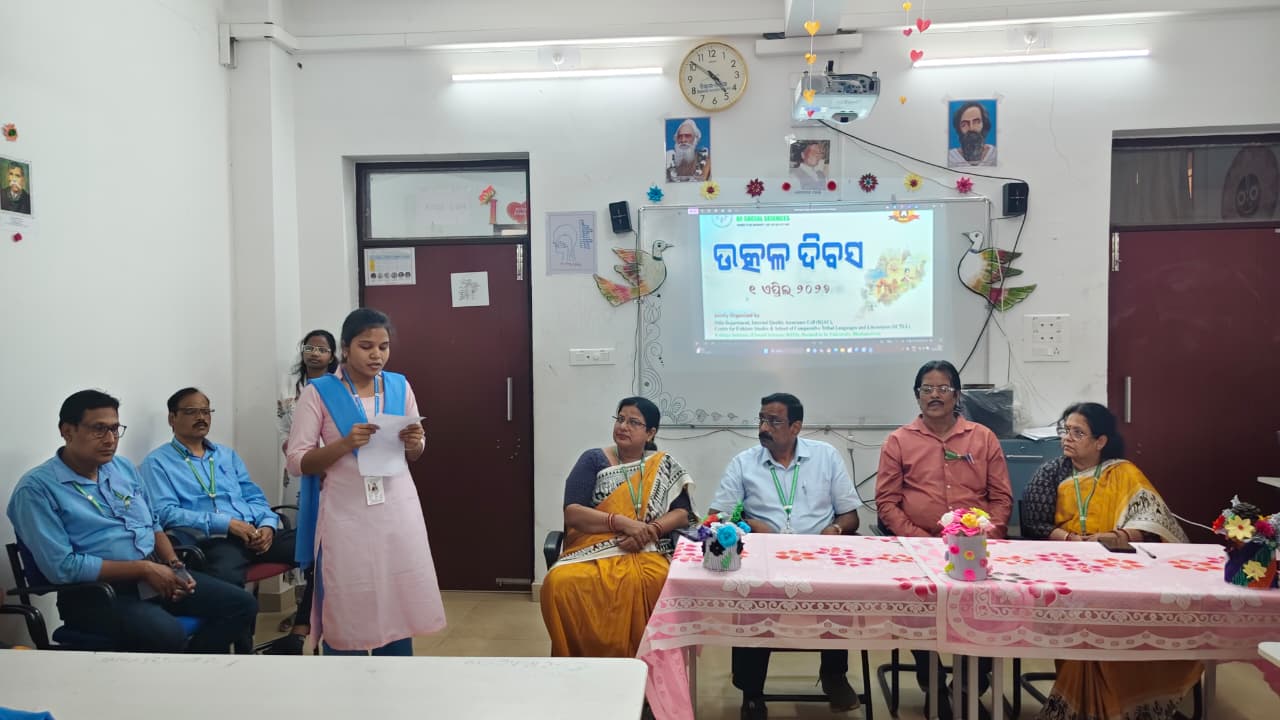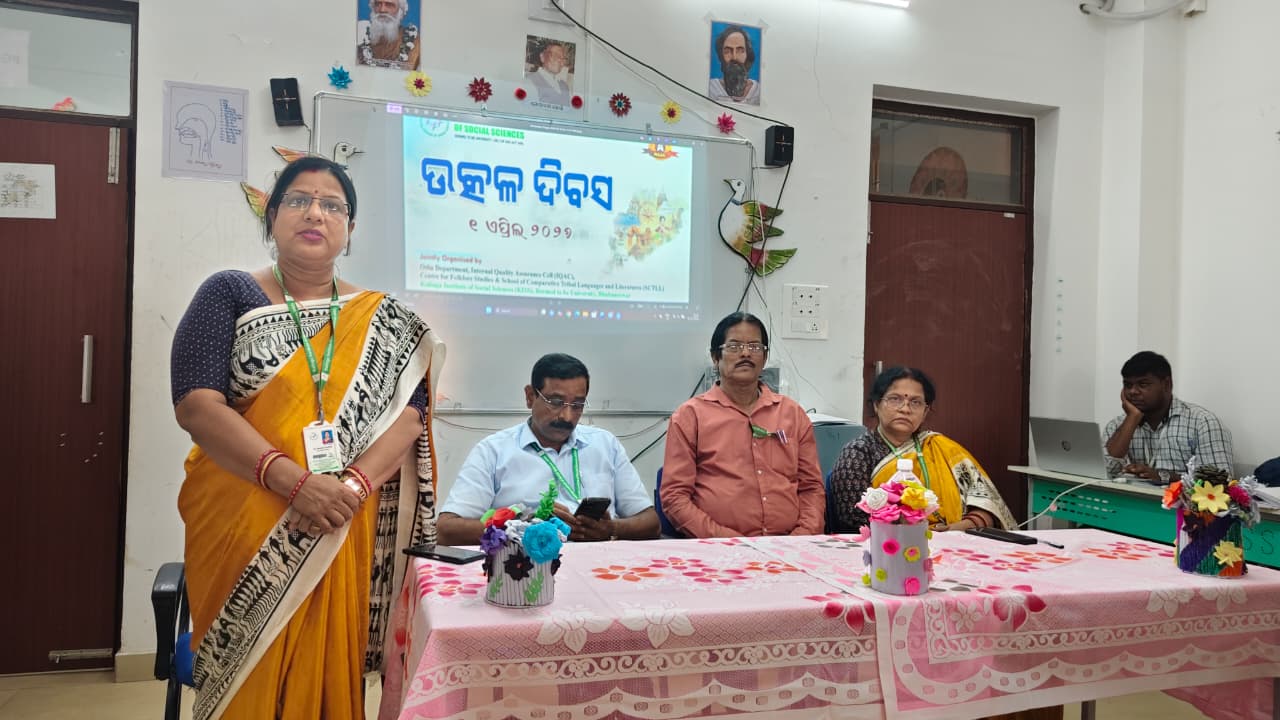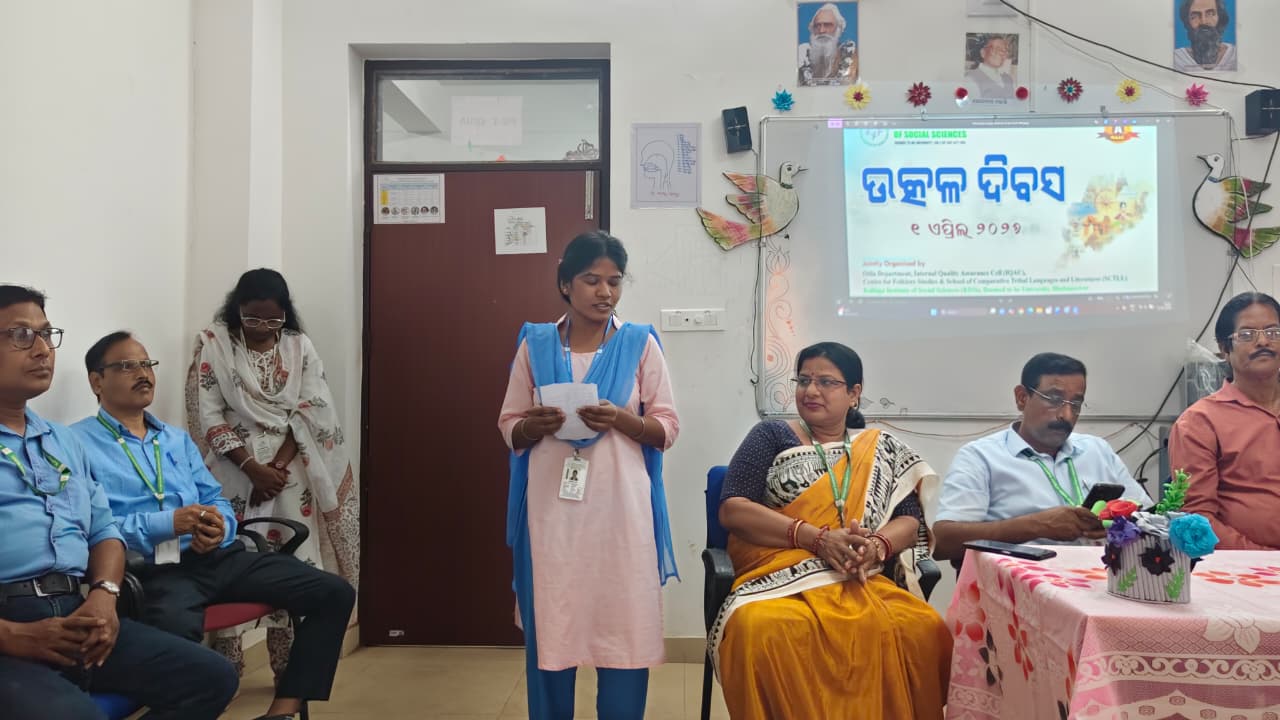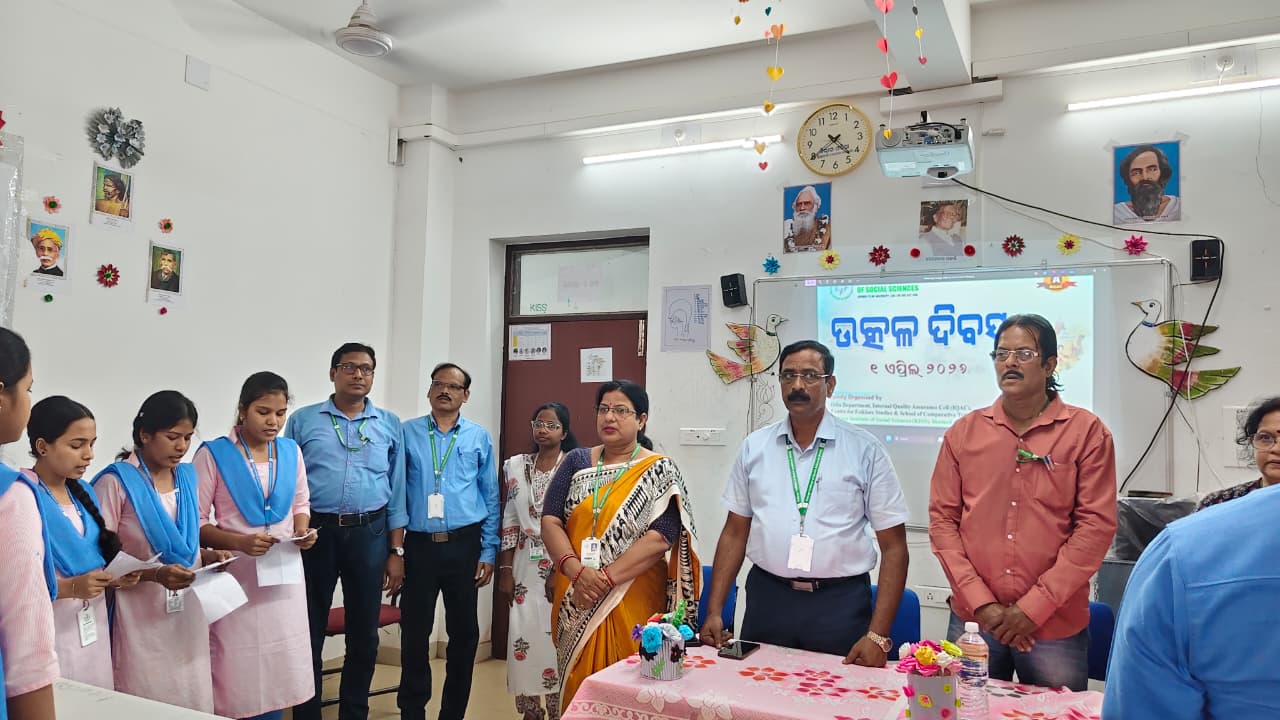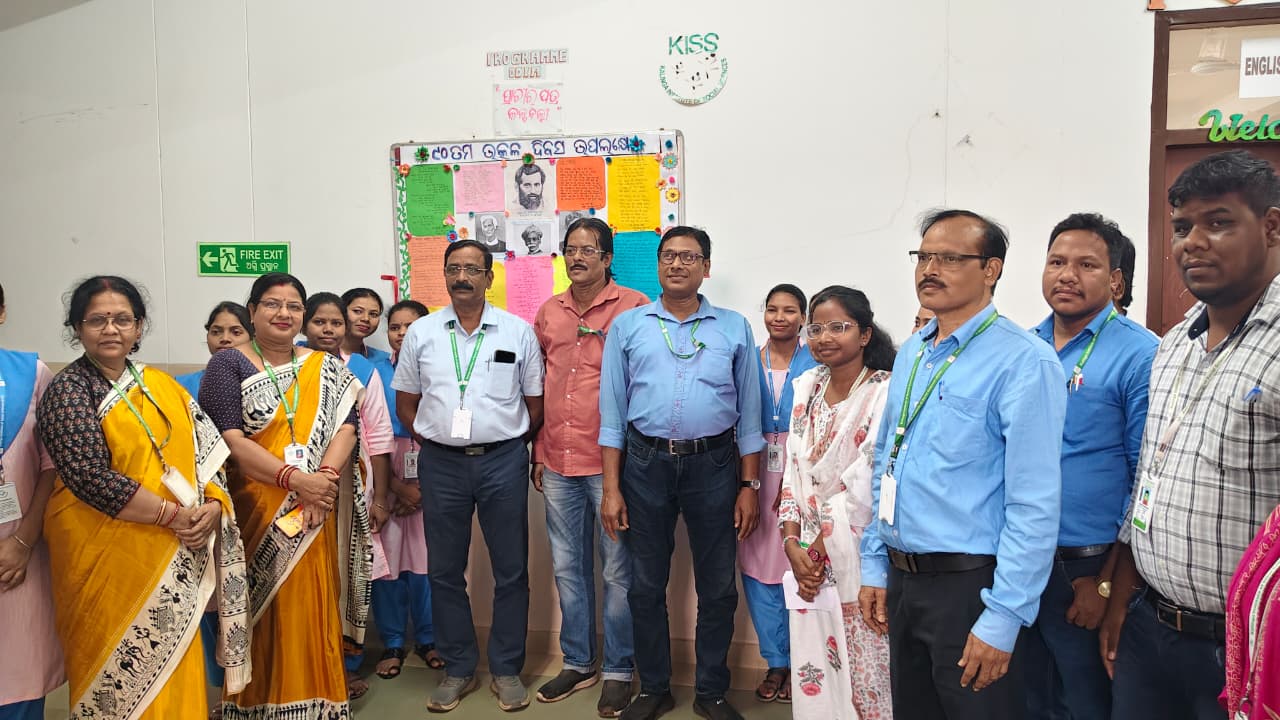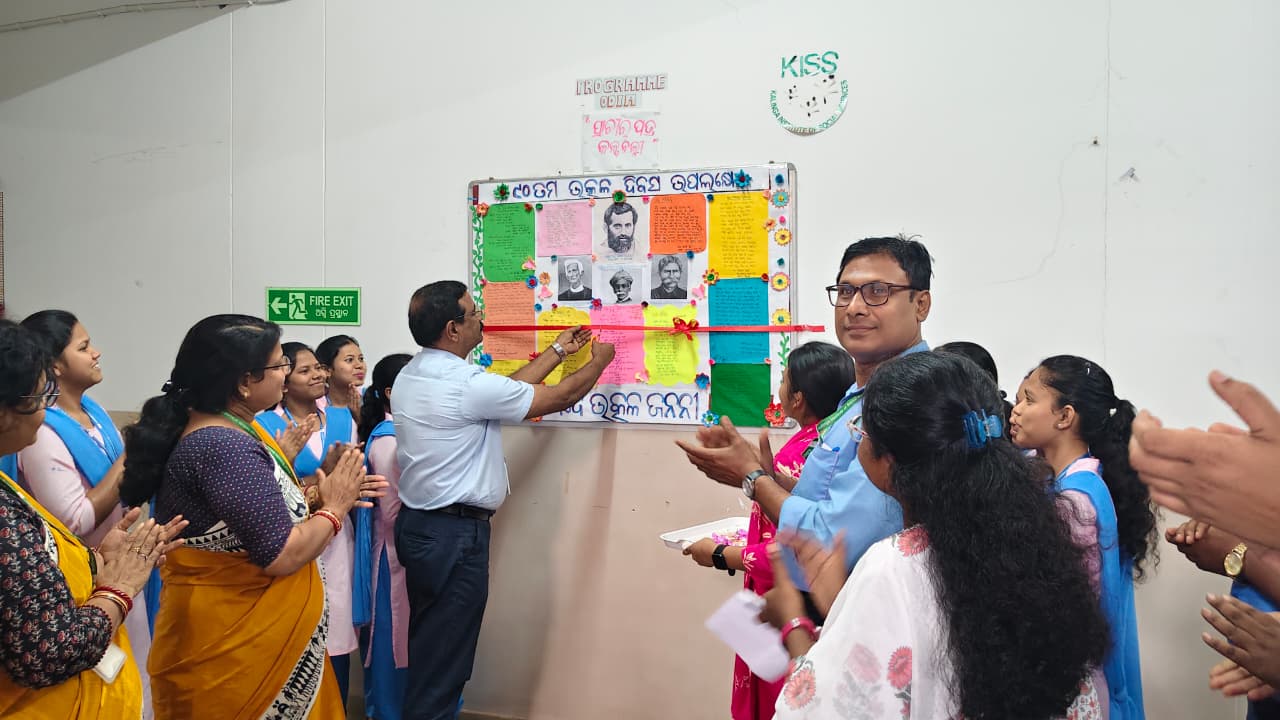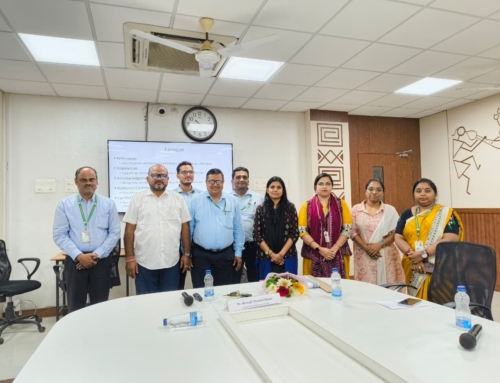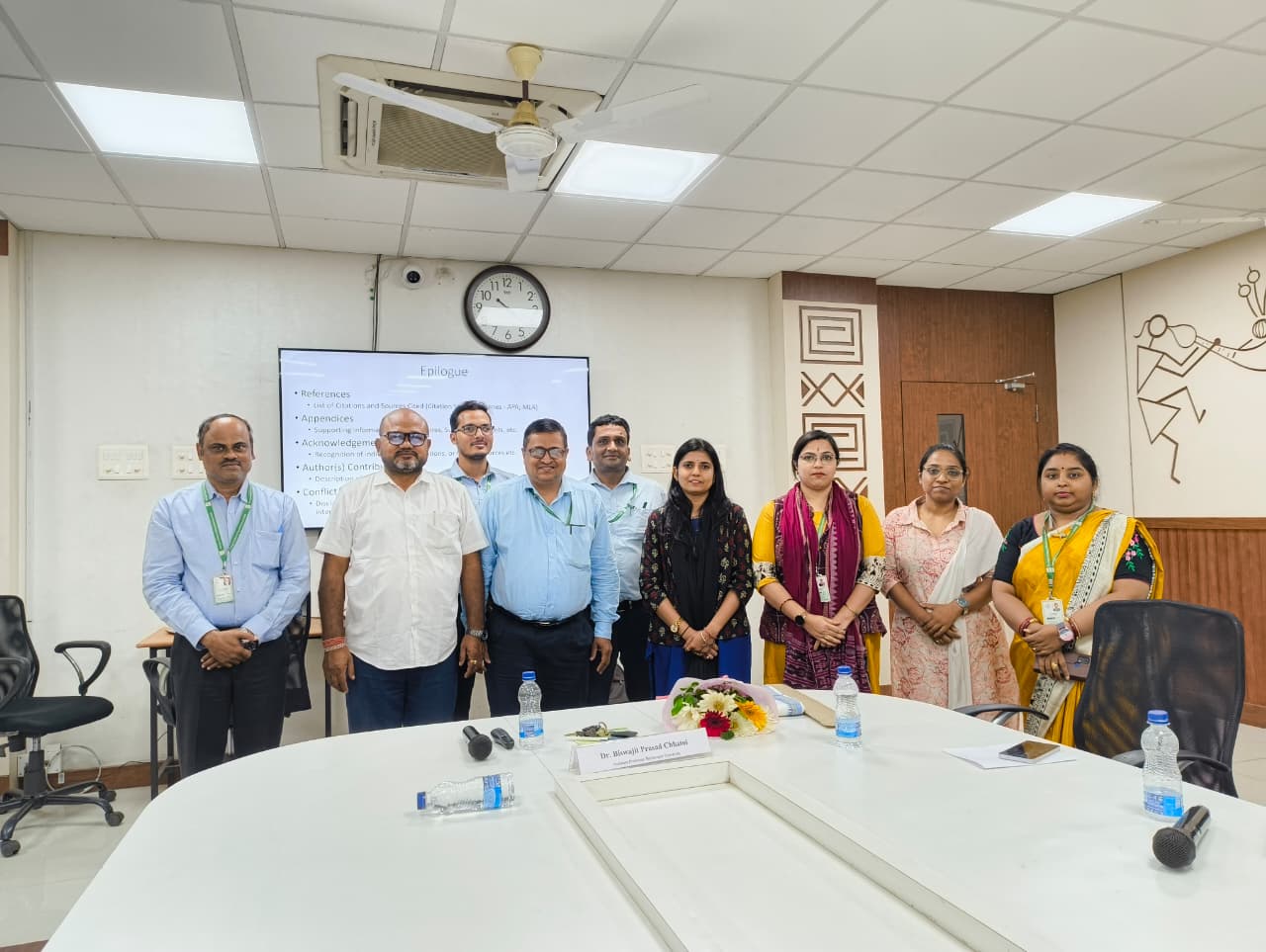
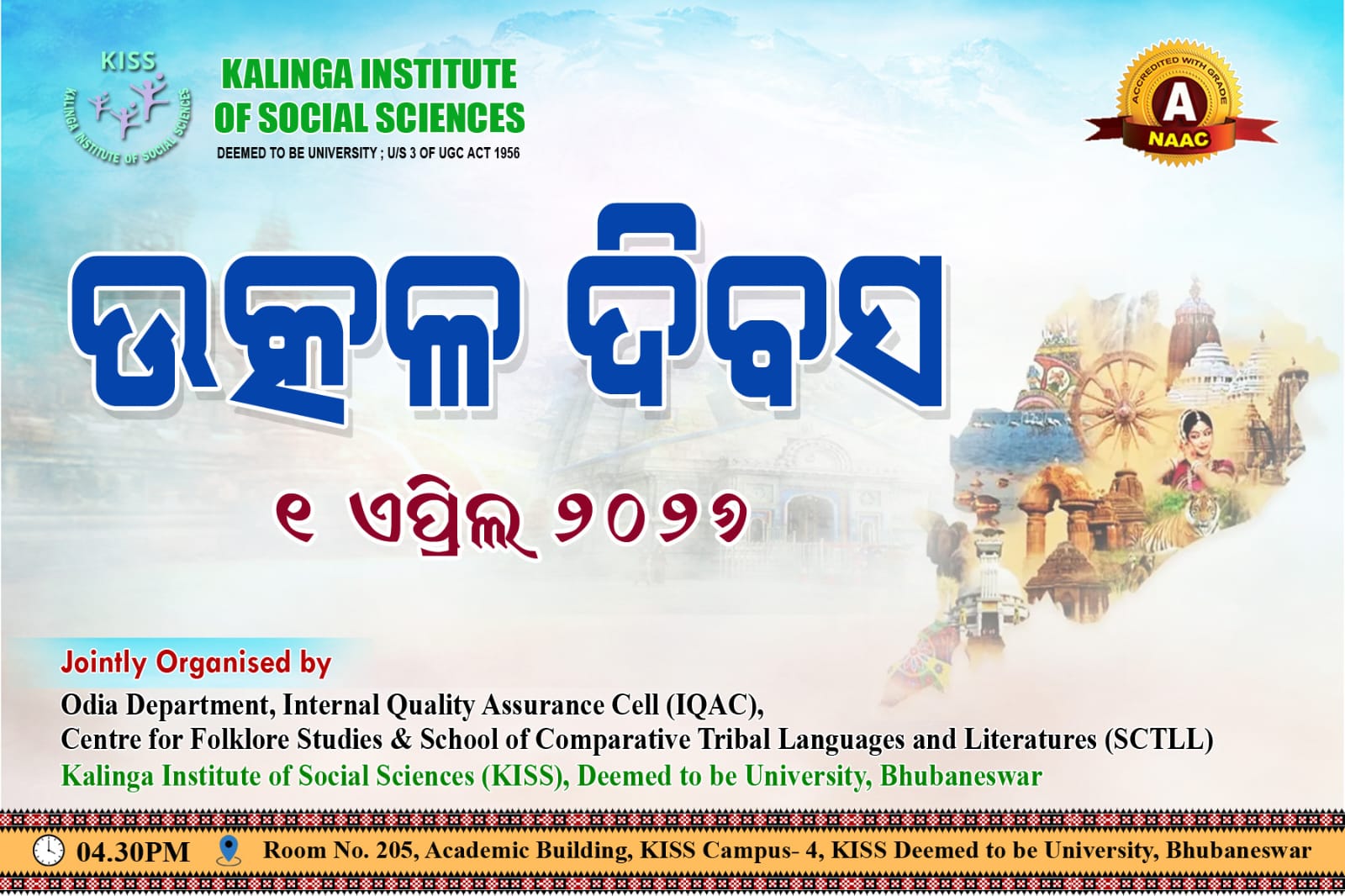
The Department of Odia and the Centre for Folklore Studies, School of Comparative Tribal Languages and Literatures (SCTLL), KISS Deemed to be University, Bhubaneswar, in association with the Internal Quality Assurance Cell (IQAC), observed Utkal Diwas on 1st April 2026 at 4:30 PM in Room No. 205, Academic Building, KISS Campus 4 with great enthusiasm and cultural fervour. The programme commenced with the inauguration of the Wall Magazine titled “କଳ୍ପବଲ୍ଲି (Kalpaballi),” which was ceremonially unveiled by the Chief Guest and Keynote Speaker, Dr. Chittaranjan Bhoi, Associate Professor and Dean, School of CTLL, and Chair Professor, Dr. B. R. Ambedkar Research Chair, KISS-DU along with the Heads of various Departments of the School. The wall magazine reflected the literary creativity, cultural consciousness, and academic engagement of the students. Following the inauguration, the Postgraduate students of the Department of Odia presented a soulful rendition of “Bande Utkala Janani,” creating a patriotic and emotionally charged atmosphere, paying homage to the spirit and identity of Odisha.
The Inaugural Address was delivered by Dr. Rasmita Tripathy, Associate Professor, Head of the Department of Odia, SCTLL, and Centre Head, Centre for Folklore Studies. In her address, she elaborated on the historical significance of Utkal Diwas, commemorating the formation of Odisha as a separate linguistic state in 1936. She emphasized the sacrifices and struggles of eminent leaders and language activists who fought for linguistic identity. She further highlighted the importance of preserving and promoting Odia language and culture in the present globalised era and encouraged students to actively engage in cultural and literary pursuits.
The programme witnessed active participation from Ph.D. Scholars and students of SCTLL, who shared their thoughts on the significance of Utkal Diwas. Some students also recited their self-composed poems, reflecting themes of linguistic pride, cultural heritage, and regional identity, which added depth and creativity to the celebration.
Mrs. Debahuti Pattanaik, faculty member of the Odia Department, spoke on the need for preservation of the Odia language. She stressed that language is the carrier of culture and identity, and its preservation requires collective effort. She suggested measures such as promoting Odia in daily communication, encouraging reading, and writing in Odia, integrating technology with language learning, and ensuring intergenerational transmission of linguistic values.
Dr. Amulya Ratna Nanda, Assistant Professor, Department of Odia, highlighted that Odia language continues to thrive even in the modern era. He pointed out that Odia is not confined within the geographical boundaries of Odisha but is actively propagated in other states like Chhattisgarh, Jharkhand, and West Bengal through Odia-medium schools and colleges. His address underscored the resilience and outreach of the language.
The Keynote Address was delivered by Dr. Chittaranjan Bhoi, who provided a profound insight into the historical, cultural, and academic importance of Odia language and identity. He likely emphasized that Utkal Diwas is not merely a day of celebration but a reminder of the intellectual struggle and unity of the Odia people. He might have discussed the role of language in shaping civilisational identity and urged scholars and students to contribute to research, documentation, and dissemination of Odia literature and folklore. He also possibly highlighted the importance of integrating tribal languages and folk traditions within mainstream academic discourse, aligning with the vision of inclusive education and cultural preservation.
The programme concluded with a Vote of Thanks delivered by Dr. Ashis Kumar Chakraborty, Faculty, Department of Odia. In his address, he referred to the historical claim made by Mr. Kanti Chandra Bhattacharya, who had once argued that Odia was not an independent language but a derivative of Bengali. Dr. Chakraborty stated that although such claims were baseless, they inadvertently led to a strong linguistic movement among Odia people. This resulted in renewed efforts for the development and standardisation of the Odia language, led by pioneers like Fakir Mohan Senapati and others. He concluded by expressing gratitude to all dignitaries, faculty members, students, and organisers for making the event a success. The programme ended on a note of cultural pride and academic inspiration, reinforcing the commitment of the institution towards the promotion and preservation of Odia language and heritage.