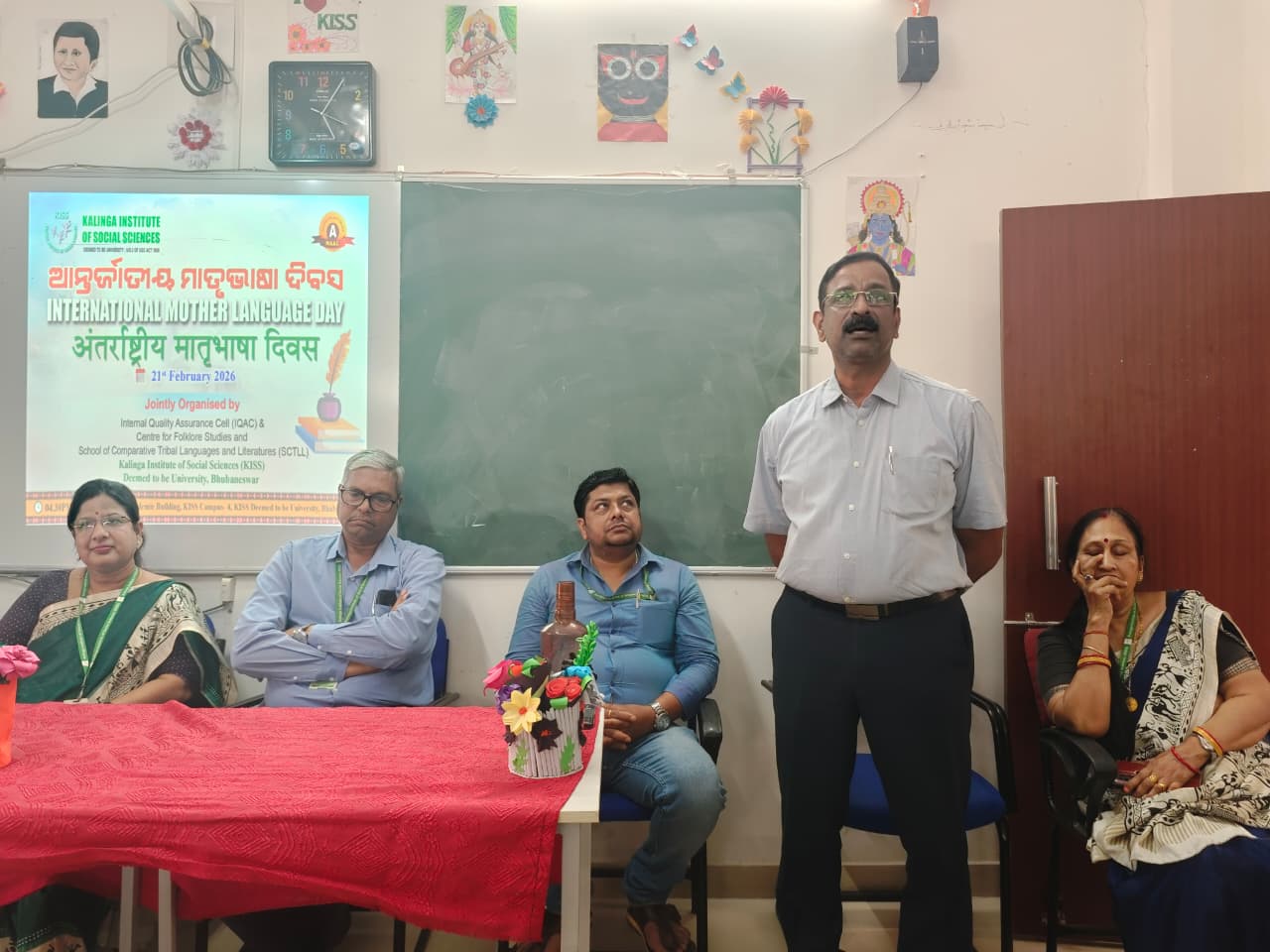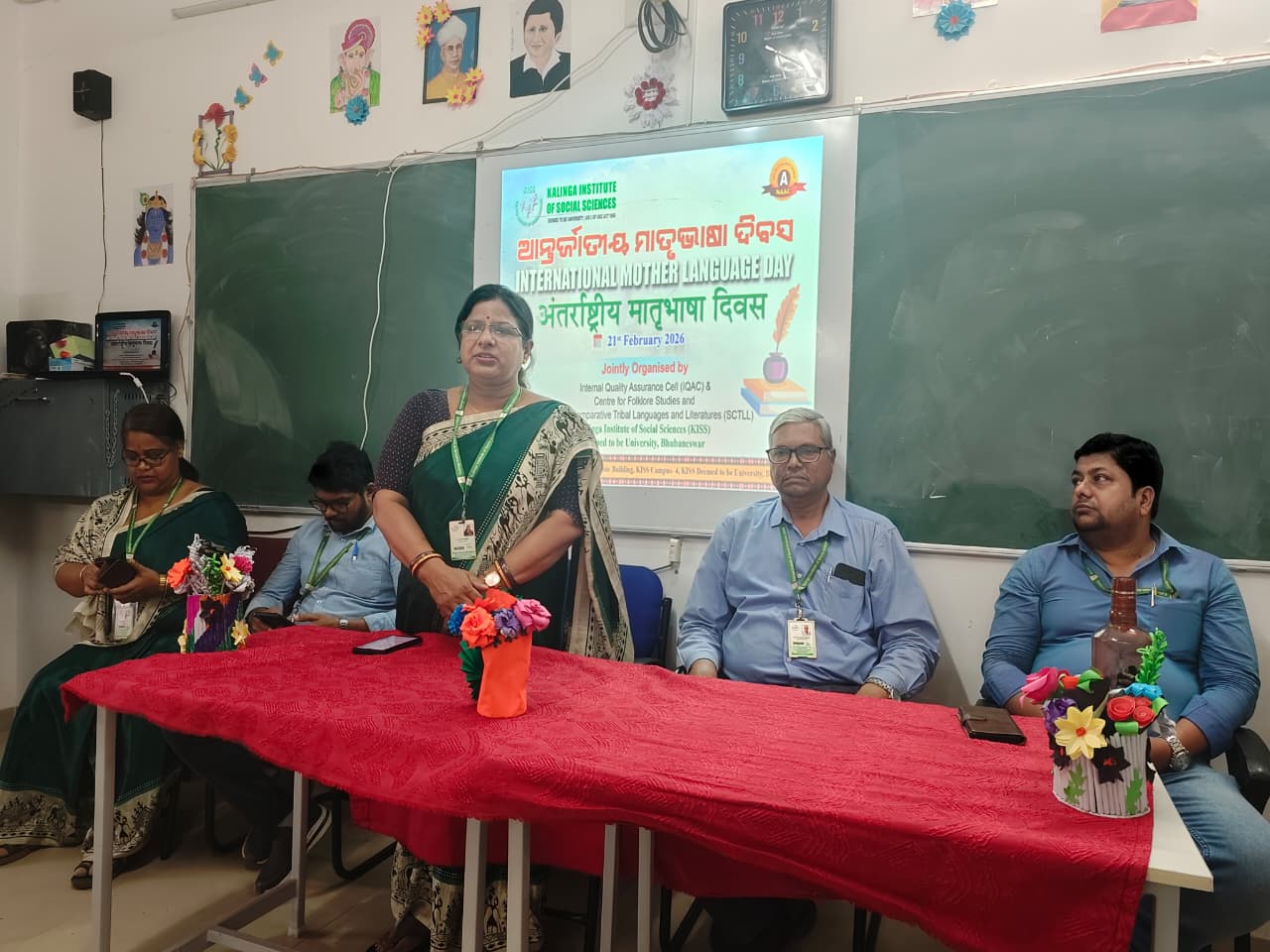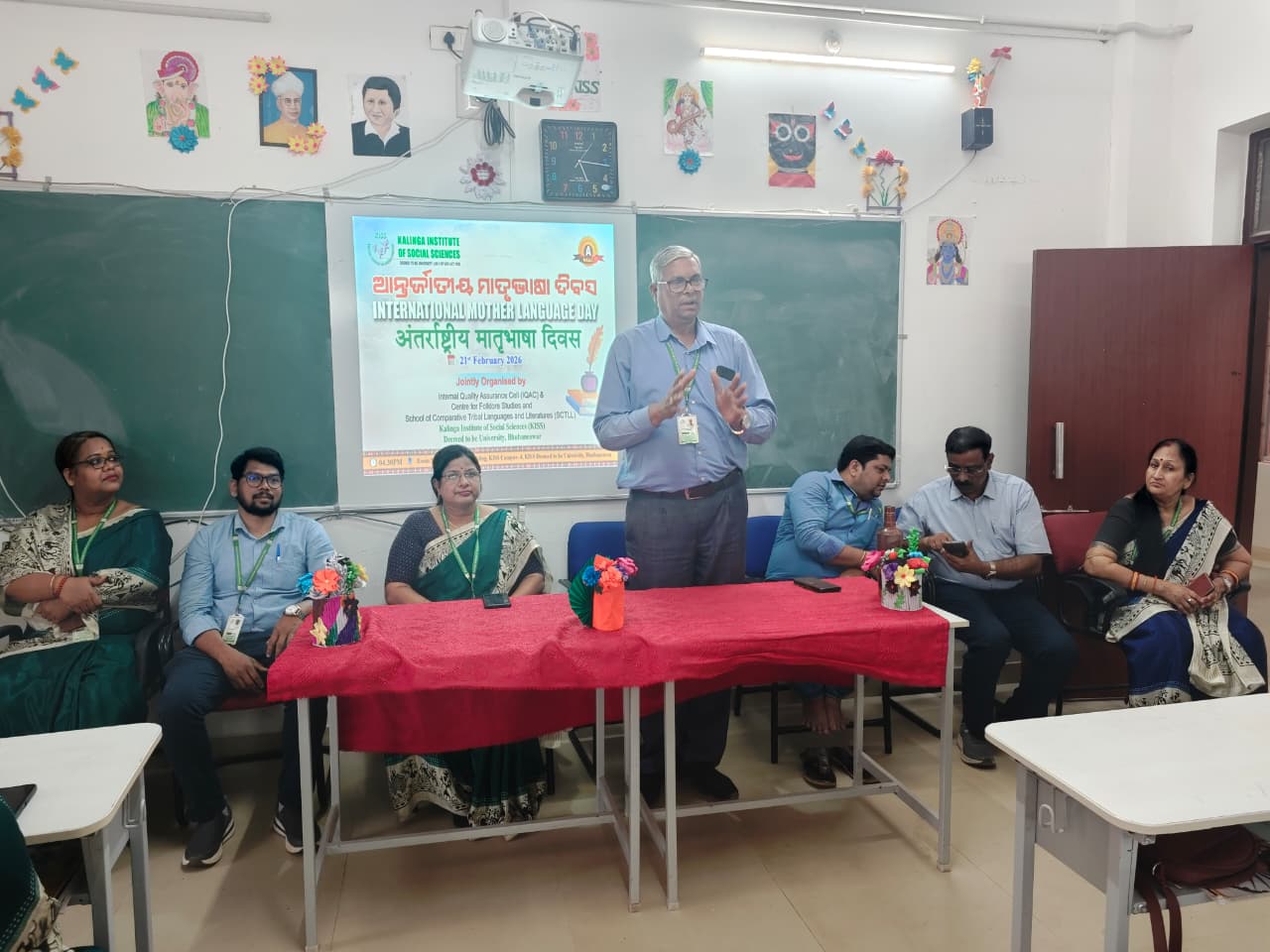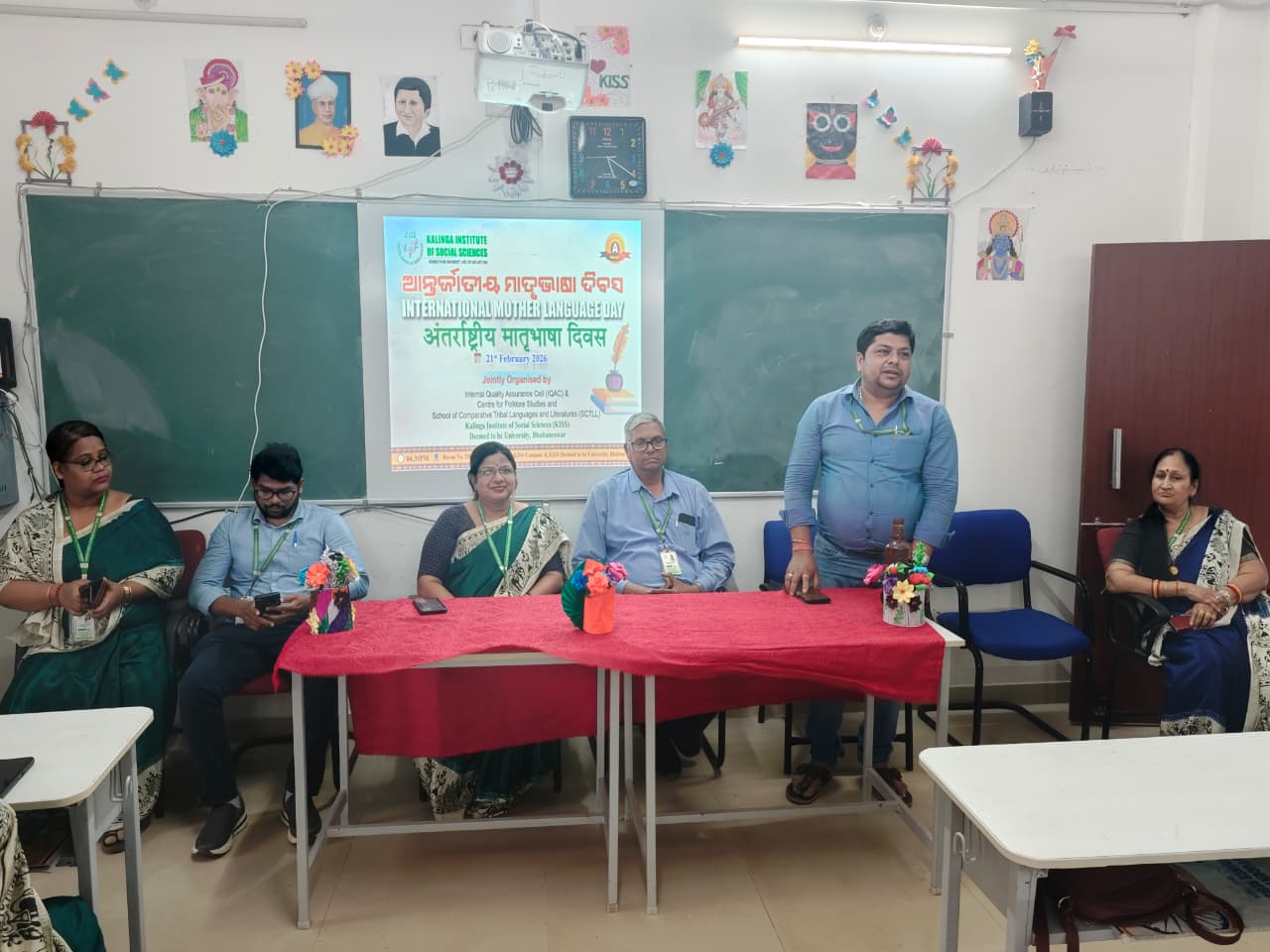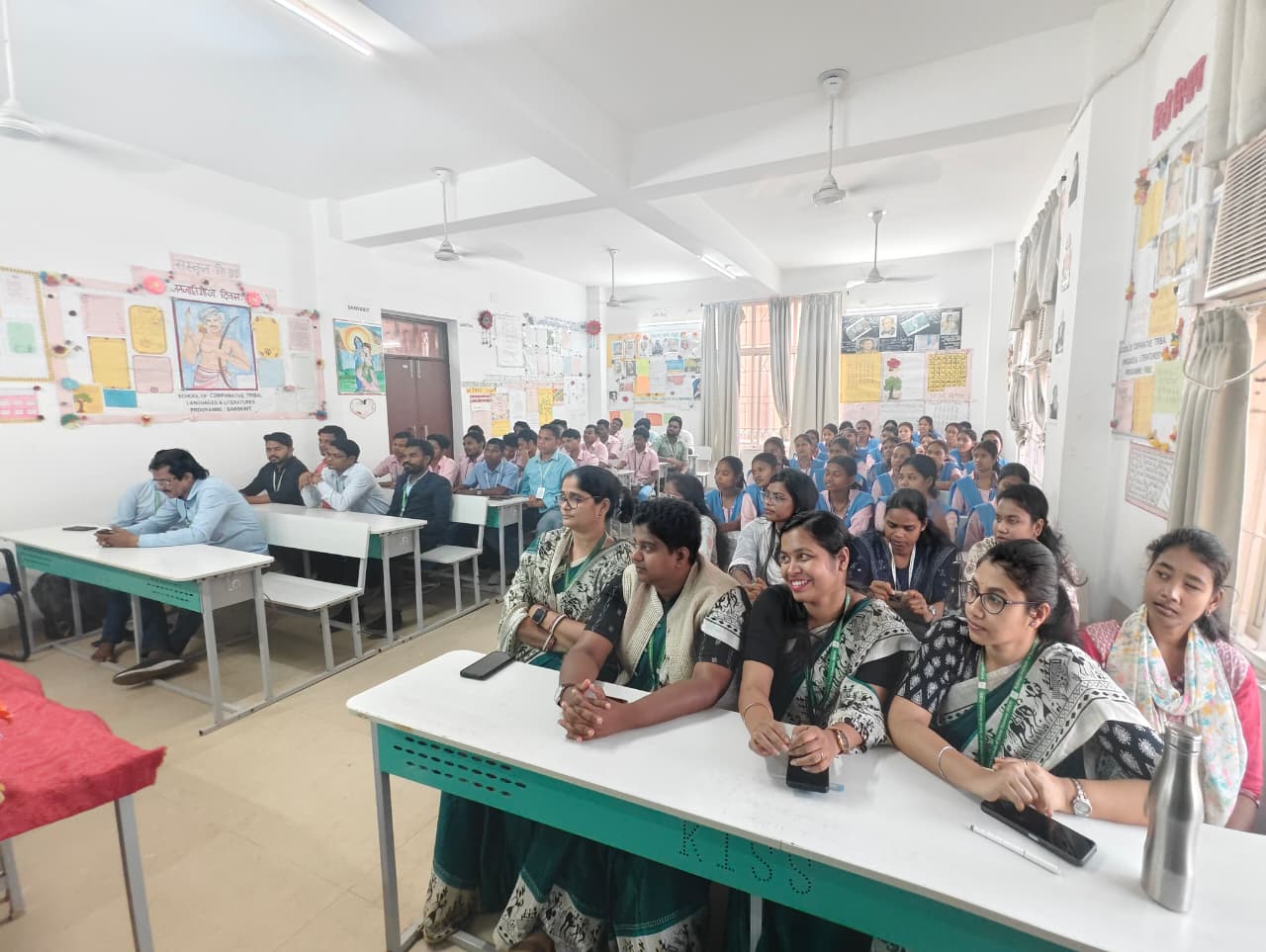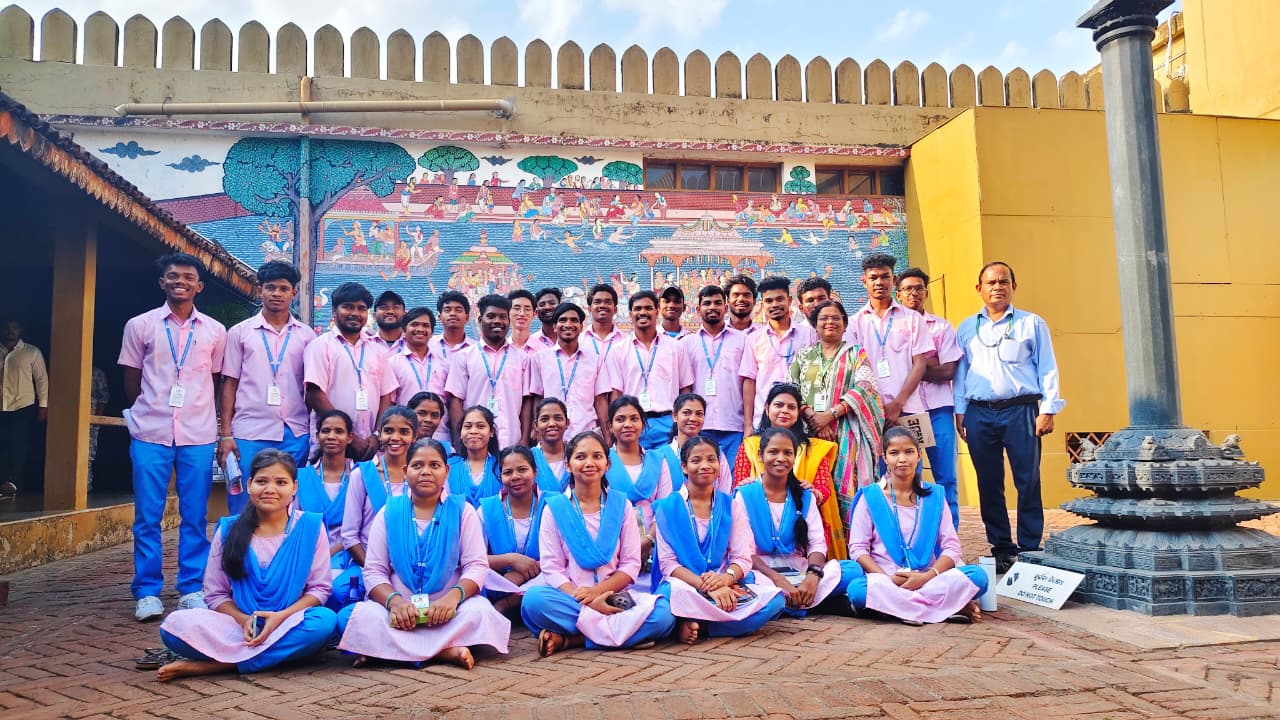
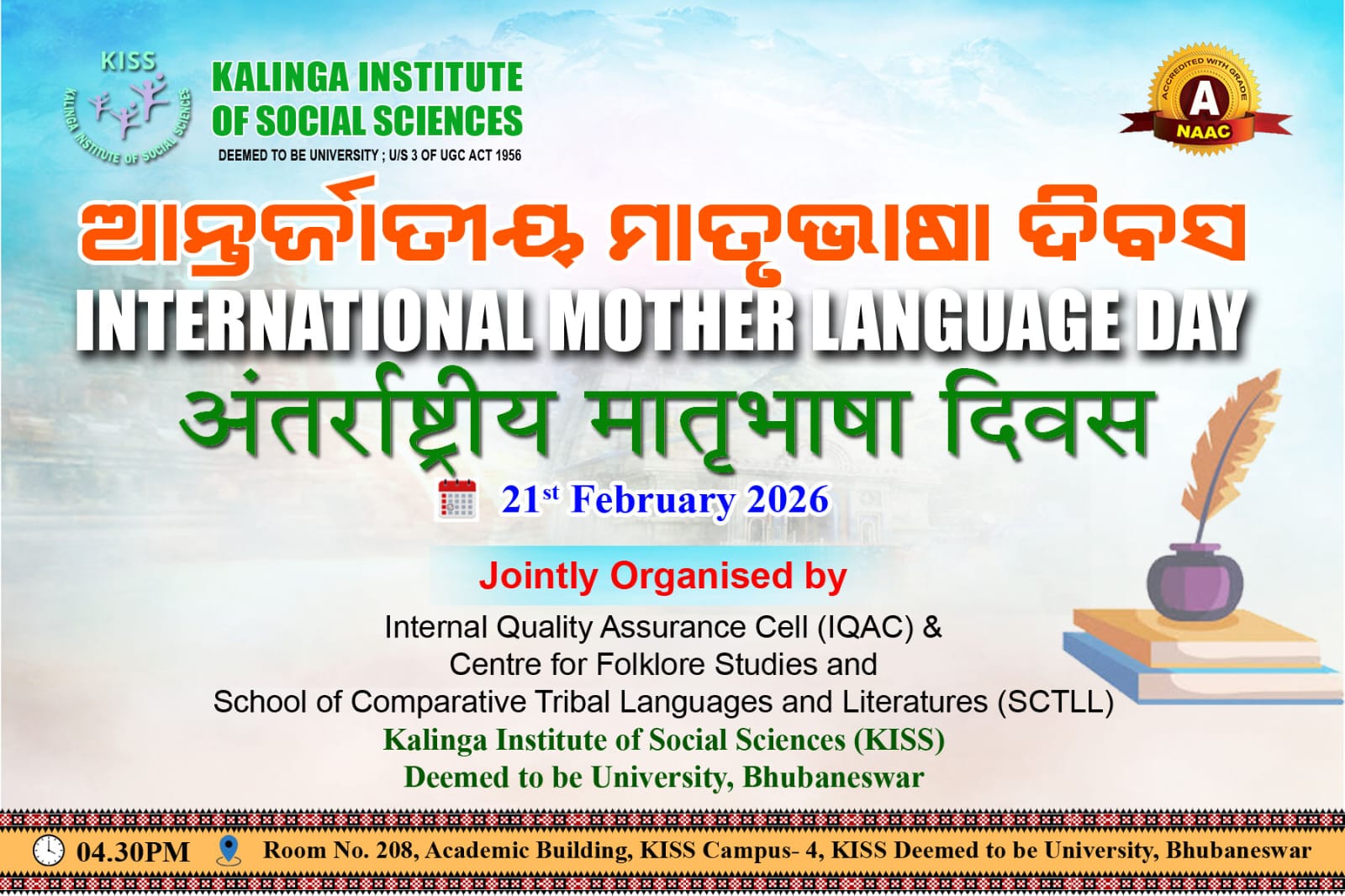
The School of Comparative Tribal Languages and Literatures (SCTLL), KISS-DU observed International Mother Language Day with great enthusiasm and academic fervour on 21st February 2026 at 4.30 PM in Room No. 208. The programme was organised to pause and ponder on the importance of linguistic diversity and to promote awareness regarding the preservation and protection of mother tongues across the globe.
The event commenced with a formal welcome address delivered by Chair Professor Dr. B.R Ambedkar Chair and Dean of the SCTLL Dr. Chitta Ranjan Bhoi. In his address, he warmly welcomed the keynote speaker, faculty members, research scholars, and students. He emphasised the significance of celebrating linguistic plurality in a multilingual country like India and underscored the vital role of educational institutions in nurturing respect for all languages. He also highlighted how mother tongues serve as the foundation of cultural identity and intellectual development.
Following the welcome address, Dr. Rasmita Tripathy, Associate Professor, Department of Odia, SCTLL spoke about the objective and significance of International Mother Tongue Day. She elaborated on the historical background of the day and its global relevance. She explained that the observance aims to promote multilingualism, preserve endangered languages, and foster inclusive education. She further stressed that learning in one’s mother tongue enhances cognitive growth, emotional connection, and academic achievement.
The keynote address was delivered by Dr. Anil Kumar Mishra, Associate Professor, Department of English, SCTLL who provided an enriching and scholarly perspective on the theme of the day. He discussed the role of language in shaping thought, identity, and social cohesion. Drawing upon contemporary research and practical examples, he emphasised the need to integrate mother tongue-based education within mainstream academic frameworks. He also highlighted the challenges posed by globalisation and the dominance of certain languages, urging educators and policymakers to adopt balanced approaches that respect linguistic diversity while promoting national and global communication.
Adding further depth to the programme, several Ph.D. scholars of the School presented their reflections on the importance of mother tongues in education, research, and community life. They spoke about linguistic diversity in India, the pedagogical value of multilingual classrooms, and the emotional bond individuals share with their native languages. Their contributions reflected scholarly engagement as well as personal commitment to the cause.
The programme concluded with a heartfelt Vote of Thanks proposed by Dr. Biraj Krushna Mishra. He expressed sincere gratitude to the keynote speaker, the Dean, faculty members, research scholars, and students for their active participation and valuable contributions. He acknowledged the collective efforts of the organising team in making the event a meaningful and successful one.