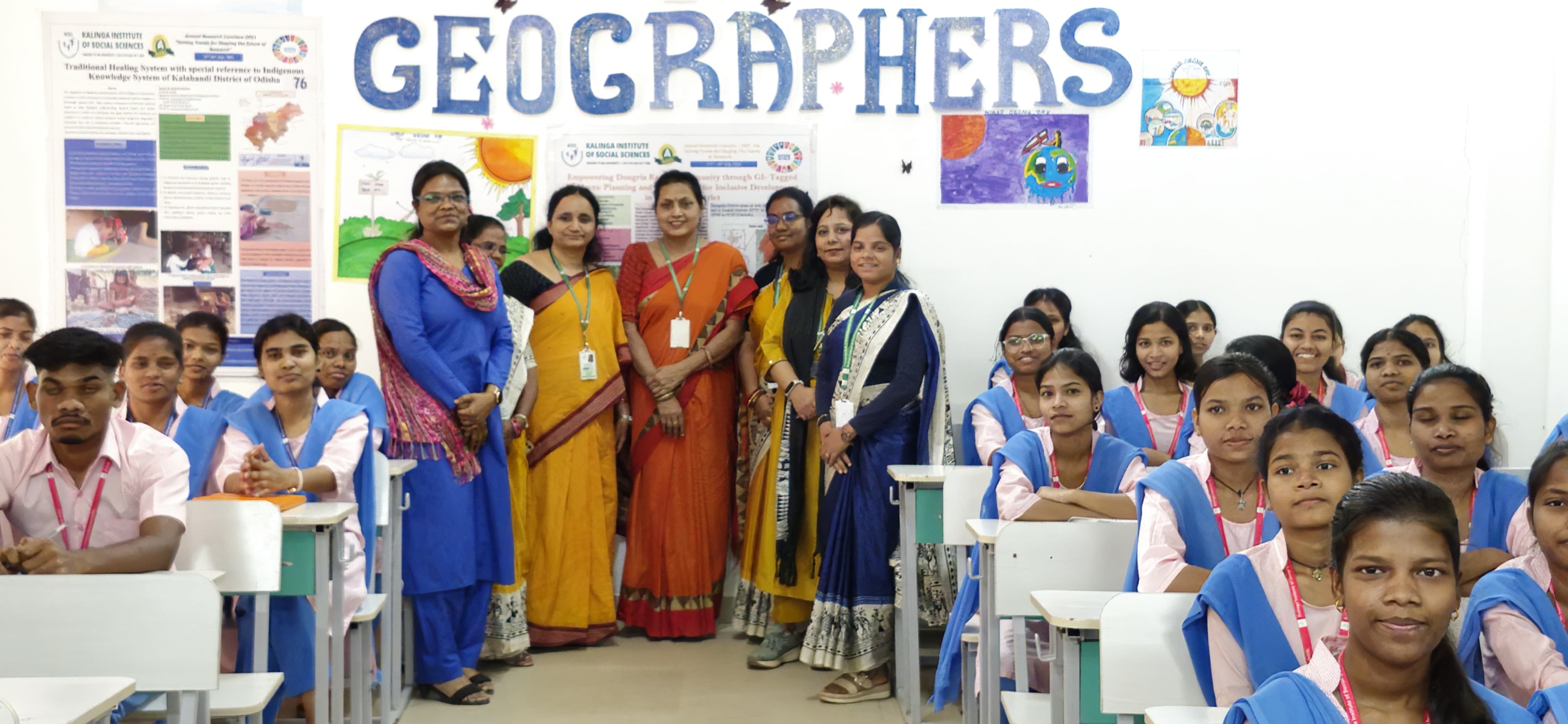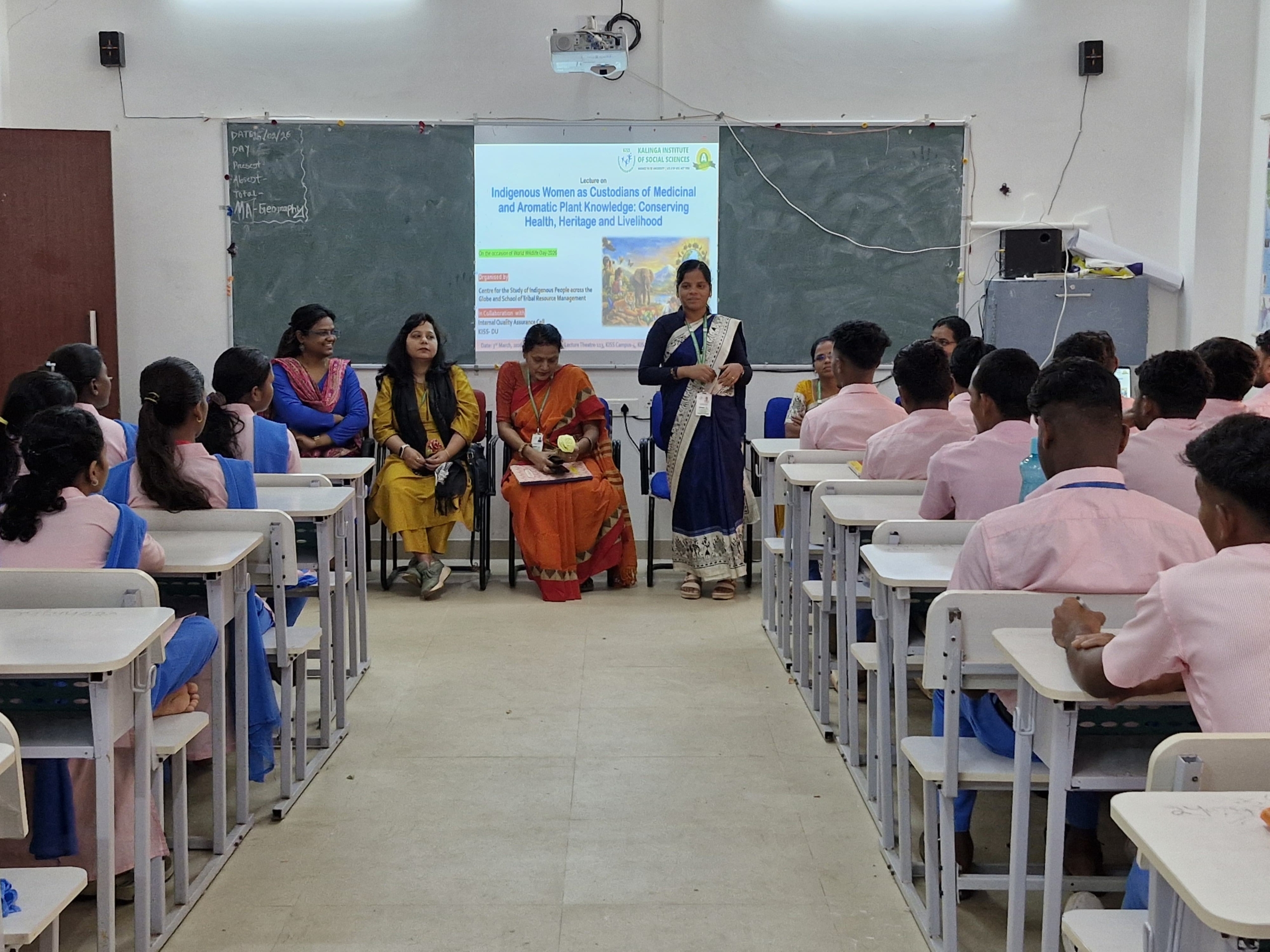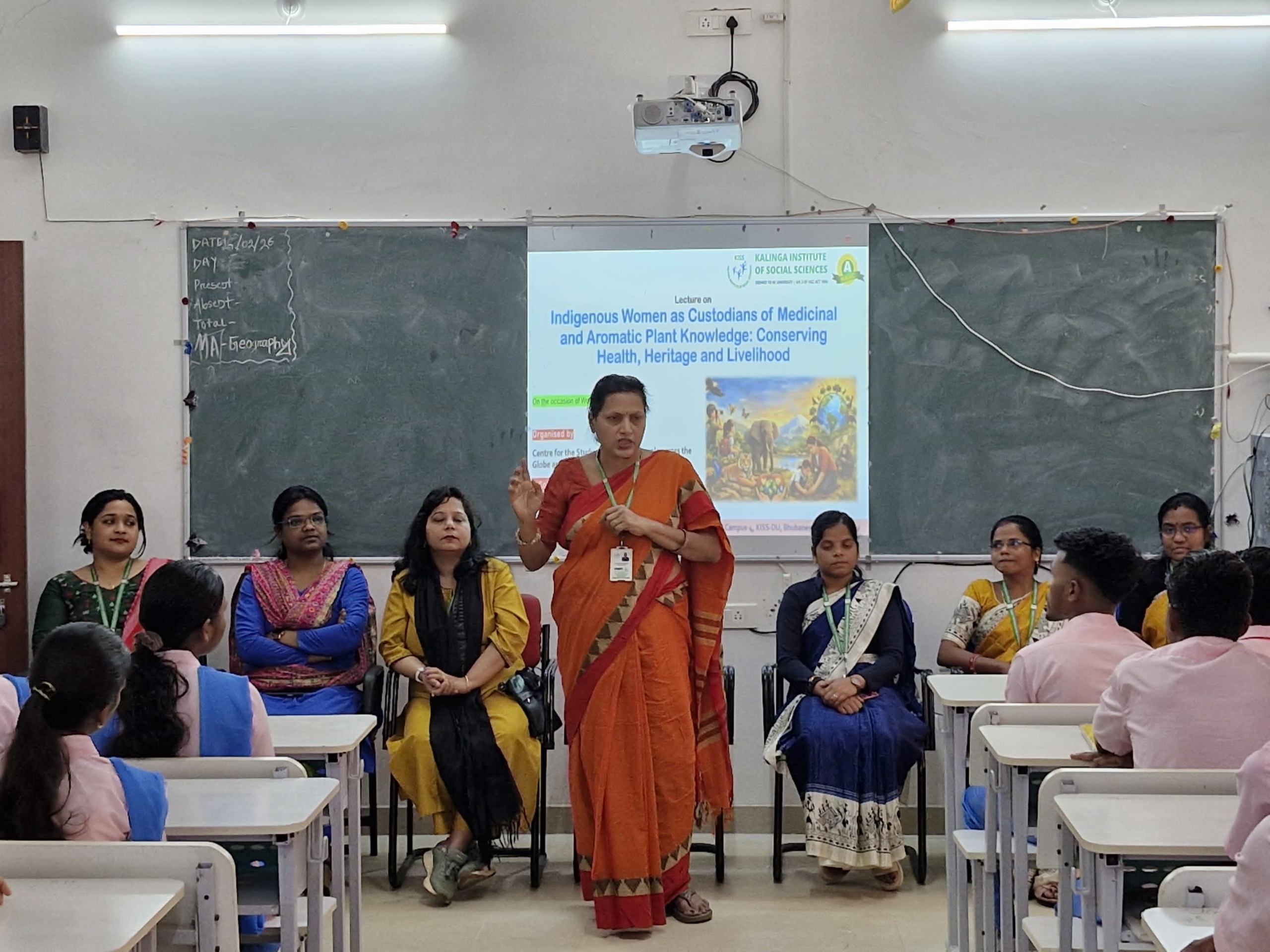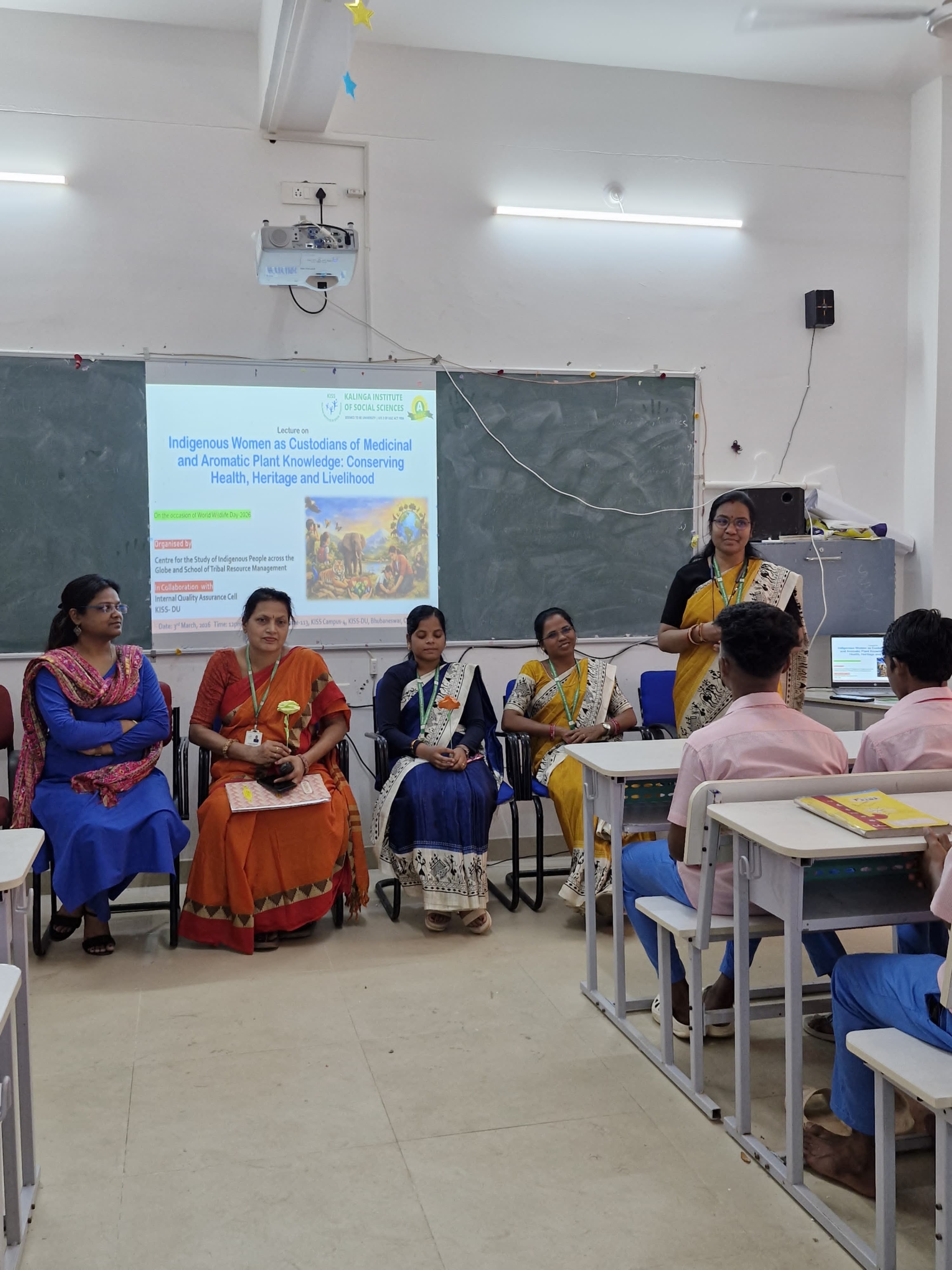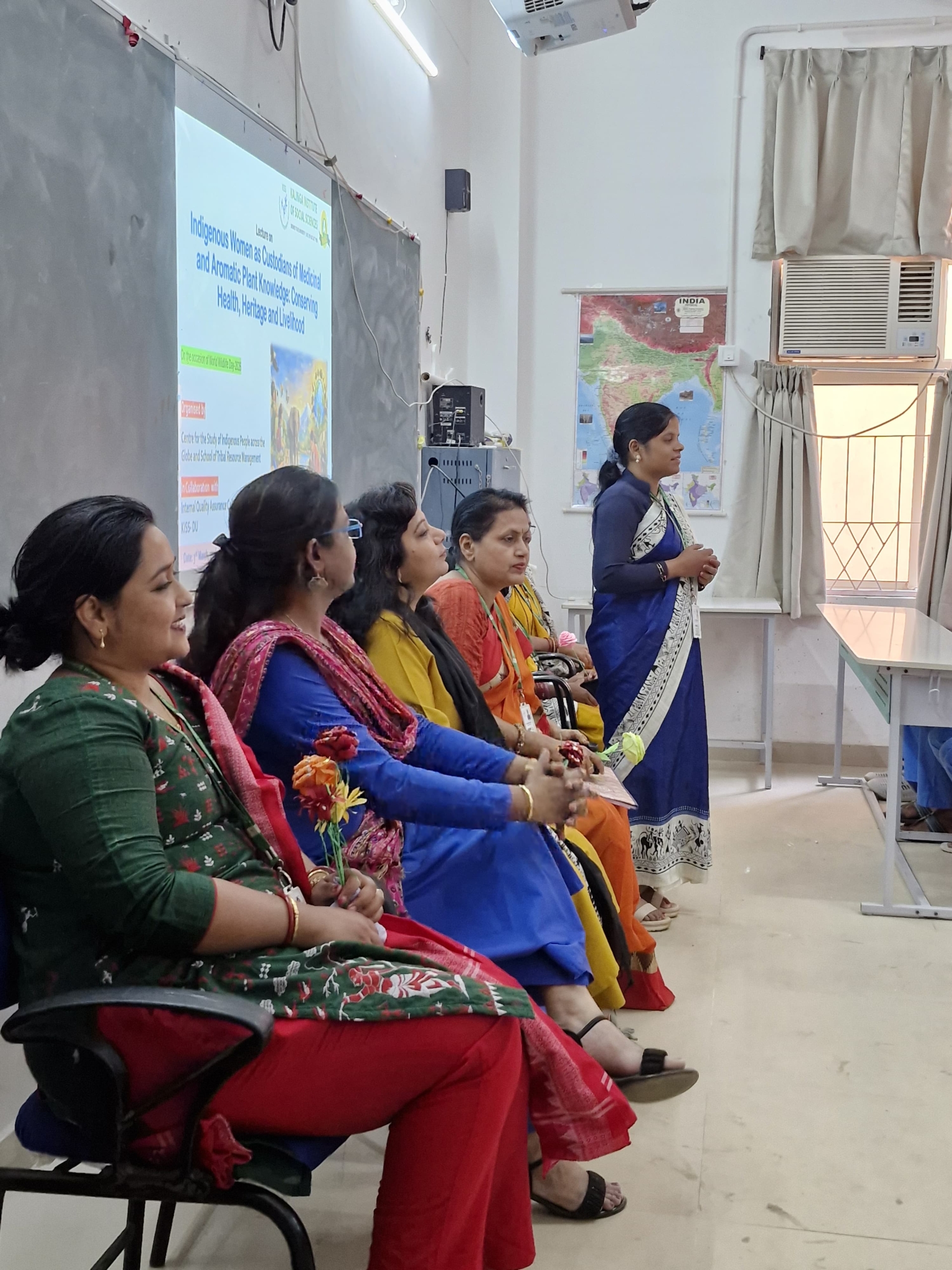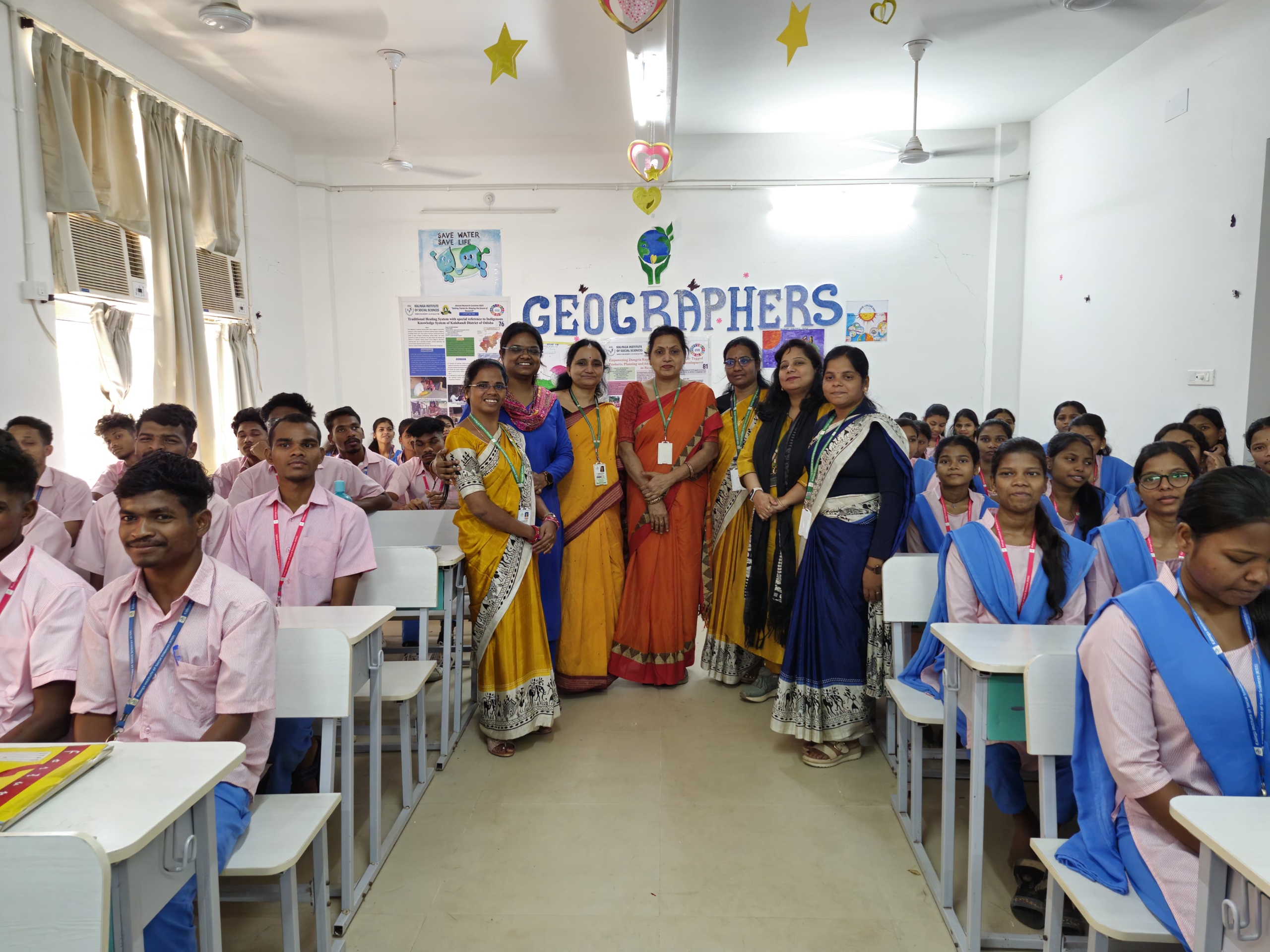
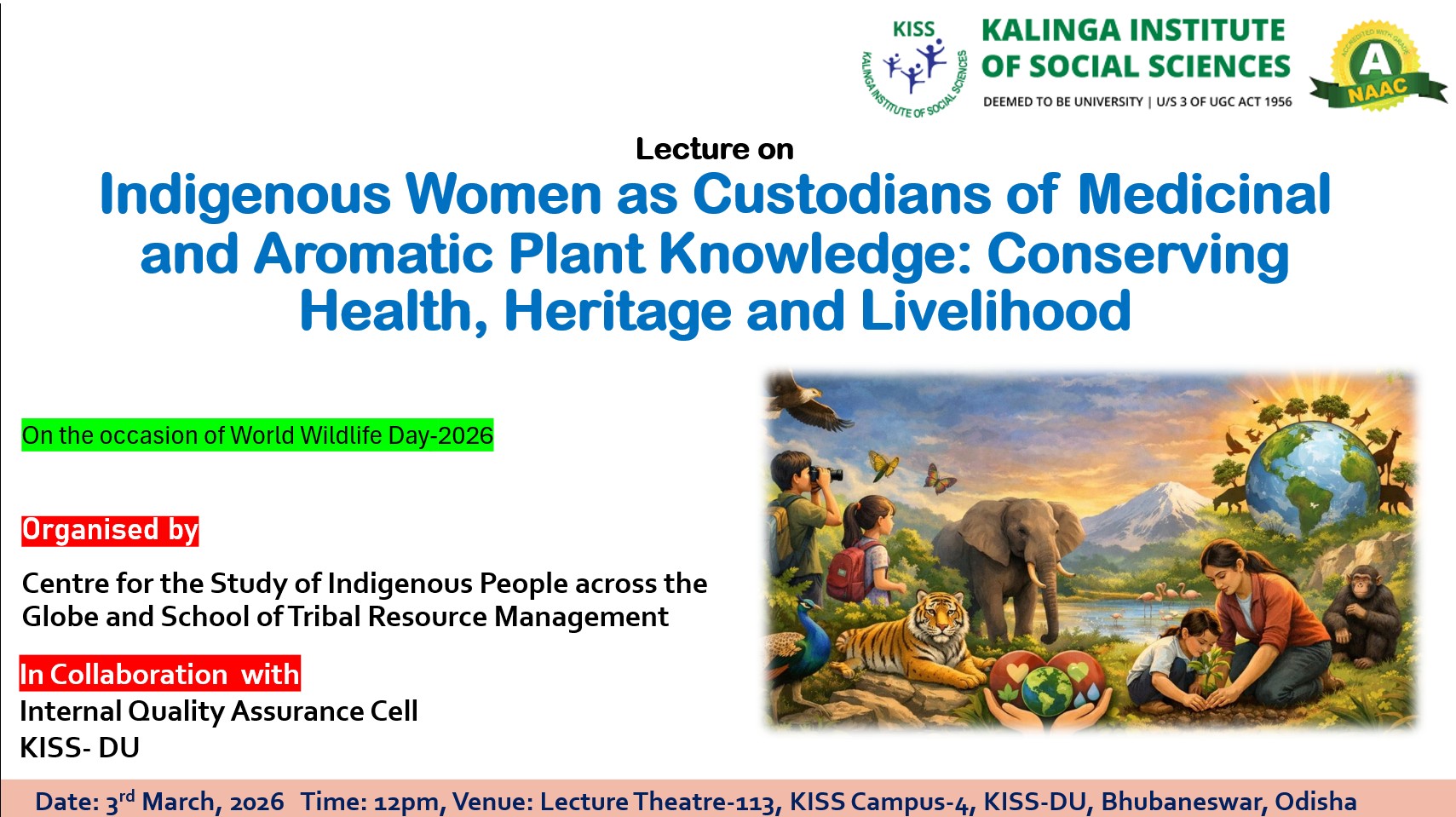
On the occasion of World Wildlife Day 2026, the Centre for the Study of Indigenous Peoples across the Globe, in collaboration with the School of Tribal Resource Management (STRM) and Internal Quality Assurance Cell (IQAC), KISS-DU, organized Academic Lecture as part of its ongoing academic engagement and knowledge-sharing initiatives on 3rd March 2026. The theme of the lecture was “Indigenous Women as Custodians of Medicinal and Aromatic Plant Knowledge: Conserving Health, Heritage and Livelihoods.” The programme aimed at highlighting the invaluable role of Indigenous women in preserving traditional knowledge systems related to medicinal and aromatic plants and their contribution to sustainable health practices, cultural heritage and livelihood generation.
The programme commenced with a warm welcome to the distinguished speakers, faculty members, research scholars and students. The Centre Head, Dr. Arpana Premi Lina Oraon, emphasized on the relevance of World Wildlife Day in recognizing the interdependence between indigenous communities and biodiversity. She underscored the importance of documenting and promoting indigenous knowledge systems, particularly those preserved and practiced by women.
Dr. Rashmi Mahapatra, Head of the Department of Botany, School of Comparative Indic Science and Technology (SCIST) delivered an insightful lecture on innovative research in medicinal plants. She elaborated on the scientific validation of traditional medicinal practices and discussed recent advancements in plant-based research. Her presentation bridged the gap between Indigenous wisdom and modern scientific inquiry, highlighting how collaborative research can promote sustainable healthcare solutions. Dr. Sweta Arora, Head of the Department of Zoology School of Comparative Indic Science and Technology (SCIST) appreciated the initiative taken by the Centre and STRM in organizing the lecture. She emphasized the need for interdisciplinary approaches in wildlife conservation and biodiversity management and acknowledged the vital contributions of indigenous communities in protecting ecological resources.
Dr. Laxmi Priya Mallick, Assistant Professor, spoke on Indigenous livelihoods derived from medicinal plants. She explained how traditional knowledge of plant resources contributes not only to healthcare but also to economic empowerment, especially among indigenous women. She highlighted the role of community-based enterprises and sustainable harvesting practices in strengthening rural economies. Dr. Jaminee Jhankar, Assistant Professor discussed aromatic plants and shared her experiences at KISS-DU. She provided valuable insights into the cultivation, processing, and value addition of aromatic plants, stressing their growing demand in the pharmaceutical and cosmetic industries. She also highlighted opportunities for skill development and entrepreneurship among tribal women. Dr. Hemlata Chalk, Assistant Professor, delivered an engaging talk on indigenous knowledge systems, emphasizing their cultural and ecological significance. She spoke about the oral traditions through which medicinal plant knowledge is transmitted across generations and the urgent need to preserve such knowledge in the face of modernization and environmental challenges.
The programme was graced by the presence of Dr. Snigdharani Panda, Director IQAC, who encouraged continued academic initiatives that integrate Indigenous perspectives into mainstream scholarship. Faculty members of STRM and other departments actively participated in the session, contributing to a vibrant academic discussion.
The lecture concluded with a formal vote of thanks, expressing gratitude to the esteemed speakers, faculty members and participants for making the programme a meaningful and intellectually enriching event. The event successfully fostered dialogues on the Sustainable Development Goals of the United Nation and emphasized goals like SDG-4, 5, and 15. The conversations revolved around conservation of biodiversity and the recognition of Indigenous women as key custodians of medicinal and aromatic plant knowledge, reinforcing the commitment of KISS-DU toward inclusive and sustainable development.