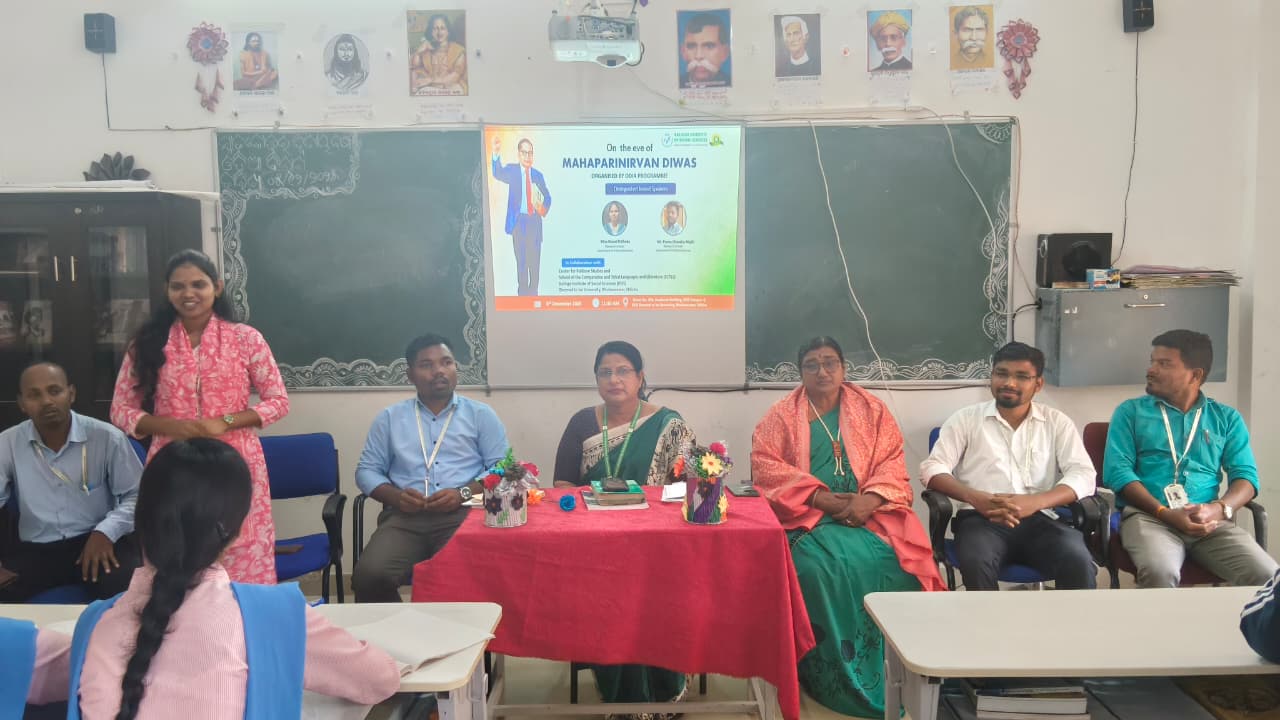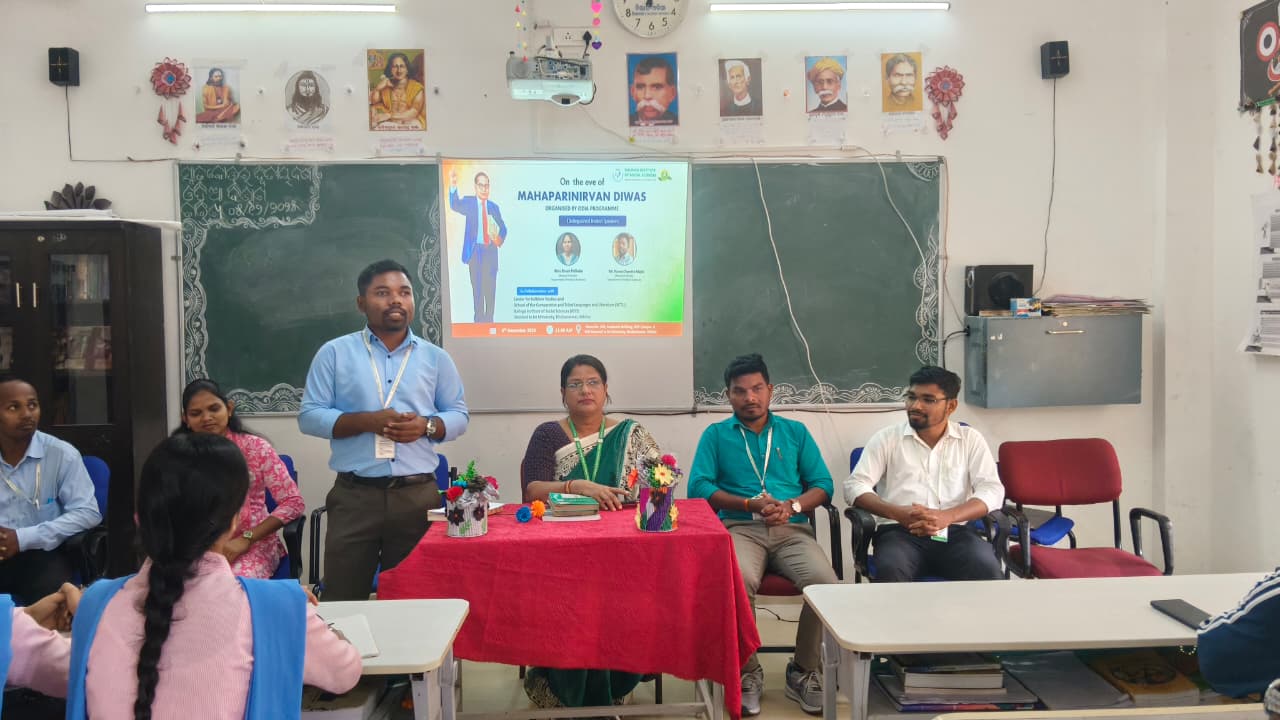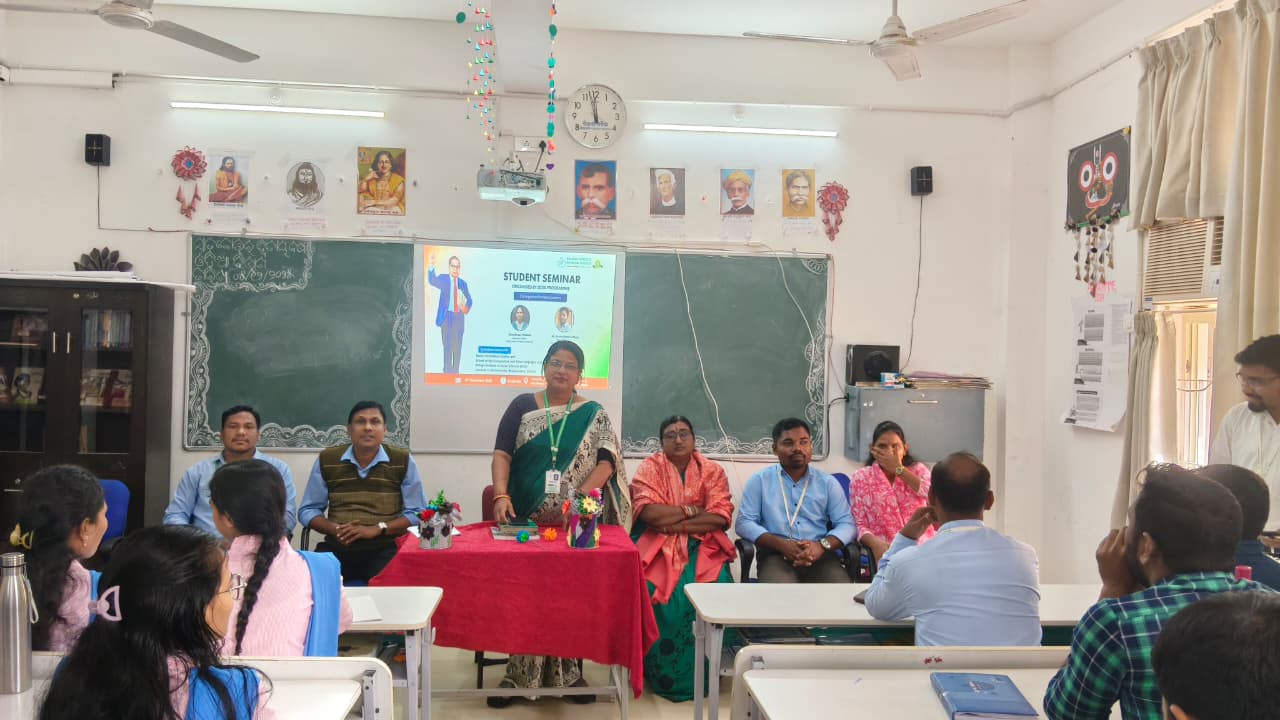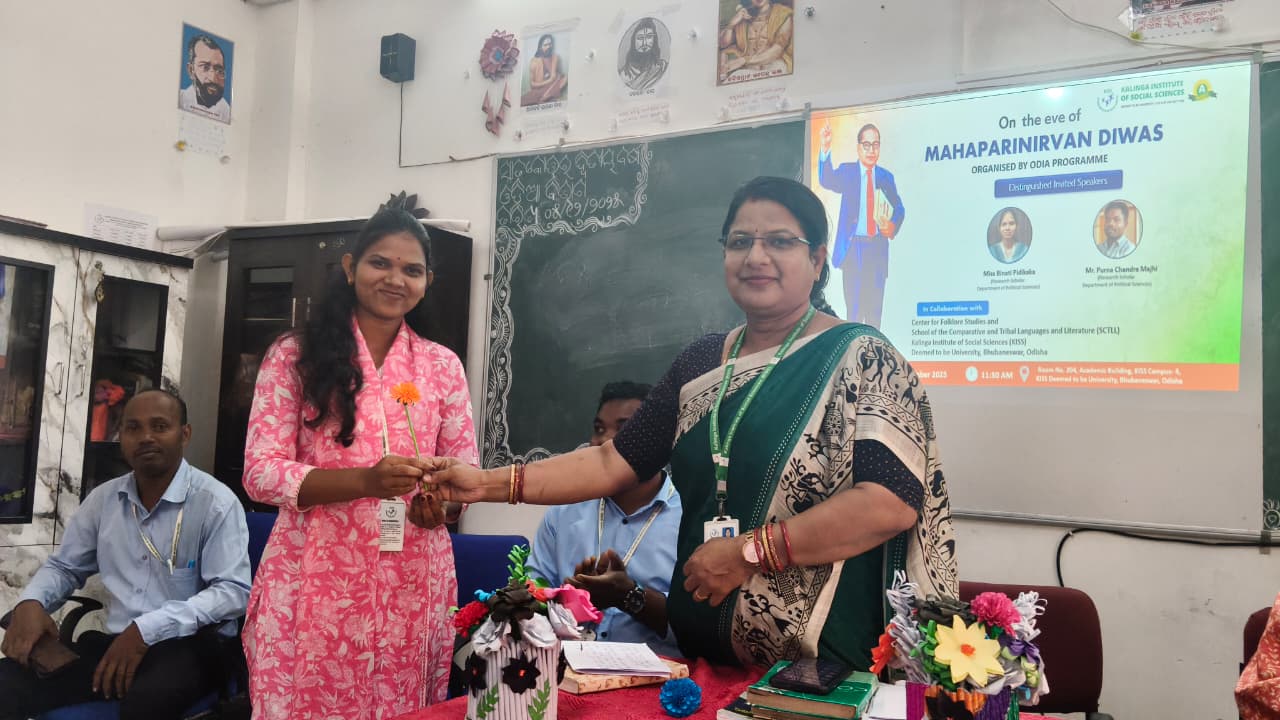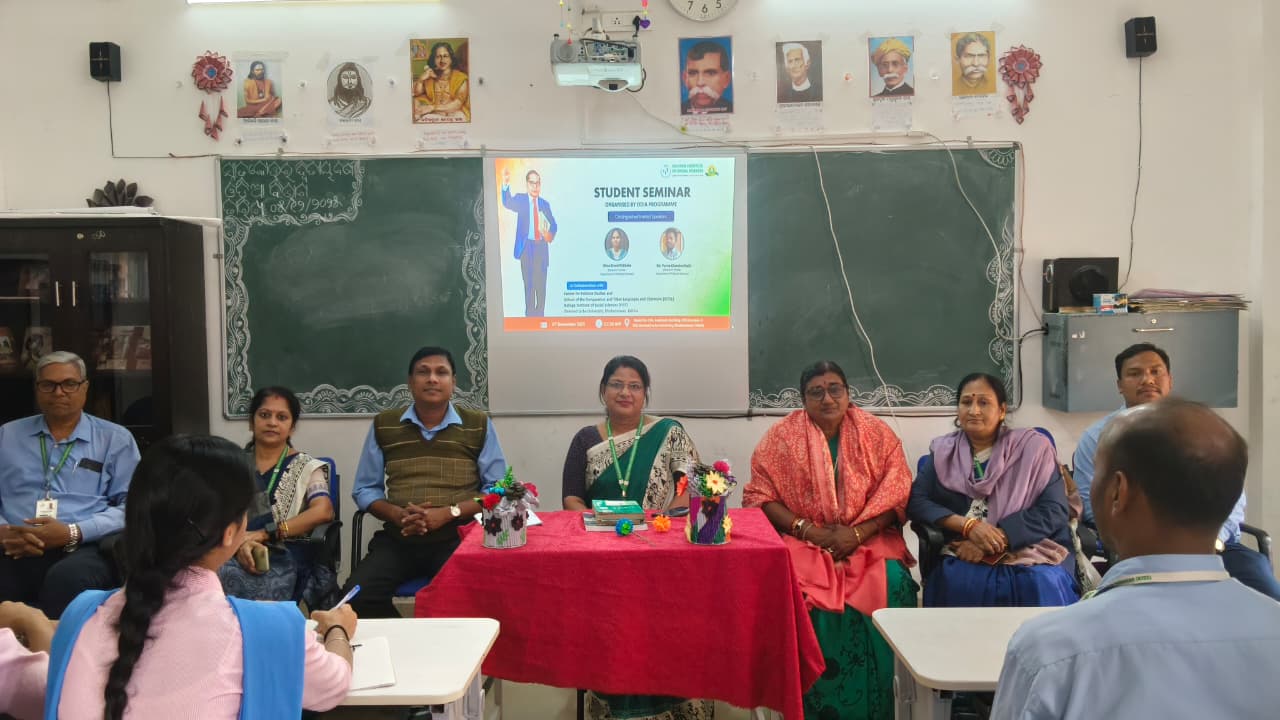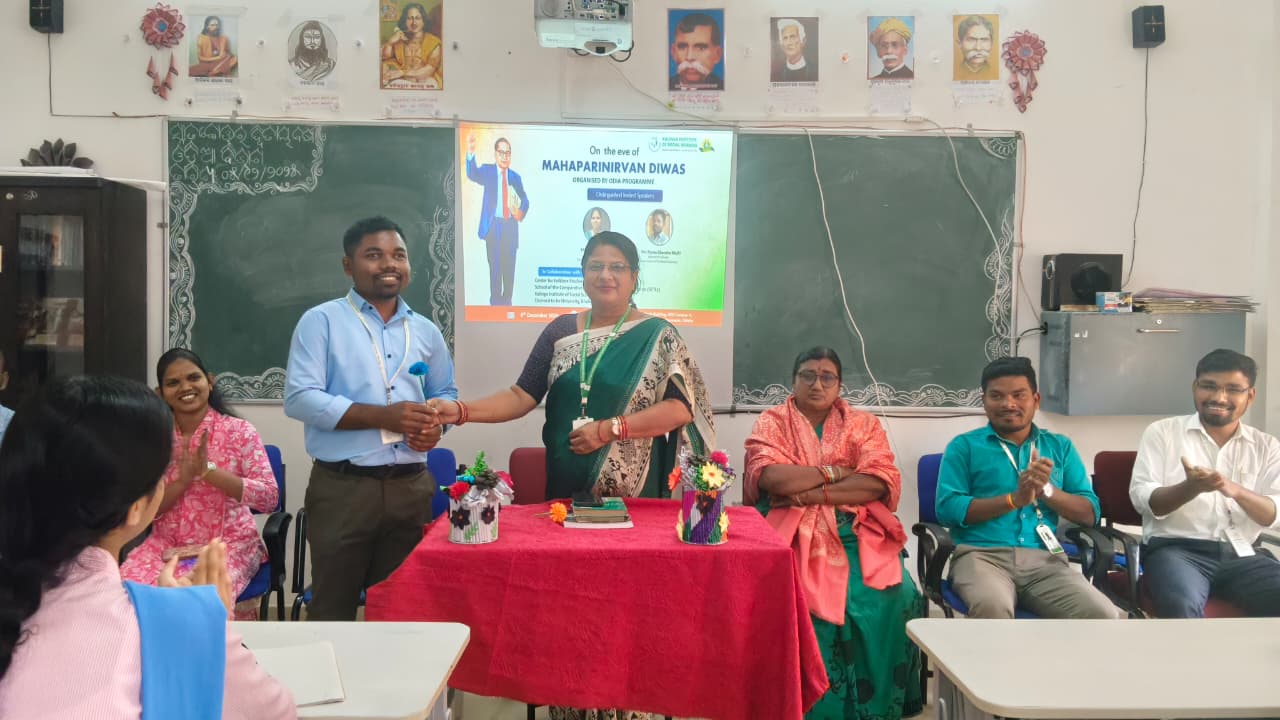
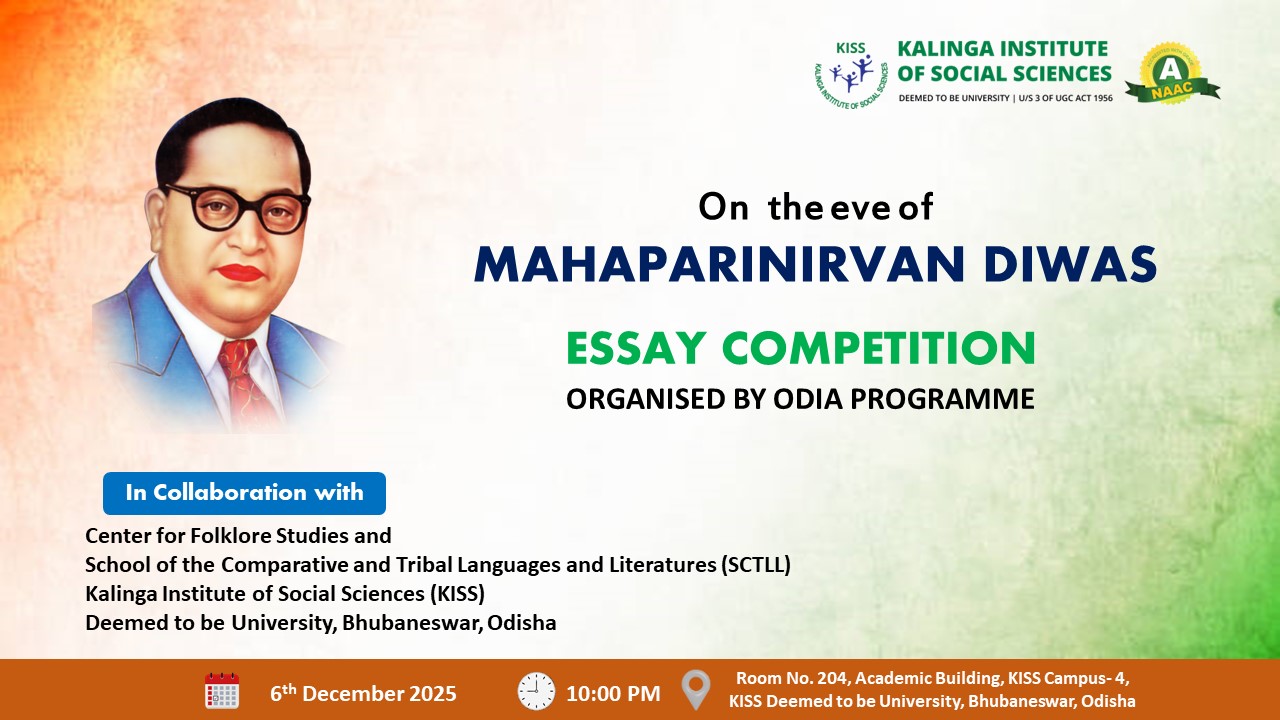
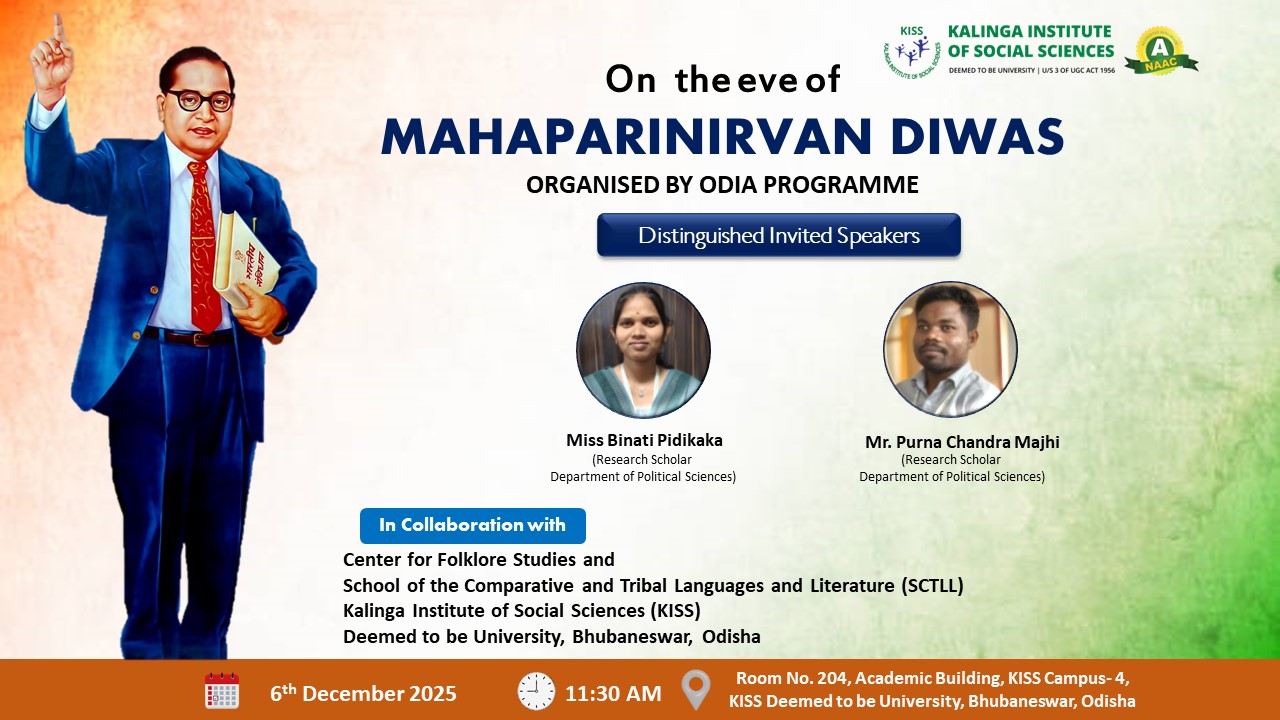
The Department of Odia, in collaboration with the Centre for Folklore Studies, School of Comparative Tribal Languages and Literatures (SCTLL) KISS Deemed to be University, organised Maha Parinirvan Diwas on 6th December 2025. On this occasion, a Student Seminar was organised to commemorate the ideals and contributions associated with the day and to create awareness among students about its socio-cultural significance.
The programme commenced with a Welcome Address by Dr. Rasmita Tripathy, Associate Professor and Head, Department of Odia, SCTLL. In her address, she warmly welcomed all the invited speakers, faculty members, research scholars, and students. She highlighted the relevance of Maha Parinirvan Diwas in contemporary society and emphasised the need for students to engage with values of social justice, equality, and inclusive thinking.
The seminar featured scholarly deliberations by the invited speakers Ms. Binati Pidikaka and Mr. Purana Chandra Majhi, Ph.D. Scholar, Department of Political Science. Both speakers delivered insightful talks reflecting on the historical, philosophical, and socio-political dimensions associated with Maha Parinirvan Diwas. Their presentations encouraged students to critically reflect on democratic ideals and the role of education in social transformation.
As part of the academic activities, an essay competition had been organised earlier by the Department of Odia on themes related to Maha Parinirvan Diwas. The competition received active participation from students. The prizes were distributed during the seminar, appreciating the efforts and intellectual engagement of the participants.
The programme concluded with a vote of thanks proposed by Dr. Sudarshan Raita, Assistant Professor, Department of Odia, SCTLL, who expressed gratitude to the organisers, speakers, faculty members, and students for their wholehearted cooperation in making the programme a success.
Overall, the observance of Maha Parinirvan Diwas proved to be a meaningful and enriching academic event, fostering awareness, reflection, and dialogue among students in an Indian academic ethos.