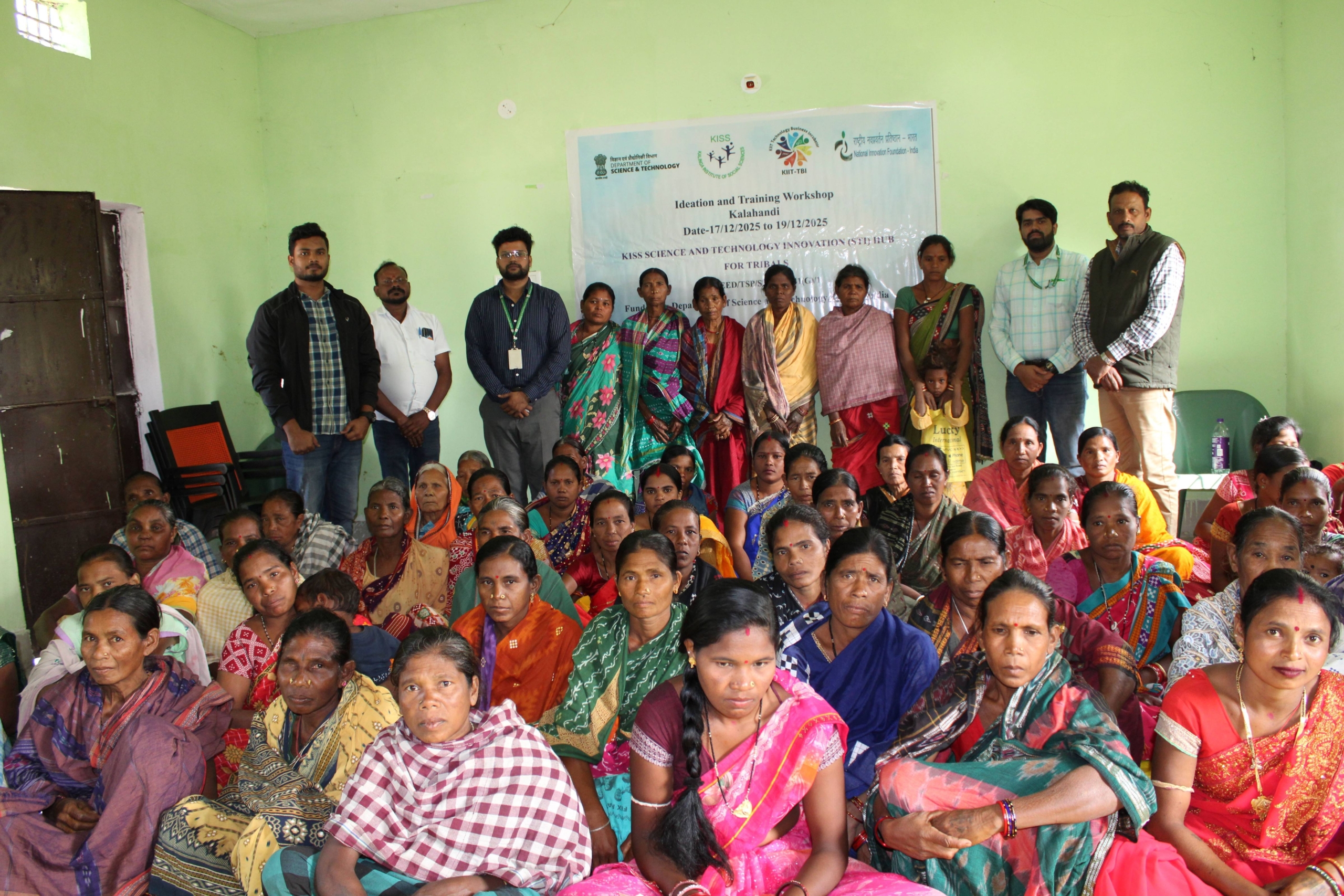
An Ideation and Training Programme was organized by KISS-DU, under the KISS Science and Technology Innovation (KISS STI Hub) Project funded by the Department of Science and Technology (DST), Government of India from 17th to 19th December 2025 at Sikirguda Village, Chancher Gram Panchayat, Bhawanipatna Block in Kalahandi district.
The primary objective of the programme was to create training on entrepreneurship among tribal communities by leveraging indigenous foods, traditional knowledge systems, and medicinal herbs. The training emphasized how locally available resources can be transformed into value-added products, enabling participants to initiate self-employment opportunities and scale micro-enterprises sustainably.
The workshop aimed to inspire participants to recognize the economic potential of their indigenous knowledge and encourage innovation-driven livelihood generation at the grassroots level. The first day focused on introducing participants to the KISS STI Hub, its objectives, ongoing initiatives, and its role in promoting science-based innovation among tribal communities. Sessions were conducted to train about entrepreneurship, self-reliance, and start-up thinking, emphasizing how traditional knowledge can be transformed into sustainable business models. The second half of the day witnessed a significant move to foster entrepreneurship at Maa Manekeswari University.
In this regard, a meeting was held with Dr. Nibedita Nath, Vice Chancellor (I/c) of Maa Manikeswari University, to organize an Ideation and Hackathon Programme led by the KISS Science and Technology Innovation (STI) Hub. This initiative is specifically designed for tribal students at the university to encourage student-led startups and bridge the gap between indigenous knowledge and modern scientific innovation. By leveraging the STI Hub’s expertise in empowering marginalized communities through technology, the collaboration aims to create a sustainable ecosystem for grassroots innovation and self-reliant livelihoods within the campus.
The topic for the second day was Value-added Indigenous Pulses and Traditional Food Crops for Marketing in Tribal Areas. Participants were sensitized on processing techniques, hygiene, packaging, and basic market linkage concepts. Discussions highlighted how the value of local foods can be enhanced through simple processing methods and positioned for wider markets while preserving their cultural significance.
Tribal communities of Sikirguda Village traditionally cultivate indigenous pulses and oilseeds well suited to the agro-climatic conditions of Kalahandi. Key crops include Kandula (pigeon pea), Biri (black gram), Char koli (local landrace) and Tola fruits, which are rich in protein and essential nutrients. These crops support household nutrition and livelihoods and are largely produced using traditional, low-input methods. Organized marketing through SHGs and cooperatives, along with cleaning, grading, value addition, and branding as Kalahandi tribal produce, can enhance income, conserve agrobiodiversity, and strengthen food security.
The theme of the third day of the training programme was on Ayurvedic and Indigenous Herbs. It focused on Ayurvedic and indigenous medicinal herbs, emphasizing their traditional uses, health benefits, and commercial potential. Participants gained knowledge about identifying local medicinal plants, their applications, and opportunities for developing herbal-based value-added products. The sessions encouraged sustainable utilization of bio-resources while ensuring conservation of indigenous knowledge.
A total of 147 participants derived benefits from this training programme and the major focus areas included Entrepreneurship Training, Value-added Indigenous Food Products, and Ayurvedic and Indigenous Medicinal Herbs. The impact includes Enhanced training of self-employment and entrepreneurship opportunities, Improved understanding of value addition using indigenous resources and Motivation to develop scalable, community-based micro-enterprises.