
Have a diversity and equality committee, office or officer (or the equivalent) tasked by the administration or governing body to advise on and implement policies, programmes and trainings related to diversity, equity, inclusion and human rights on campus.
KISS Deemed to be University has a fully functional diversity and equality committee, tasked by the administration or governing body to advise on and implement policies, programmes, and training related to diversity, equity, inclusion and human rights on campus.
- Clause 24 of Memorandum of Association of the University, ‘Institution Deemed to be University open to all’:
- The institution Deemed to be University shall be open to the persons of all genders and of whatever caste, creed, race or class, and it shall not be lawful for the institution Deemed to be University to adopt or impose on any person, any test whatsoever of religious belief or profession in order to entitle him or her to be appointed as a faculty member of the institution Deemed to be University or to hold any other office therein or to be admitted as a student in the institution Deemed to be University or to graduate there at or to enjoy or exercise any privilege thereof: Provided that nothing in this section shall be deemed to prevent the institution deemed to be University from making special provision for the employment or admission of women, persons with disabilities, or of persons belonging to the weaker section of the society and, in particular, of the Scheduled Castes, the Scheduled Tribes and the other socially and educationally backward classes of citizens.
- All policies and procedures, in matters of admission, fee, and employment as applicable to the university level public funded and self-financing institutions, respectively, shall apply.
https://university.kiss.ac.in/about-us/moa/
https://university.kiss.ac.in/campus-life/anti-discrimination-cell/#guidelines-of-the-anti-discrimination-cell/1/
https://university.kiss.ac.in/3d-flip-book/anti-discrimination-policy/
- Equality, Diversity and Inclusion Committee:
- Composition:
- Chairperson: Vice Chancellor, KISS-DU
- Pro Vice Chancellor, KISS-DU
- Registrar, KISS-DU
- Convener: Director/Coordinator, Equality, Diversity and Inclusion
- Members:
- Deans of Schools
- Heads of Departments
- Representative, Internal Complaints Committee (ICC)
- Representative, SC and ST Cell
- Representative, Persons with Disabilities (PwD) Cell
- Representative, Tribal Advisory Council
- One student representative
- One representative from non-teaching staff members
- External expert
- Composition:
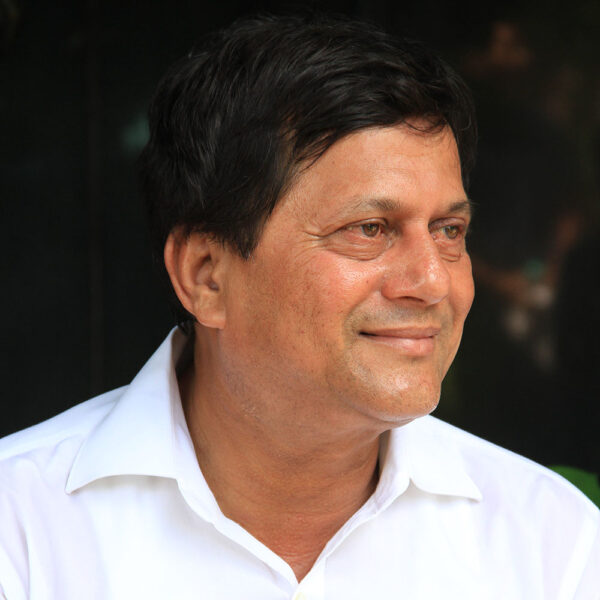
- Dr. Anirban Bandyopadhyay is the present Equality, Diversity and Inclusion Officer for KISS-DU
- Roles & Responsibilities:
- Create an inclusive governance system for maintenance of equality and diversity in the campus.
- Ensure an inclusive, safe, and discrimination-free campus environment for all members of the University community.
- Conduct of regular audits to review the policies and gaps if found; formulating customized policies and regulations for maintaining equality, diversity and inclusion and monitoring its effective implementation.
- Re-dressal of grievances related to discrimination due to caste, creed, race, gender or disability.
- Roles & Responsibilities:
- More Details available at:
- Anti Discrimination Policy: https://university.kiss.ac.in/3d-flip-book/anti-discrimination-policy/
- Anti discrimination Cell: https://university.kiss.ac.in/campus-life/anti-discrimination-cell/
- Equal Opportunity Cell: https://university.kiss.ac.in/docs/Guidelines/Guidelines-for-Equal-Opportunity-Cell-KISS-2022.pdf
- Anti ragging Cell: https://university.kiss.ac.in/campus-life/anti-ragging-cell/
- LGBTQ Policy: https://university.kiss.ac.in/3d-flip-book/lgbtq-policy/
- Equality, Diversity and Inclusion Handbook: https://university.kiss.ac.in/3d-flip-book/equality-diversity-and-inclusion-policy/
- KISS Tribal Advisory Council: The Tribal Advisory Council (TAC) of KISS was constituted on 19th July 2021. It comprises persons of eminence from various tribal communities who advise the University leadership on matters pertaining to the welfare and advancement of the students in KISS and for overall institutional development. The members come from various walks of life such as academics, public service and social work. They have all been deeply associated with the Tribal people and have in-depth knowledge of the Tribal communities of Odisha, their unique cultures and their challenges.A working committee has been constituted for the promotion, protection and preservation of tribal cultural diversity and heritage. https://university.kiss.ac.in/governance/tribal-advisory-council/
Members:- Kanhu Charan Mahali, IPS (Retd.) – Director Gerenal, KISS-DU
- Padmashree Dr. Damayanti Beshra – Former Principal, MPC Autonomous College, Baripada, Mayurbhanj, Odisha
- Professor S. N. Munda – Former VC, Dr. Shyma Prasad Mukherjee University, Ranchi
- Shri Shyam Sundar Hansdah, IPS (Retd.) – Former Additional DGP, Odisha
- Professor Johoni Xaxa – Former Professor in PG Department of Political Sciences, Sambalpur University, Jyoti Vihar, Burla, Sambalpur
- Professor Marry G. Bage – Former Professor in Sociology, Utkal University, Vani Vihar, Bhubaneswar
- Roshni Kujur – Assistant Professor, PG Department of Pol. Sc. And Public Administration, Sambalpur University
- Bhubaneswar Sabar – Assistant Professor, Department of Anthropology and Tribal Studies, Maharaja Sriram Chandra Bhanja Deo University (MSCBD University), Baripada, Mayurbhanj
- Suresh Chandra Murmu – Associate Professor, Department of Anthropology, Utkal University, Vani Vihar, Bhubaneswar
- Shri Niranjan Bisi – Member of Parliament, Rajya Sabha
- Kadey Soren – Assistant Professor, Social Work
- Smt Sumani Jhodia – Social Worker, Rayagada
- Smt Akankhya Pradhan – Social Worker, Kandhamal
- Smt Sunita Muduli – Social Activist, Koraput
- Mr Nirakar Patra – Social Activist, Kalahandi
- Mr Akshaya Kumar Bhoi – Social Activist, Sambalpur
- Dula Bankira – Ph.D. Scholar
- Jaiminee Jhankar – Ph.D. Scholar
- Abinas Kiro – Ph.D. Scholar
- Innovative Schools with Tribal Focus
- School of Comparative Indic Studies & Tribal Science – This school offers studies that define development in terms of sustainable goals and explore ways of going about these through the engagement of modern technology with traditional indigenous knowledge systems.
- School of Comparative Tribal Languages and Literatures – This school seeks to redefine literature and culture across linguistic, racial and ethnic boundaries within a comparativist framework.
- School of Indigenous Knowledge, Science and Technology – Teaching and research pursued in the programmes of this school are oriented towards an interface of the systems of indigenous knowledge and modern and applied levels.
- School of Tribal Culture, Philosophy and Eco-spiritualism – This school offers ethnocultural studies of the tribes, their cosmological religious and ecological system of belief.
- School of Tribal Heritage and Tribal Indology – This school emphasizes the pedagogy of tribal culture and heritage as part of Indological Studies and work towards cross- fertilization.
- School of Tribal Legal Studies and Tribal Rights – This school deals with legal studies related to the socio-economic and legal issues of the tribals relating to the development, displacement, traditional rights to land, forest and ecology.
- School of Tribal Resource Management – This school runs teaching and research programmes that impact knowledge and skills about tribal economic resources and their management in addition to honing the entrepreneurial skills of the tribal students. More details on the schools can be found at: https://university.kiss.ac.in/academics/
- Kalinga Fellowship: The Kalinga Fellowship is a systemic change societal leadership platform to facilitate a breakthrough in thinking and strategy on the United Nations’ Sustainable Development Goal (SDG) 5 that concerns gender equality. Within SDG5, the Fellowship has concentrated on issues related to gender-based violence. KISS was instrumental in establishing this project in joint partnership with the BRIDGE Institute, Ashoka Foundation, FXB India, Prajwala, UN Women and the US Consulate Hyderabad. This global programme annually brings together the most progressive leaders from business, government and civil society to facilitate a breakthrough in thinking and strategy to answer the question: How can the senior leaders of the government, business sector and civil society come together to combat trafficking of women and children globally? It aims to tackle Target 5.2 of #SDG-5 on Gender Equality specifically addressing the issue of trafficking and calling for countries to “Eliminate all forms of violence against all women and girls in the public and private spheres, including trafficking and sexual and other types of exploitation.” https://www.kalingafellowship.org/
- In 2023, the Kalinga Institute of Social Sciences (KISS) won the International Green Gown Award for Diversity, Equity, and Inclusion in Sustainability. This award was presented at the UN High Level Political Forum on Sustainable Development on July 17, 2023. KISS was the only Indian NGO to be shortlisted for the award. https://news.kiit.ac.in/awards/kiss-wins-international-green-gown-awards-2023/