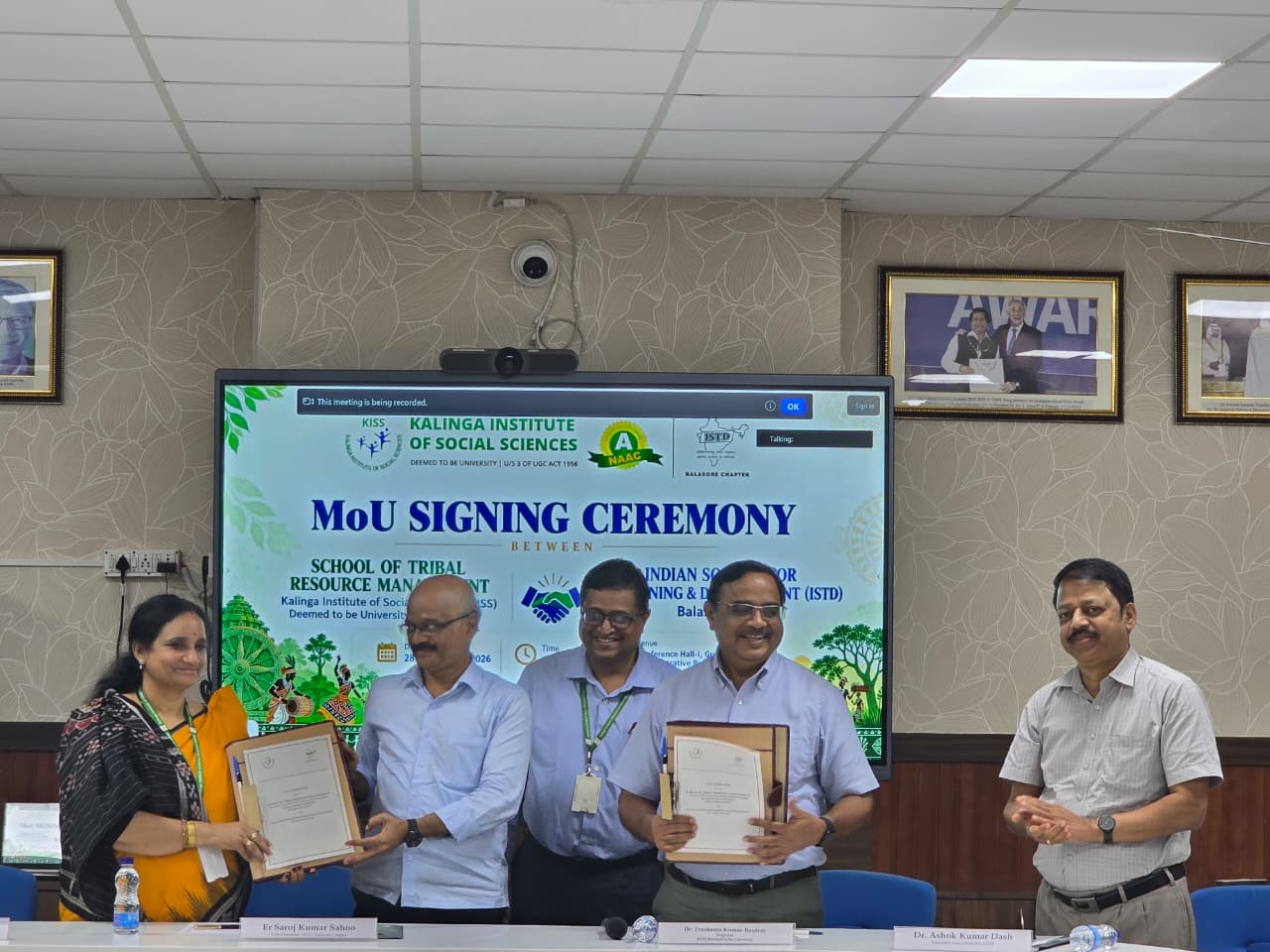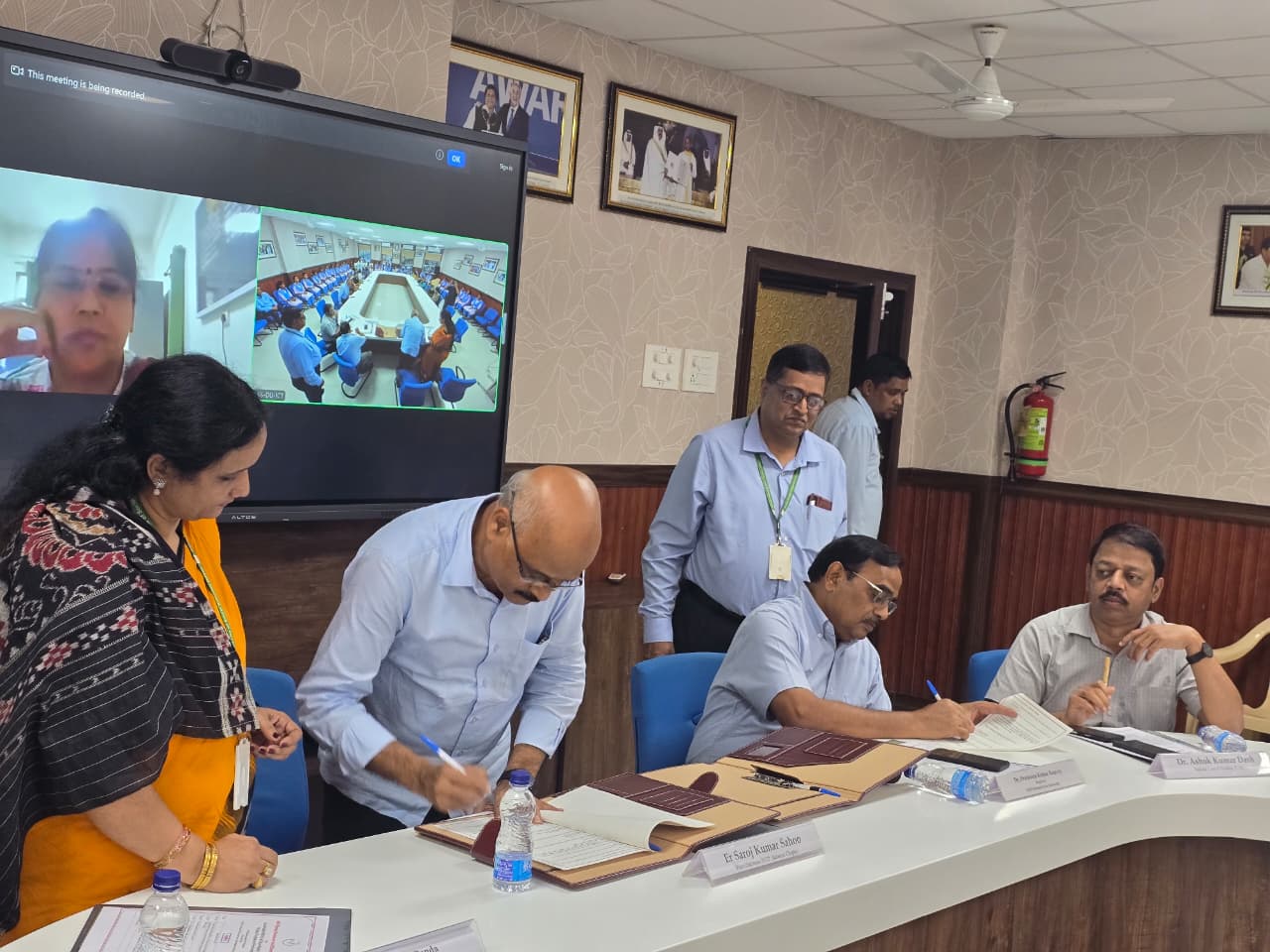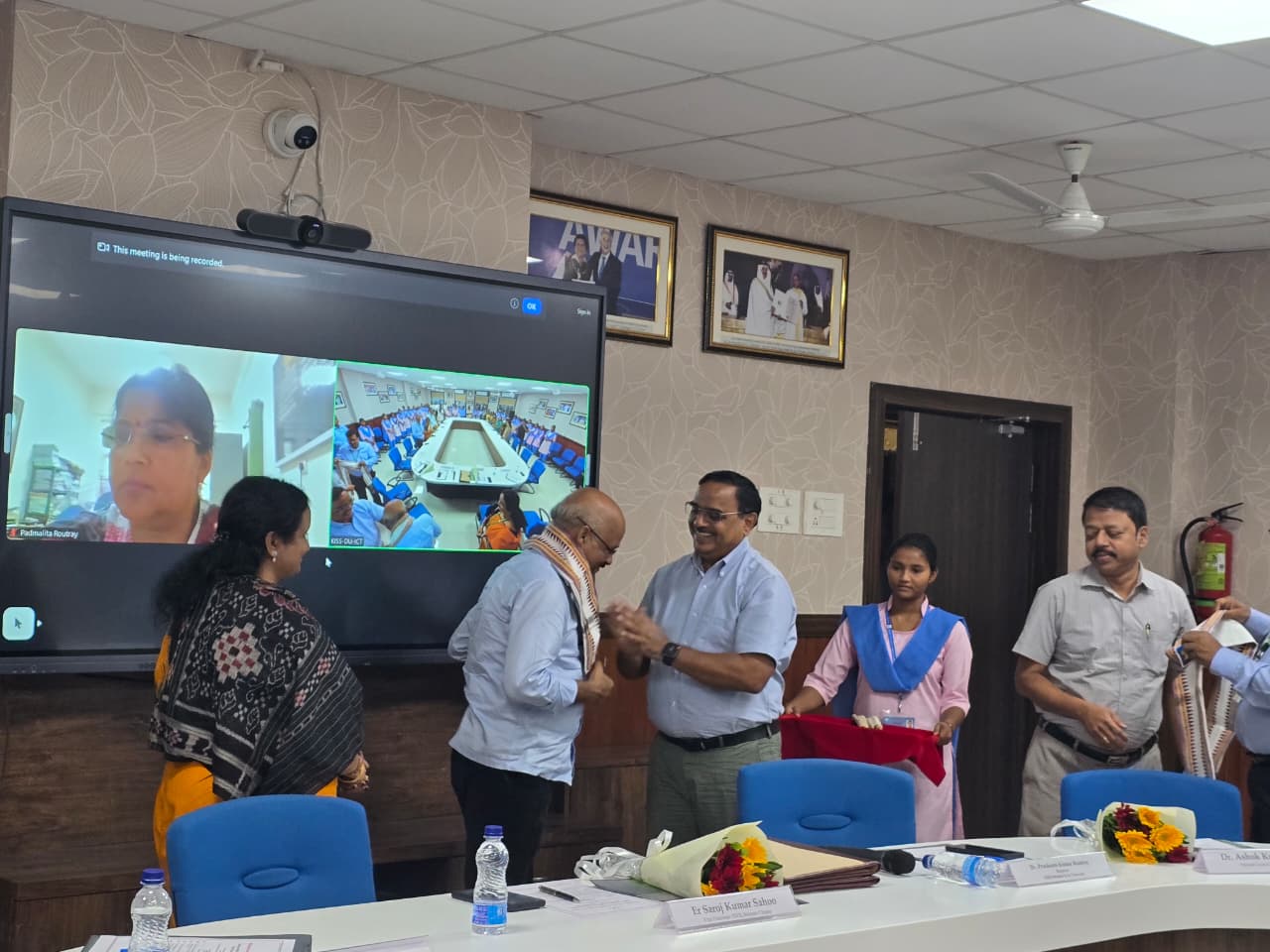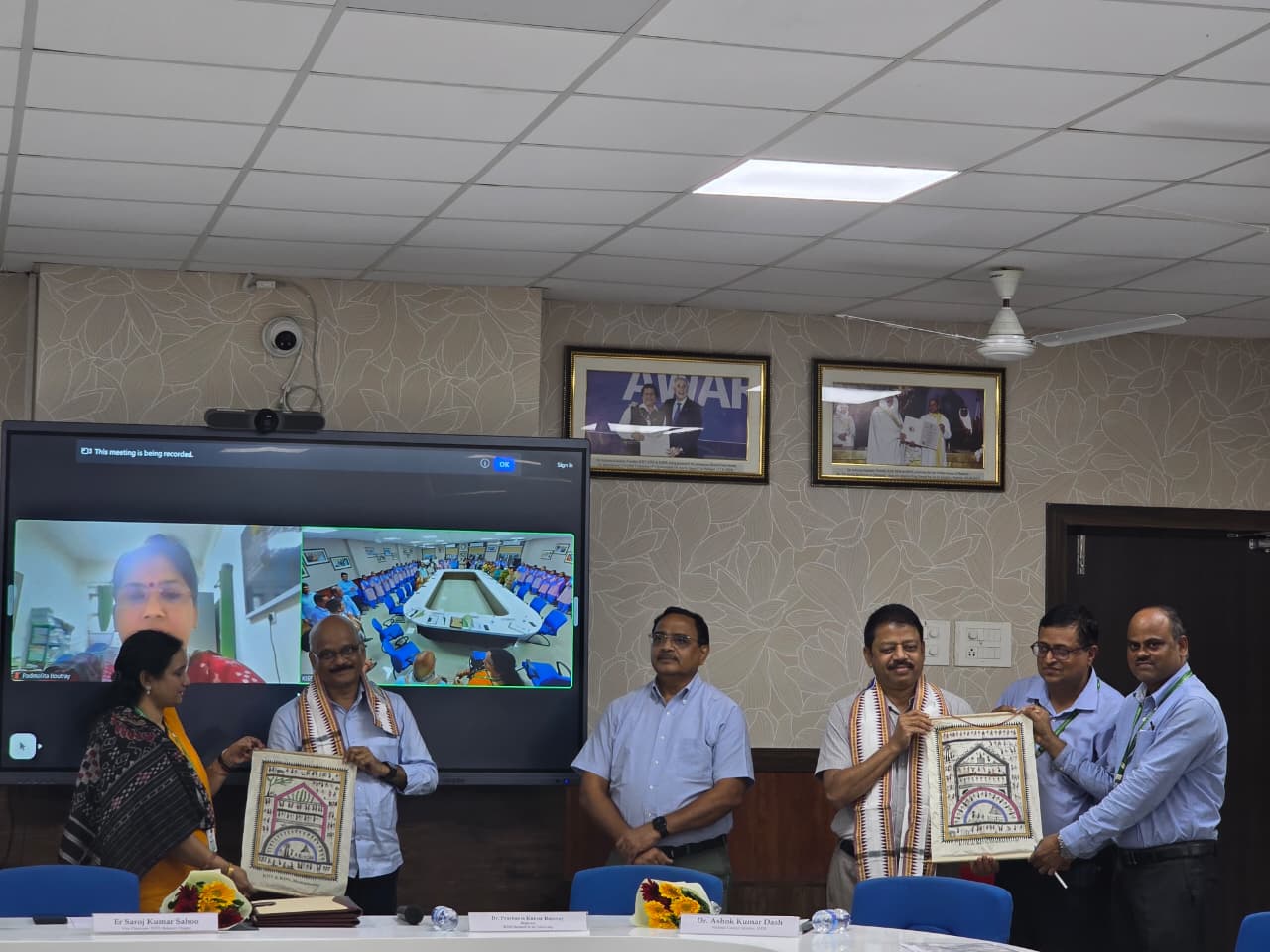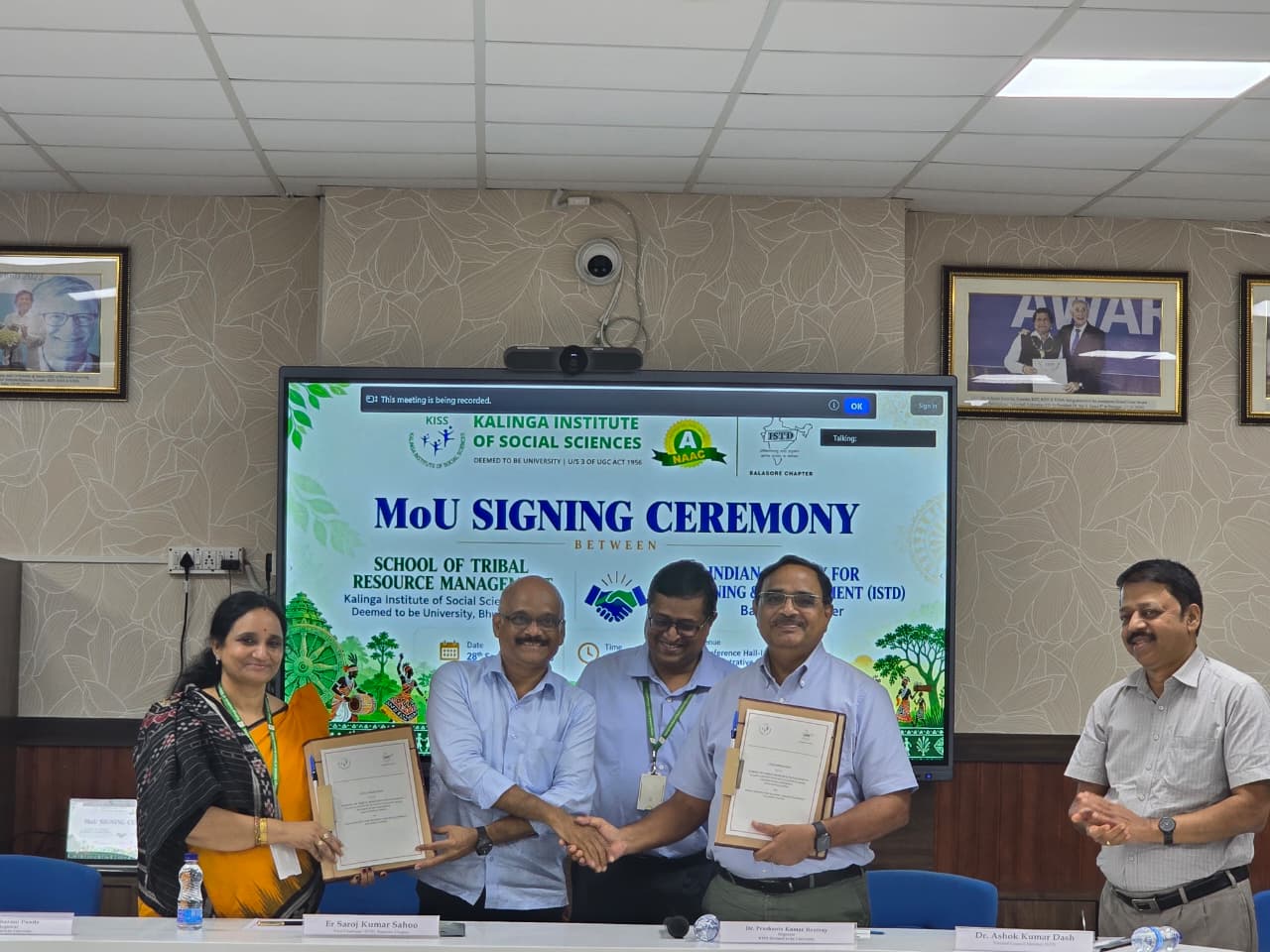
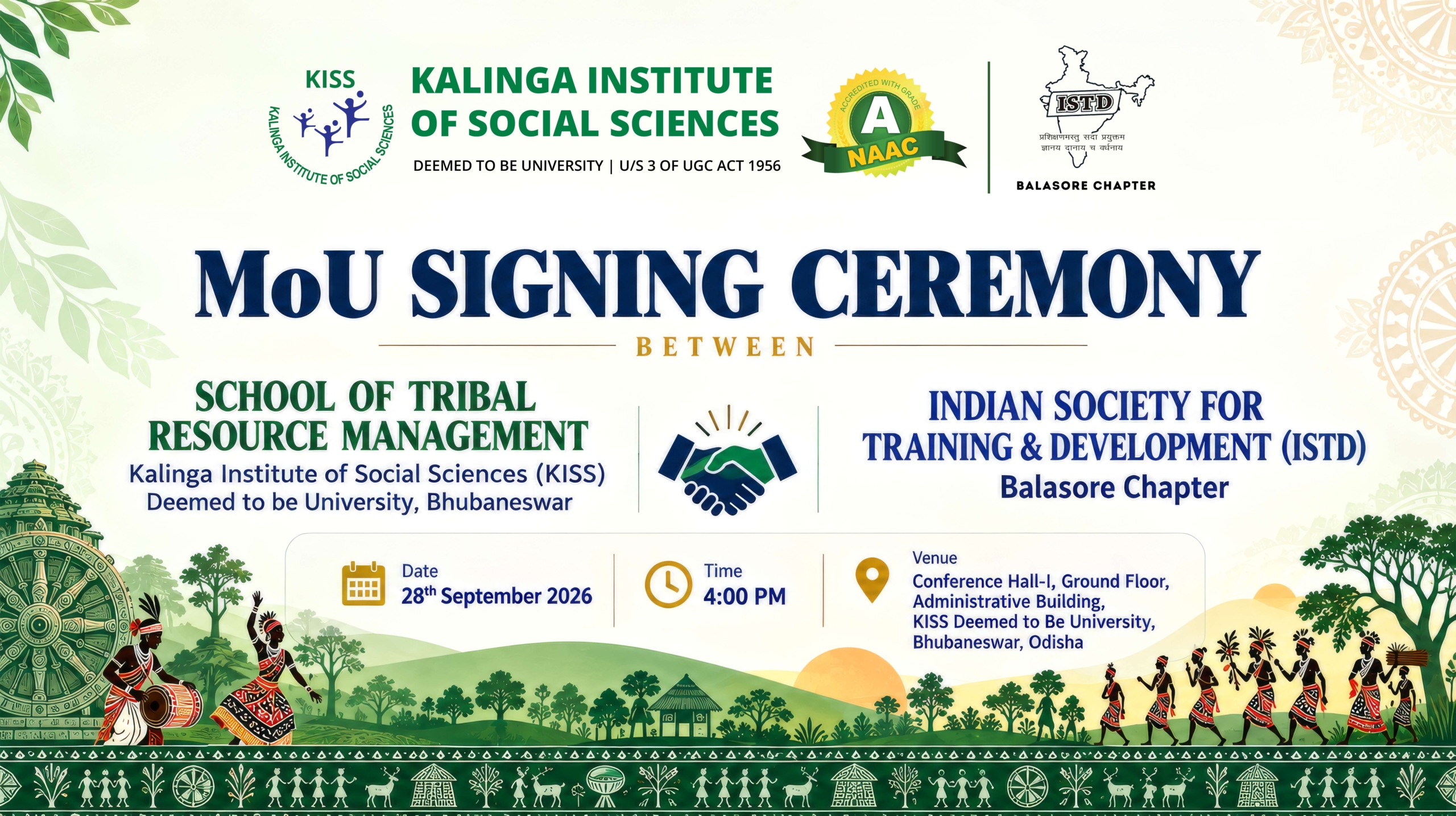
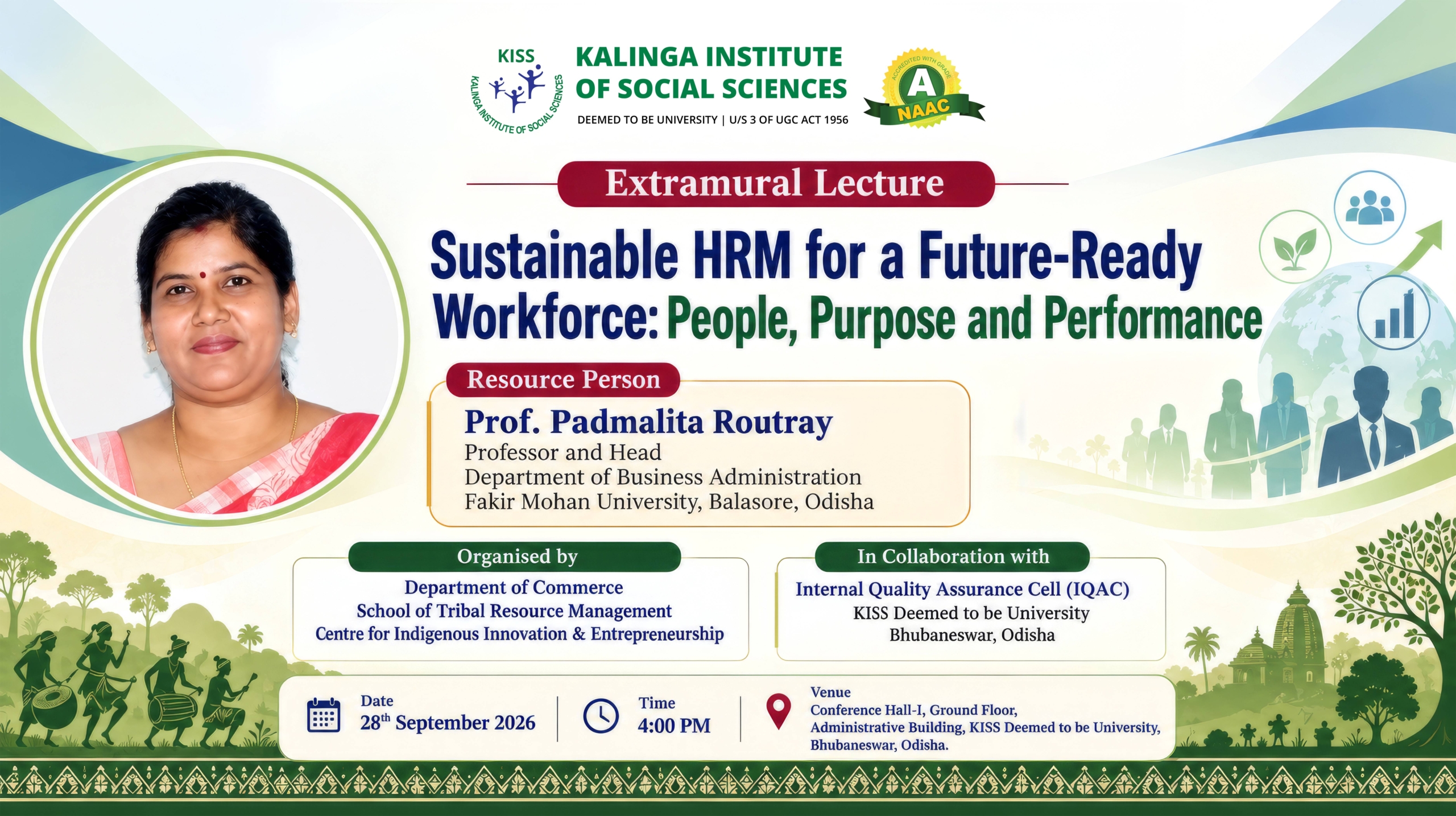
The School of Tribal Resource Management (STRM), KISS Deemed to be University, signed an MoU with the Indian Society for Training and Development (ISTD), Balasore Chapter. The signing ceremony was followed by an organised an Extra-Mural Lecture on 28th September 2026 at 4:00 PM. The programme marked an important initiative towards strengthening academic–professional collaboration, enhancing skill development, and creating greater opportunities for students and faculty through knowledge sharing and professional engagement.
The programme commenced with a Welcome Address and Introduction of the Guest by Dr. Ch Sudipta Kishore Nanda, Department of Commerce, School of Tribal Resource Management, KISS Deemed to be University. He highlighted the significance of the collaboration and emphasised the growing need for stronger linkages between academic institutions and professional organisations to prepare students for an increasingly dynamic and competitive world of work.
The MoU Signing Ceremony between KISS Deemed to be University and ISTD, Balasore Chapter was the major highlight of the programme. The collaboration is intended to provide a platform for training and development, professional interaction, capacity building, knowledge exchange, expert lectures, skill enhancement, and career-oriented initiatives. Such institutional partnerships can contribute to bridging the gap between academic learning and workplace requirements and support the development of professionally competent and future-ready graduates.
The programme was enriched by insightful addresses from distinguished dignitaries. Dr. Snigdharani Panda, Joint Registrar and Chairperson, Council of Deans, KISS Deemed to be University, spoke on the importance of collaborative initiatives in strengthening higher education and enhancing opportunities for students. Professor Padmalita Routray, Chairperson, ISTD, Balasore Chapter and Professor and Head, Department of Business Administration, Fakir Mohan University, Balasore, addressed the gathering online and emphasised the importance of continuous learning, professional competencies, adaptability, and human-centred approaches in the changing world of work.
Er. Saroj Kumar Sahoo, Vice Chairman, ISTD Balasore Chapter, and Dr. Ashok Kumar Dash, National Council Member, ISTD, also shared their valuable perspectives on professional development, training, employability, and the role of institutions in preparing young people for emerging workplace challenges.
The academic highlight of the programme was the Extra-Mural Lecture delivered by Prof. Padmalita Routray on “Sustainable HRM for Future-Ready Workforce: People, Purpose and Performance.” The lecture explored the evolving role of Human Resource Management in developing organisations that are sustainable, people-oriented, adaptable, and performance-driven. Prof. Routray highlighted the interconnected dimensions of people, purpose, and performance and discussed the importance of developing competencies, employee engagement, organisational values, adaptability, and sustainable practices to meet the requirements of the future of work. The session provided valuable academic and practical insights for students and faculty members.
The programme concluded with a Vote of Thanks by Dr. Parikshita Khatua, Head, Department of Commerce, STRM, KISS Deemed to be University, who expressed gratitude to the university authorities, ISTD representatives, distinguished speakers, faculty members, and participants for their valuable contributions to the successful organisation of the event.
The MOU and the Extra-Mural Lecture together represent a meaningful step towards strengthening academia–professional linkages, promoting skill-based learning, enhancing employability, and creating future-oriented learning opportunities. The initiative reflects the commitment of KISS Deemed to be University and the School of Tribal Resource Management towards providing students with broader exposure, professional competencies, and opportunities for continuous learning beyond the conventional classroom environment.